Laboratory of Biochemistry EA2608, Institute of Biology, University of Caen, France.
J Occup Med Toxicol. 2010 Oct 27;5:29. doi: 10.1186/1745-6673-5-29.
Worldwide used pesticides containing different adjuvants like Roundup formulations, which are glyphosate-based herbicides, can provoke some in vivo toxicity and in human cells. These pesticides are commonly found in the environment, surface waters and as food residues of Roundup tolerant genetically modified plants. In order to know their effects on cells from liver, a major detoxification organ, we have studied their mechanism of action and possible protection by precise medicinal plant extracts called Dig1.
The cytotoxicity pathways of four formulations of glyphosate-based herbicides were studied using human hepatic cell lines HepG2 and Hep3B, known models to study xenobiotic effects. We monitored mitochondrial succinate dehydrogenase activity and caspases 3/7 for cell mortality and protection by Dig1, as well as cytochromes P450 1A1, 1A2, 3A4 and 2C9 and glutathione-S-transferase to approach the mechanism of actions.
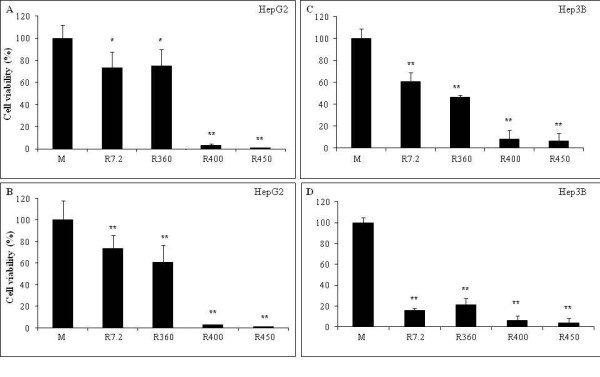
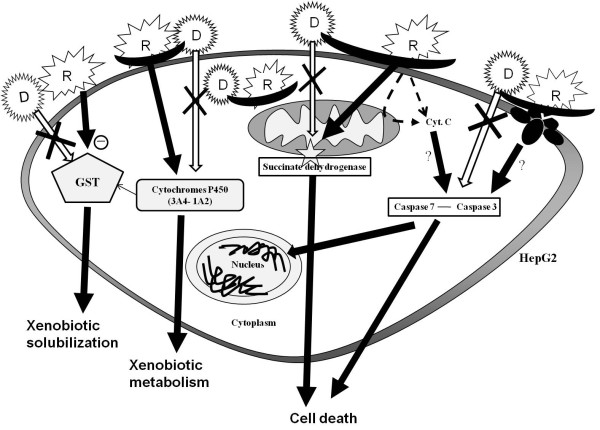
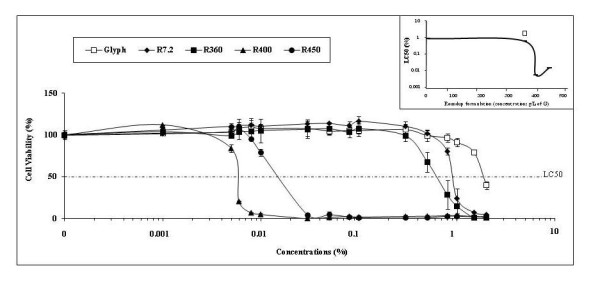
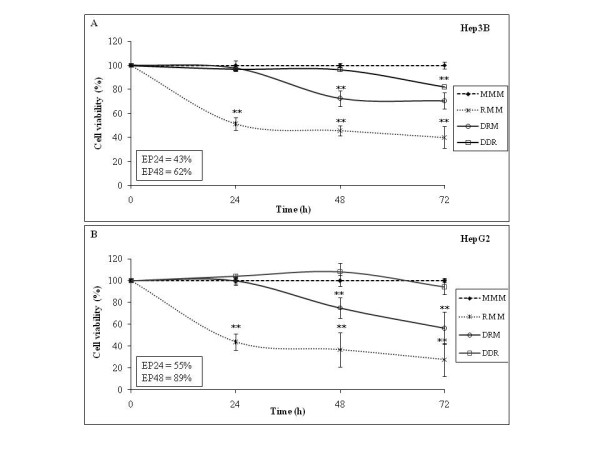
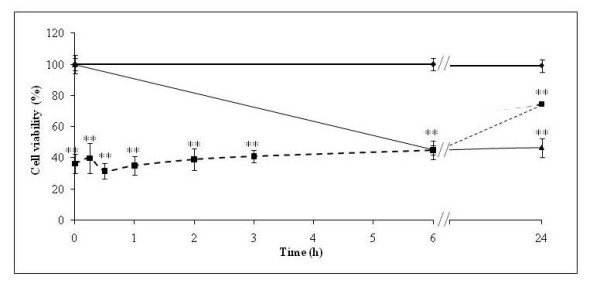
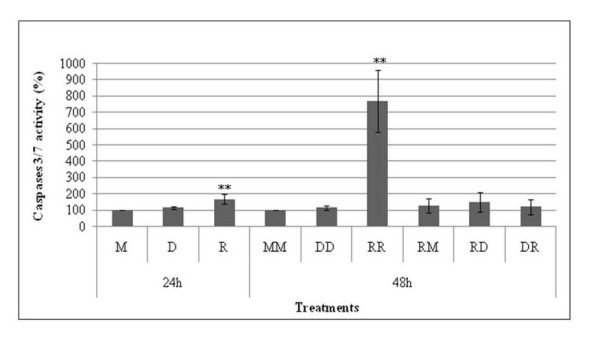
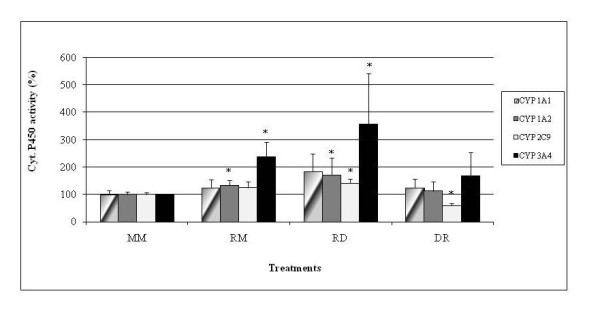
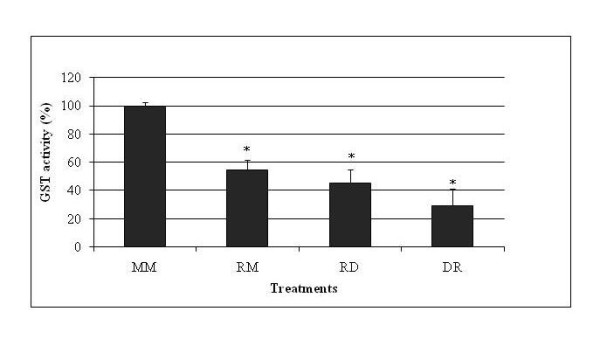
All the four Roundup formulations provoke liver cell death, with adjuvants having stronger effects than glyphosate alone. Hep3B are 3-5 times more sensitive over 48 h. Caspases 3/7 are greatly activated in HepG2 by Roundup at non-cytotoxic levels, and some apoptosis induction by Roundup is possible together with necrosis. CYP3A4 is specifically enhanced by Roundup at doses 400 times less than used in agriculture (2%). CYP1A2 is increased to a lesser extent together with glutathione-S-transferase (GST) down-regulation. Dig 1, non cytotoxic and not inducing caspases by itself, is able to prevent Roundup-induced cell death in a time-dependant manner with an important efficiency of up to 89%, within 48 h. In addition, we evidenced that it prevents Caspases 3/7 activation and CYP3A4 enhancement, and not GST reduction, but in turn it slightly inhibited CYP2C9 when added before Roundup.
Roundup is able to provoke intracellular disruption in hepatic cell lines at different levels, but a mixture of medicinal plant extracts Dig1 can protect to some extent human cell lines against this pollutants. All this system constitutes a tool for studying liver intoxication and detoxification.
全世界使用的农药含有不同的助剂,如草甘膦制剂,这些制剂是基于草甘膦的除草剂,可能会在体内引起一些毒性,并在人类细胞中引起毒性。这些农药在环境、地表水以及作为耐草甘膦基因改造植物的食物残留中很常见。为了了解它们对肝脏这种主要解毒器官的细胞的影响,我们研究了它们的作用机制以及精确的药用植物提取物 Dig1 的可能保护作用。
使用已知可用于研究外源性物质作用的人类肝系细胞株 HepG2 和 Hep3B,研究了四种草甘膦制剂的细胞毒性途径。我们监测了线粒体琥珀酸脱氢酶活性和 caspase 3/7 的细胞死亡率,并研究了 Dig1 的保护作用,以及细胞色素 P450 1A1、1A2、3A4 和 2C9 以及谷胱甘肽-S-转移酶,以探讨其作用机制。
所有四种 Roundup 制剂都会引起肝细胞死亡,助剂的作用比草甘膦单独作用更强。在 48 小时内,Hep3B 的敏感性是 HepG2 的 3-5 倍。在非细胞毒性水平,Roundup 极大地激活了 HepG2 中的 caspase 3/7,并且 Roundup 可能同时诱导细胞凋亡和坏死。CYP3A4 在农业中使用的剂量(2%)低 400 倍时,特异性增强。CYP1A2 也有一定程度的增加,同时伴随着谷胱甘肽-S-转移酶(GST)下调。Dig1 非细胞毒性,本身不诱导 caspase,能够以时间依赖的方式阻止 Roundup 诱导的细胞死亡,在 48 小时内的效率高达 89%。此外,我们证明它可以阻止 caspase 3/7 的激活和 CYP3A4 的增强,而不是 GST 的减少,但反过来它在添加到 Roundup 之前稍微抑制了 CYP2C9。
Roundup 能够在不同水平上引起肝系细胞系的细胞内破坏,但药用植物提取物 Dig1 的混合物可以在一定程度上保护人类细胞系免受这些污染物的侵害。整个系统构成了研究肝脏中毒和解毒的工具。