Desai Pinaki, Patlolla Ram R, Singh Mandip
College of Pharmacy and Pharmaceutical Sciences, Florida A&M University, Tallahassee, Florida 32307, USA.
Mol Membr Biol. 2010 Oct;27(7):247-59. doi: 10.3109/09687688.2010.522203.
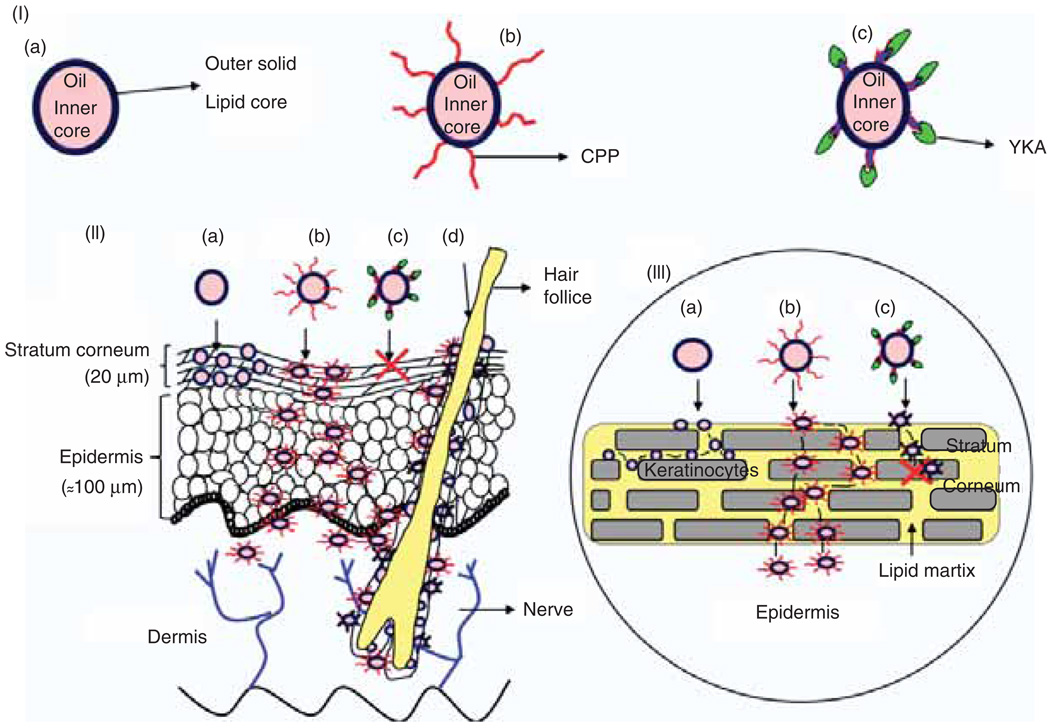
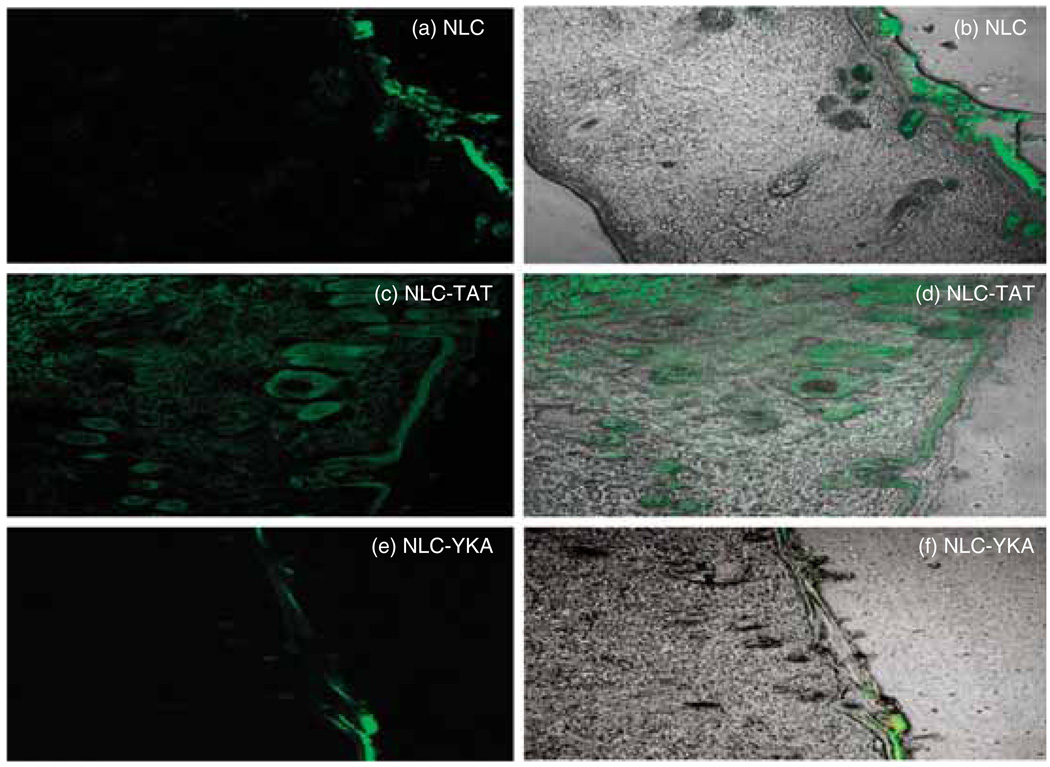
Topical or transdermal drug delivery is challenging because the skin acts as a natural and protective barrier. Therefore, several methods have been examined to increase the permeation of therapeutic molecules into and through the skin. One approach is to use the nanoparticulate delivery system. Starting with liposomes and other vesicular systems, several other types of nanosized drug carriers have been developed such as solid lipid nanoparticles, nanostructured lipid carriers, polymer-based nanoparticles and magnetic nanoparticles for dermatological applications. This review article discusses how different particulate systems can interact and penetrate into the skin barrier. In this review, the effectiveness of nanoparticles, as well as possible mode of actions of nanoparticles, is presented. In addition to nanoparticles, cell-penetrating peptide (CPP)-mediated drug delivery into the skin and the possible mechanism of CPP-derived delivery into the skin is discussed. Lastly, the effectiveness and possible mechanism of CPP-modified nanocarriers into the skin are addressed.
局部或透皮给药具有挑战性,因为皮肤起着天然保护屏障的作用。因此,人们研究了多种方法来增加治疗分子透过皮肤的渗透。一种方法是使用纳米颗粒递送系统。从脂质体和其他囊泡系统开始,已经开发了几种其他类型的纳米尺寸药物载体,如用于皮肤病学应用的固体脂质纳米颗粒、纳米结构脂质载体、聚合物基纳米颗粒和磁性纳米颗粒。这篇综述文章讨论了不同的颗粒系统如何与皮肤屏障相互作用并穿透皮肤屏障。在这篇综述中,介绍了纳米颗粒的有效性以及纳米颗粒可能的作用方式。除了纳米颗粒,还讨论了细胞穿透肽(CPP)介导的药物递送至皮肤以及CPP介导递送至皮肤的可能机制。最后,探讨了CPP修饰的纳米载体进入皮肤的有效性和可能机制。