Raymond and Beverly Sackler School of Physics and Astronomy, Tel-Aviv University, Tel Aviv 69978, Israel.
BMC Genomics. 2010 Oct 28;11:608. doi: 10.1186/1471-2164-11-608.
Adenosine to inosine (A-to-I) RNA-editing is an essential post-transcriptional mechanism that occurs in numerous sites in the human transcriptome, mainly within Alu repeats. It has been shown to have consistent levels of editing across individuals in a few targets in the human brain and altered in several human pathologies. However, the variability across human individuals of editing levels in other tissues has not been studied so far.
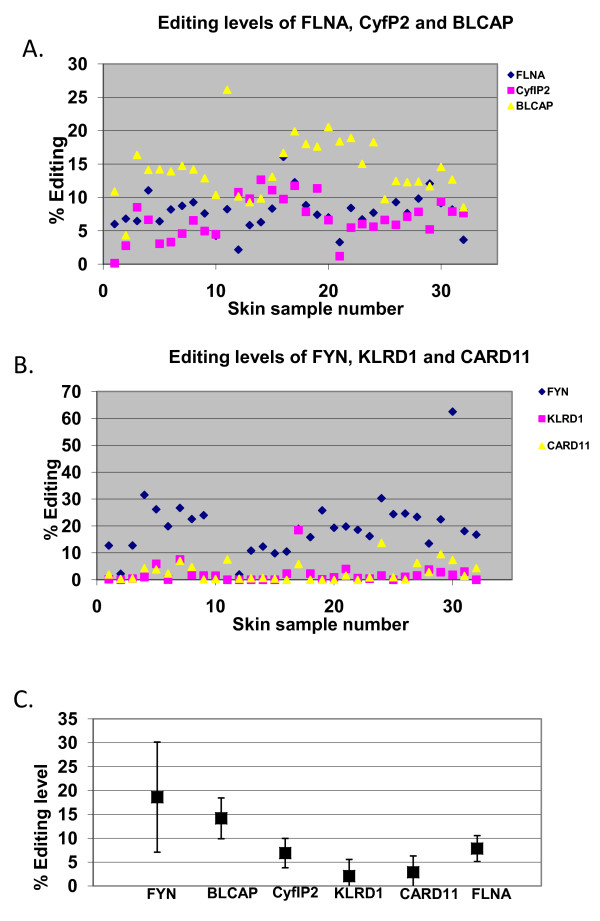
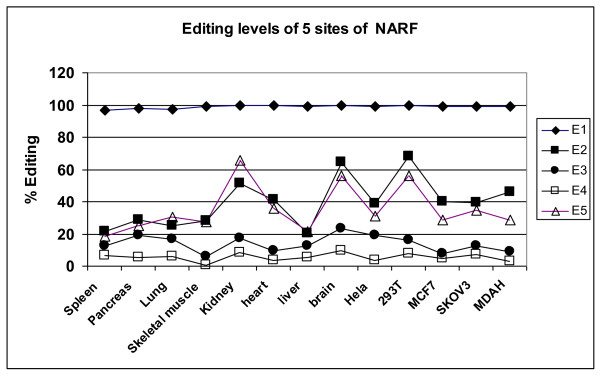
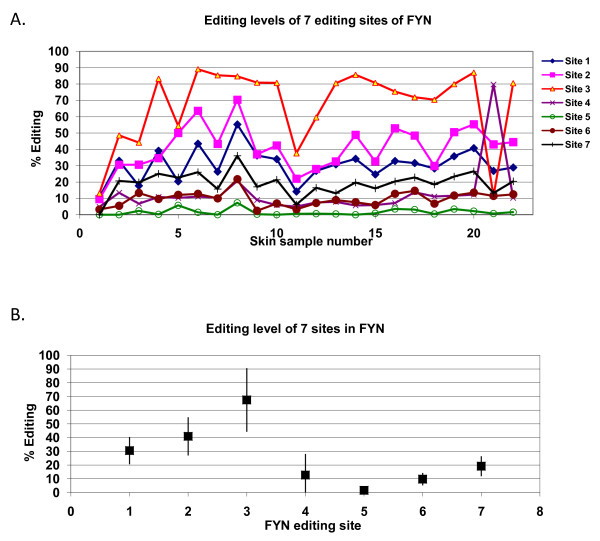
Here, we analyzed 32 skin samples, looking at A-to-I editing level in three genes within coding sequences and in the Alu repeats of six different genes. We observed highly consistent editing levels across different individuals as well as across tissues, not only in coding targets but, surprisingly, also in the non evolutionary conserved Alu repeats.
Our findings suggest that A-to-I RNA-editing of Alu elements is a tightly regulated process and, as such, might have been recruited in the course of primate evolution for post-transcriptional regulatory mechanisms.
腺嘌呤到次黄嘌呤(A-to-I)RNA 编辑是一种重要的转录后机制,发生在人类转录组的许多位点,主要在 Alu 重复序列内。已经表明,在人类大脑的几个靶点中,个体之间的编辑水平具有一致性,并且在几种人类病理中发生改变。然而,到目前为止,其他组织中编辑水平的个体间变异性尚未得到研究。
在这里,我们分析了 32 个皮肤样本,观察了三个基因的编码序列内以及六个不同基因的 Alu 重复内的 A-to-I 编辑水平。我们观察到不同个体之间以及不同组织之间的编辑水平高度一致,不仅在编码靶点,而且令人惊讶的是,在非进化保守的 Alu 重复内也是如此。
我们的研究结果表明,Alu 元件的 A-to-I RNA 编辑是一个严格调控的过程,因此,可能在灵长类动物进化过程中被招募用于转录后调控机制。