Daniel Chammiran, Silberberg Gilad, Behm Mikaela, Öhman Marie
Genome Biol. 2014 Feb 3;15(2):R28. doi: 10.1186/gb-2014-15-2-r28.
RNA editing by adenosine to inosine deamination is a widespread phenomenon, particularly frequent in the human transcriptome, largely due to the presence of inverted Alu repeats and their ability to form double-stranded structures--a requisite for ADAR editing. While several hundred thousand editing sites have been identified within these primate-specific repeats, the function of Alu-editing has yet to be elucidated.
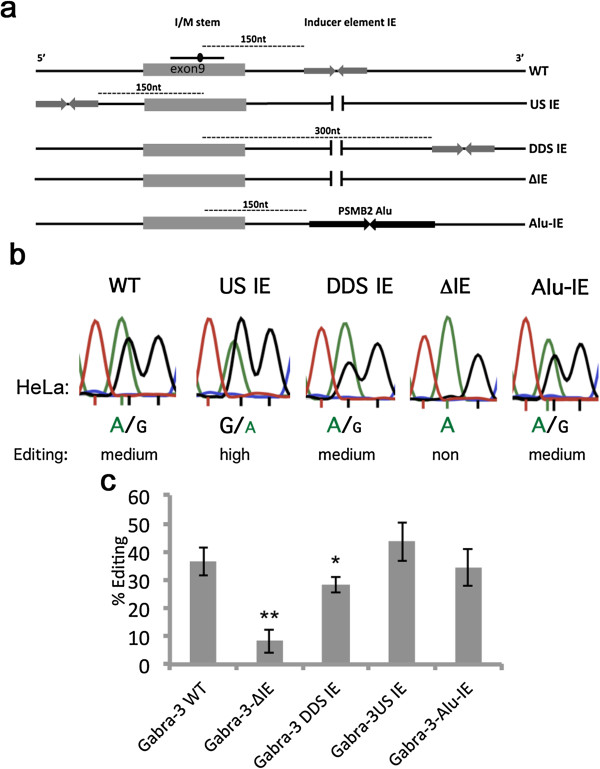
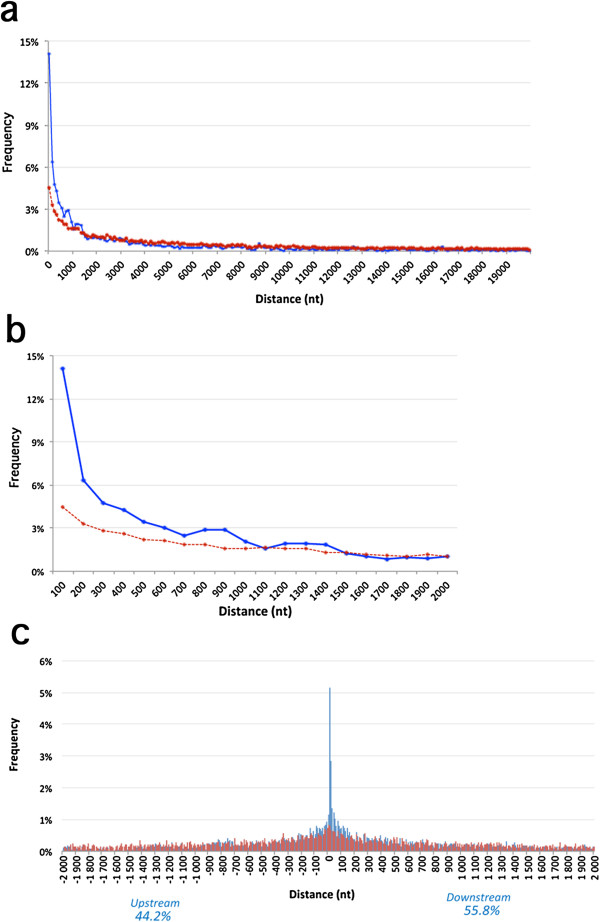
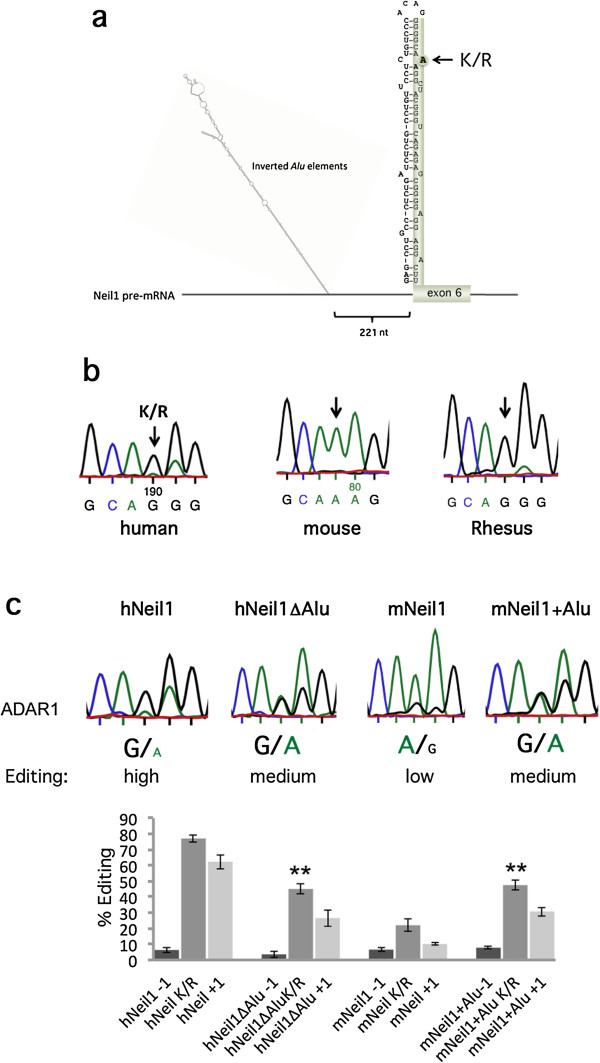
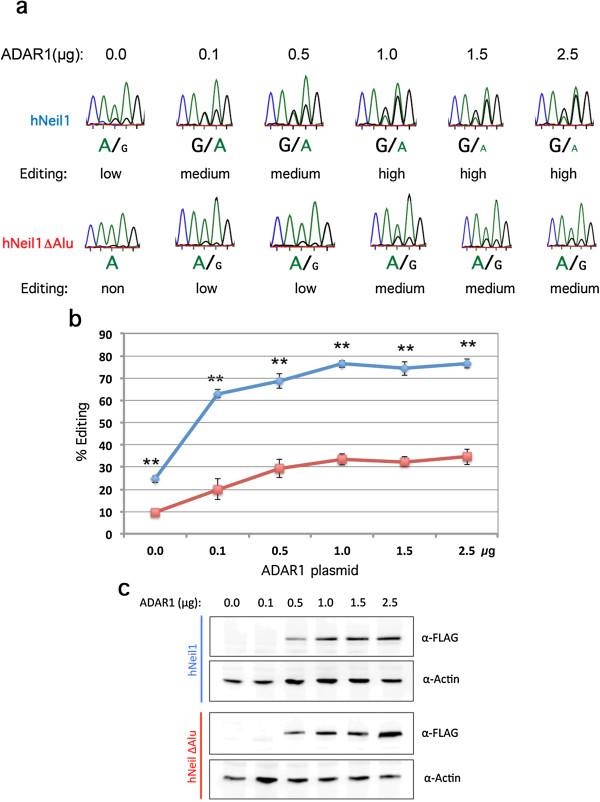
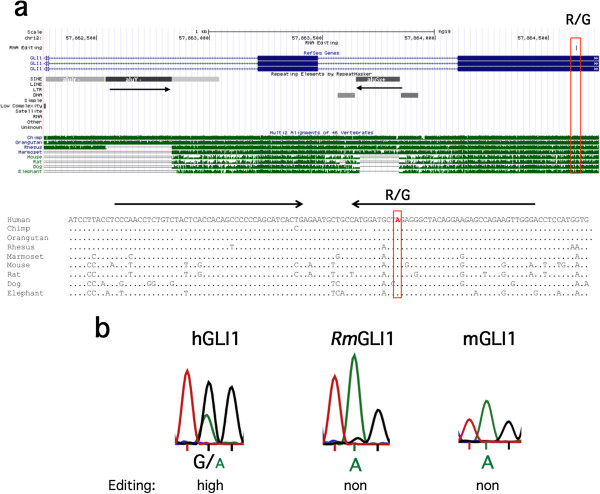
We show that inverted Alu repeats, expressed in the primate brain, can induce site-selective editing in cis on sites located several hundred nucleotides from the Alu elements. Furthermore, a computational analysis, based on available RNA-seq data, finds that site-selective editing occurs significantly closer to edited Alu elements than expected. These targets are poorly edited upon deletion of the editing inducers, as well as in homologous transcripts from organisms lacking Alus. Sequences surrounding sites near edited Alus in UTRs, have been subjected to a lesser extent of evolutionary selection than those far from edited Alus, indicating that their editing generally depends on cis-acting Alus. Interestingly, we find an enrichment of primate-specific editing within encoded sequence or the UTRs of zinc finger-containing transcription factors.
We propose a model whereby primate-specific editing is induced by adjacent Alu elements that function as recruitment elements for the ADAR editing enzymes. The enrichment of site-selective editing with potentially functional consequences on the expression of transcription factors indicates that editing contributes more profoundly to the transcriptomic regulation and repertoire in primates than previously thought.
通过腺苷脱氨转变为肌苷的RNA编辑是一种广泛存在的现象,在人类转录组中尤为常见,这主要归因于反向Alu重复序列的存在及其形成双链结构的能力——这是ADAR编辑的必要条件。虽然在这些灵长类动物特有的重复序列中已鉴定出数十万处编辑位点,但Alu编辑的功能尚未阐明。
我们发现,在灵长类动物大脑中表达的反向Alu重复序列可在顺式作用下,对距离Alu元件数百个核苷酸处的位点进行位点选择性编辑。此外,基于现有RNA测序数据的计算分析发现,位点选择性编辑发生的位置比预期更靠近被编辑的Alu元件。在缺失编辑诱导剂后,以及在缺乏Alu元件的生物体的同源转录本中,这些靶点的编辑程度较低。UTR中靠近被编辑Alu元件的位点周围序列,与远离被编辑Alu元件的序列相比,经历的进化选择程度较低,这表明它们的编辑通常依赖于顺式作用的Alu元件。有趣的是,我们发现编码序列或含锌指转录因子的UTR内存在丰富的灵长类动物特有的编辑。
我们提出了一个模型,即灵长类动物特有的编辑是由相邻的Alu元件诱导的,这些Alu元件作为ADAR编辑酶的招募元件发挥作用。位点选择性编辑在转录因子表达上具有潜在功能后果,这一现象的富集表明,编辑对灵长类动物转录组调控和组成的贡献比之前认为的更为深远。