Department of Statistics, Universidade Federal de Minas Gerais, Belo Horizonte/MG, Brazil.
Int J Health Geogr. 2010 Oct 29;9:55. doi: 10.1186/1476-072X-9-55.
Irregularly shaped spatial clusters are difficult to delineate. A cluster found by an algorithm often spreads through large portions of the map, impacting its geographical meaning. Penalized likelihood methods for Kulldorff's spatial scan statistics have been used to control the excessive freedom of the shape of clusters. Penalty functions based on cluster geometry and non-connectivity have been proposed recently. Another approach involves the use of a multi-objective algorithm to maximize two objectives: the spatial scan statistics and the geometric penalty function.
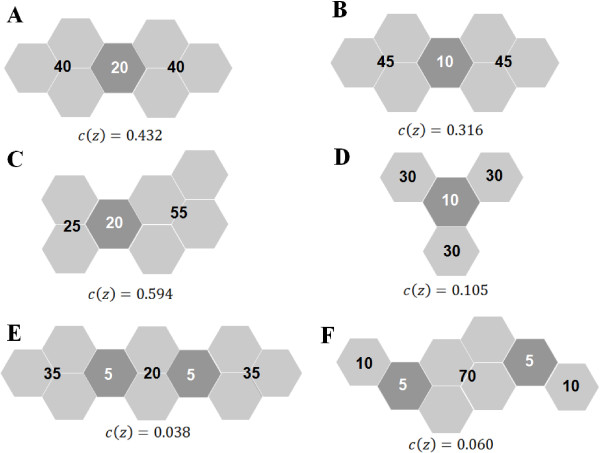
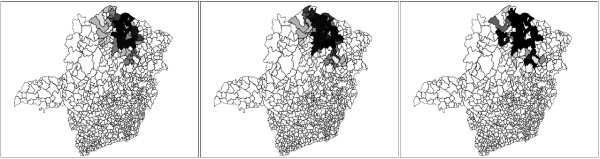
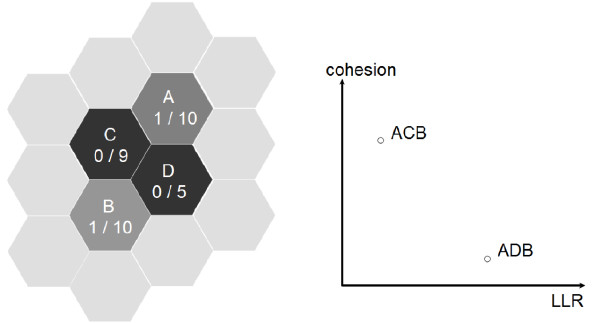
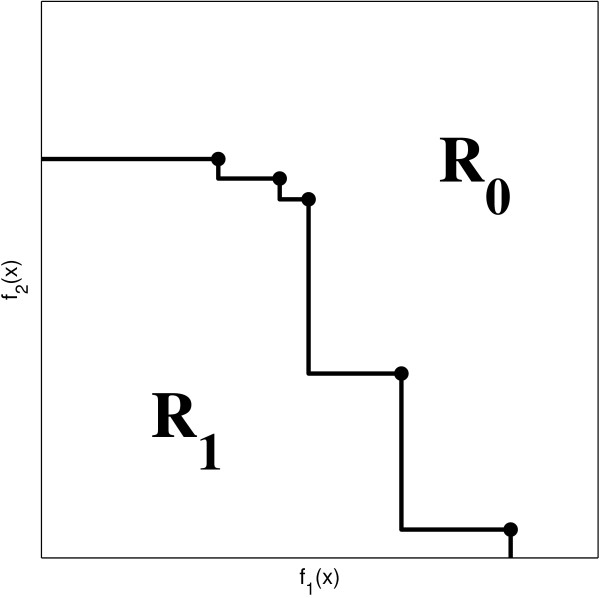
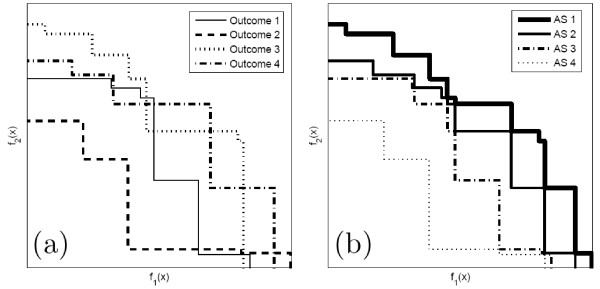
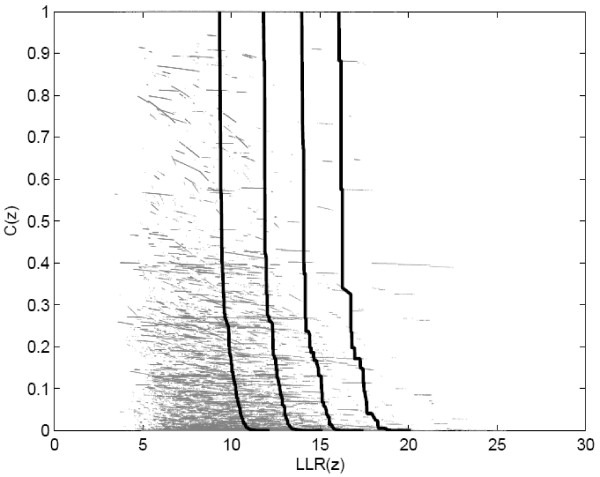
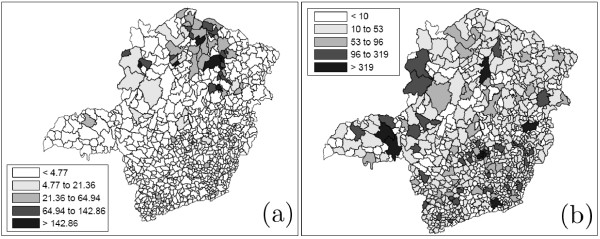
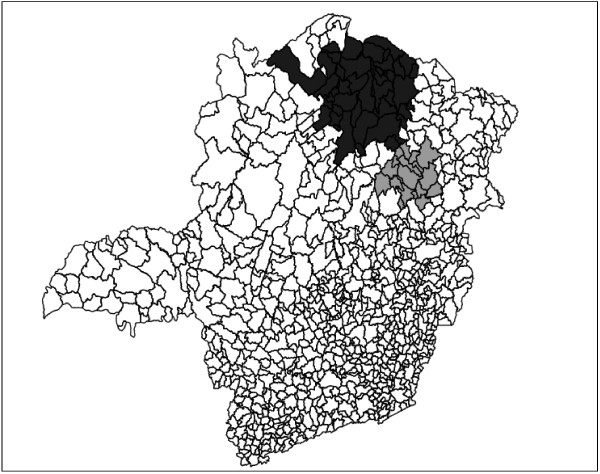
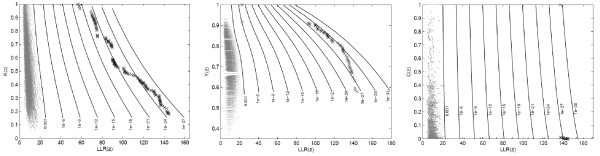
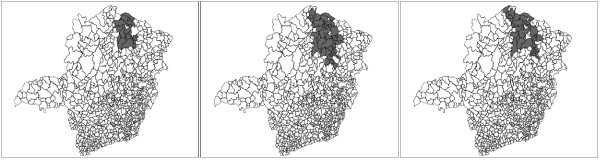
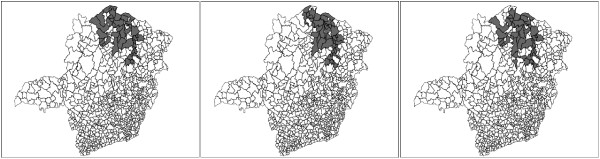
RESULTS & DISCUSSION: We present a novel scan statistic algorithm employing a function based on the graph topology to penalize the presence of under-populated disconnection nodes in candidate clusters, the disconnection nodes cohesion function. A disconnection node is defined as a region within a cluster, such that its removal disconnects the cluster. By applying this function, the most geographically meaningful clusters are sifted through the immense set of possible irregularly shaped candidate cluster solutions. To evaluate the statistical significance of solutions for multi-objective scans, a statistical approach based on the concept of attainment function is used. In this paper we compared different penalized likelihoods employing the geometric and non-connectivity regularity functions and the novel disconnection nodes cohesion function. We also build multi-objective scans using those three functions and compare them with the previous penalized likelihood scans. An application is presented using comprehensive state-wide data for Chagas' disease in puerperal women in Minas Gerais state, Brazil.
We show that, compared to the other single-objective algorithms, multi-objective scans present better performance, regarding power, sensitivity and positive predicted value. The multi-objective non-connectivity scan is faster and better suited for the detection of moderately irregularly shaped clusters. The multi-objective cohesion scan is most effective for the detection of highly irregularly shaped clusters.
不规则形状的空间聚类难以划定。算法发现的聚类通常会在地图的很大一部分传播,影响其地理意义。Kulldorff 的空间扫描统计的惩罚似然方法已被用于控制聚类形状的过度自由度。最近提出了基于聚类几何形状和非连通性的惩罚函数。另一种方法涉及使用多目标算法来最大化两个目标:空间扫描统计和几何惩罚函数。
我们提出了一种新的扫描统计算法,该算法使用基于图拓扑的函数来惩罚候选聚类中存在的人口不足的断开节点,即断开节点凝聚函数。断开节点定义为聚类中的一个区域,移除该区域会使聚类断开。通过应用此函数,可以通过大量可能的不规则候选聚类解决方案筛选出最具地理意义的聚类。为了评估多目标扫描解决方案的统计显著性,我们使用基于实现函数概念的统计方法。在本文中,我们比较了不同的惩罚似然,使用了几何和非连通性正则函数以及新的断开节点凝聚函数。我们还使用这三个函数构建了多目标扫描,并将其与以前的惩罚似然扫描进行了比较。我们展示了,与其他单目标算法相比,多目标扫描在功效、敏感性和阳性预测值方面表现更好。多目标非连通性扫描速度更快,更适合检测中度不规则形状的聚类。多目标凝聚性扫描最适合检测高度不规则形状的聚类。