Collaborative Anti-Viral Research Group, Institute of Molecular and Cell Biology, Singapore.
Microbes Infect. 2011 Feb;13(2):179-88. doi: 10.1016/j.micinf.2010.10.017. Epub 2010 Oct 28.
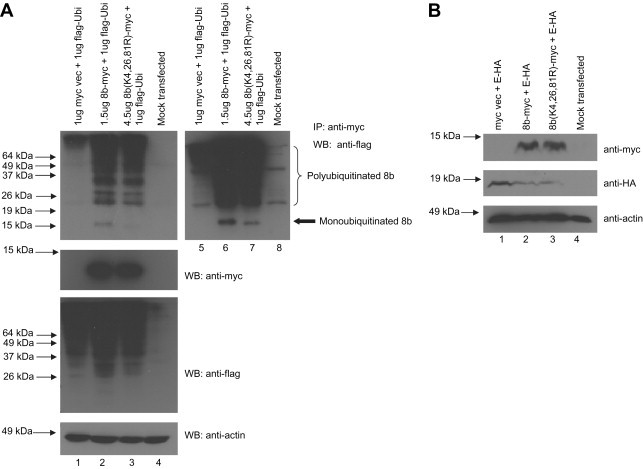
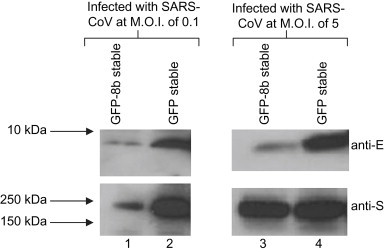
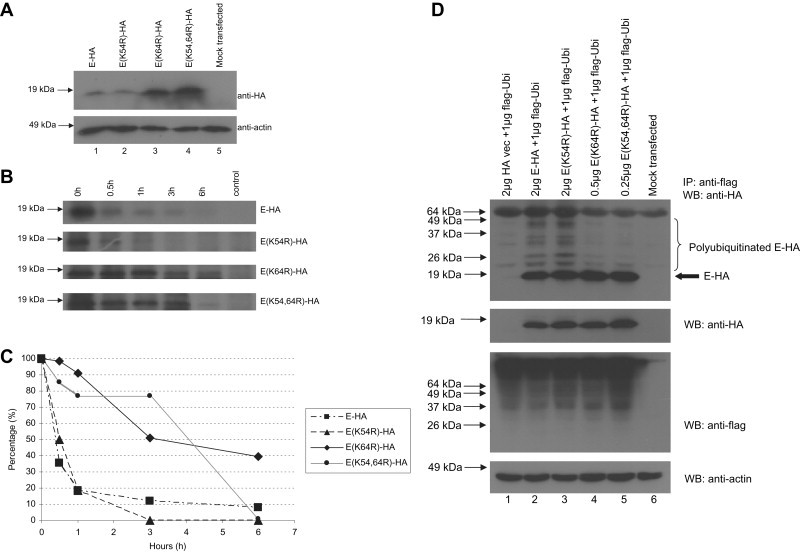
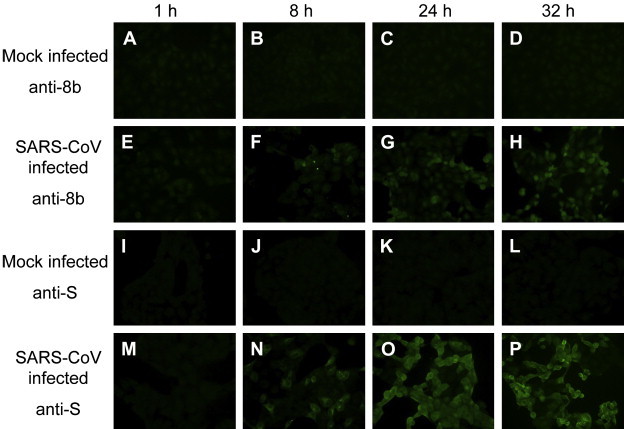
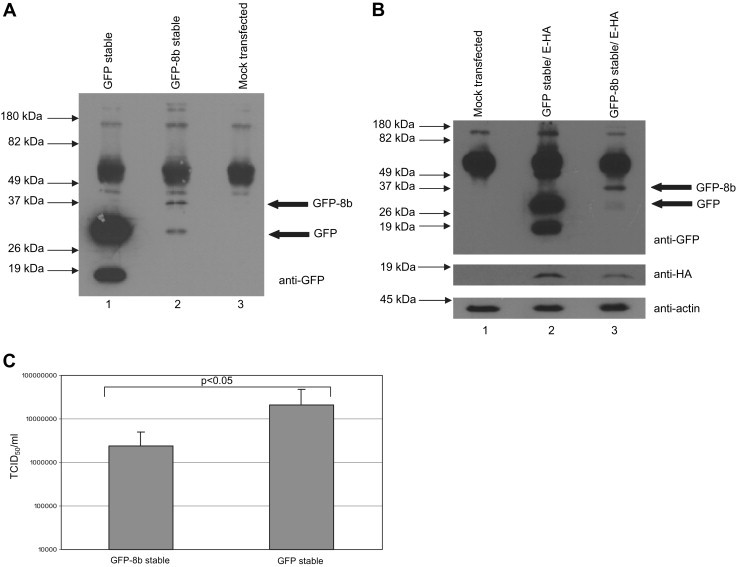
The severe acute respiratory syndrome coronavirus (SARS-CoV) 8b protein, which is not expressed by other known coronaviruses, can down-regulate the envelope (E) protein via a proteasome-dependent pathway. Here, we showed that the down-regulation of E is not dependent on the lysine residues on 8b and the reduction of polyubiquitination of E mutants is not correlated with their down-regulation by 8b, suggesting an ubiquitin-independent proteasome pathway is involved. A time-course study revealed that 8b was expressed at late-stages of SARS-CoV infection. By using Vero E6 cells stably expressing green fluorescence protein-tagged 8b, ectopic expression of 8b was shown to significantly reduce the production of progeny virus and down-regulate E expression. Taken together, these results suggest that 8b negatively modulates virus replication by down-regulating E via an ubiquitin-independent proteasome pathway.
严重急性呼吸综合征冠状病毒(SARS-CoV)的 8b 蛋白,这是不由其他已知的冠状病毒表达,可以下调包膜(E)蛋白通过蛋白酶体依赖途径。在这里,我们表明 E 的下调并不依赖于 8b 上的赖氨酸残基和 E 突变体的多泛素化的减少与它们的下调不相关,这表明一个非泛素依赖的蛋白酶体途径参与。时间进程研究表明,8b 在 SARS-CoV 感染的晚期表达。通过使用绿色荧光蛋白标记的 8b 稳定表达的 Vero E6 细胞,异位表达 8b 显著降低了病毒的产量并下调了 E 的表达。综上所述,这些结果表明,8b 通过非泛素依赖的蛋白酶体途径下调 E 来负调控病毒复制。