Department of Pathology and Cell Biology, Columbia University, College of Physicians & Surgeons, New York, New York, USA.
Nat Neurosci. 2010 Dec;13(12):1463-71. doi: 10.1038/nn.2665. Epub 2010 Oct 31.
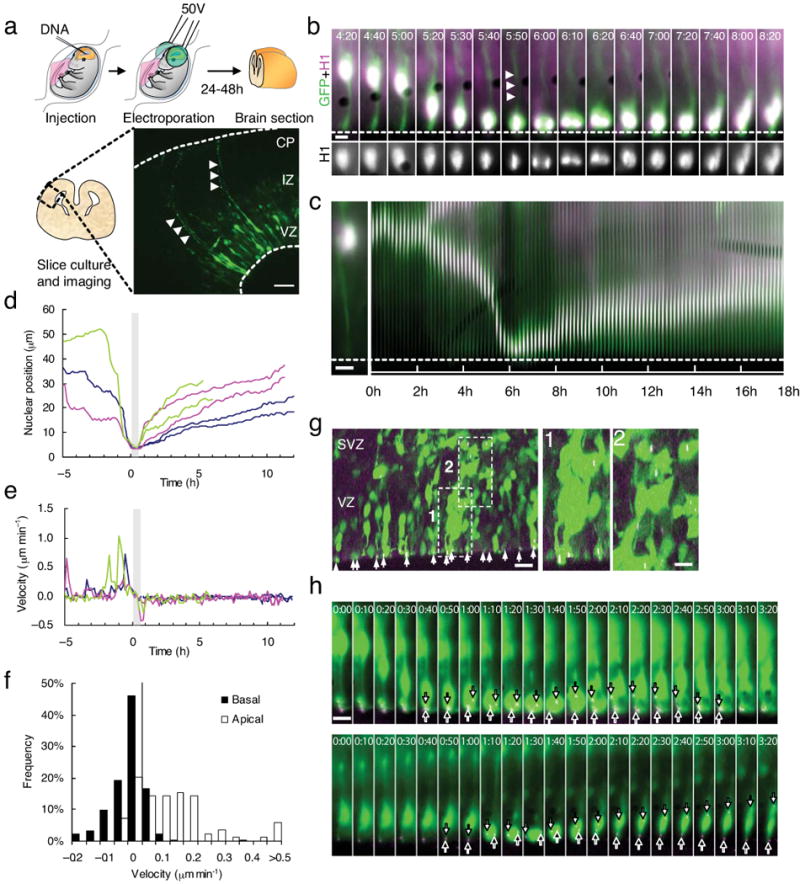
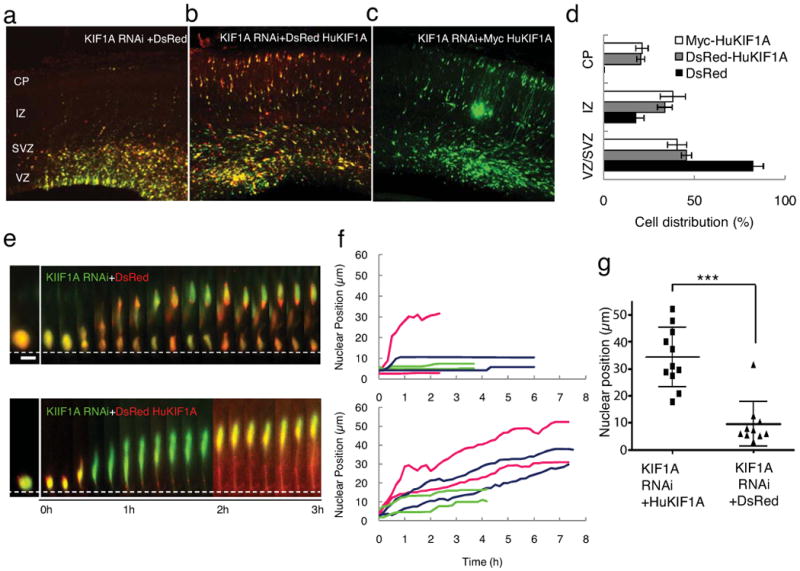
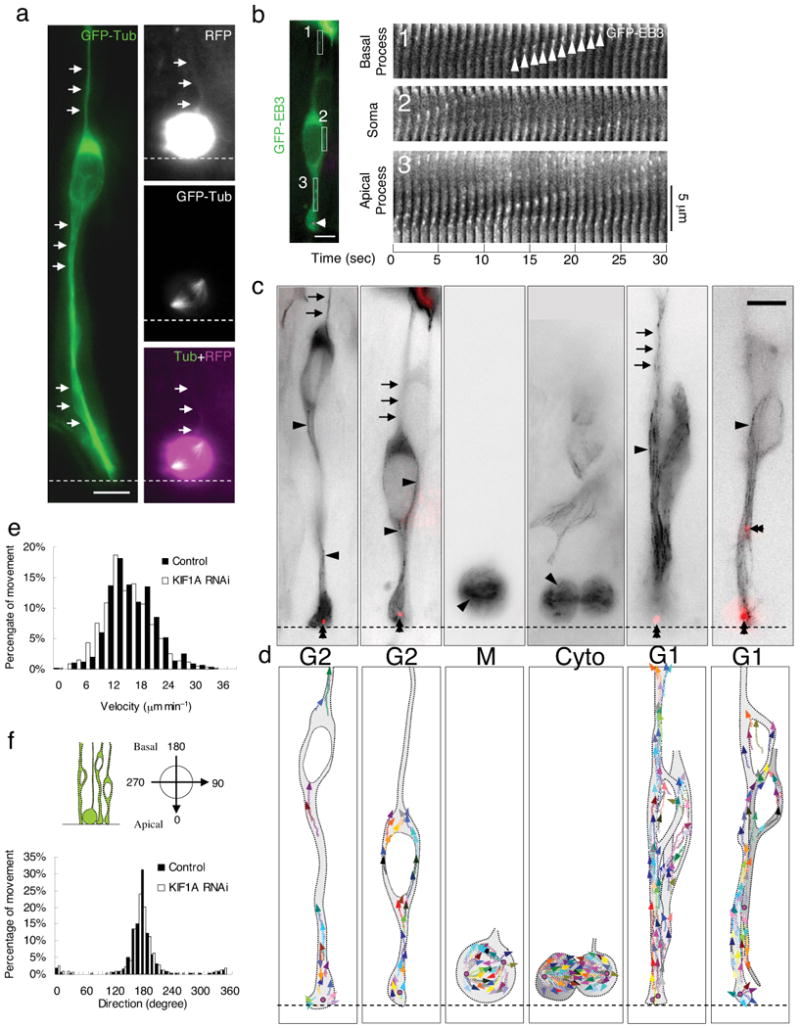
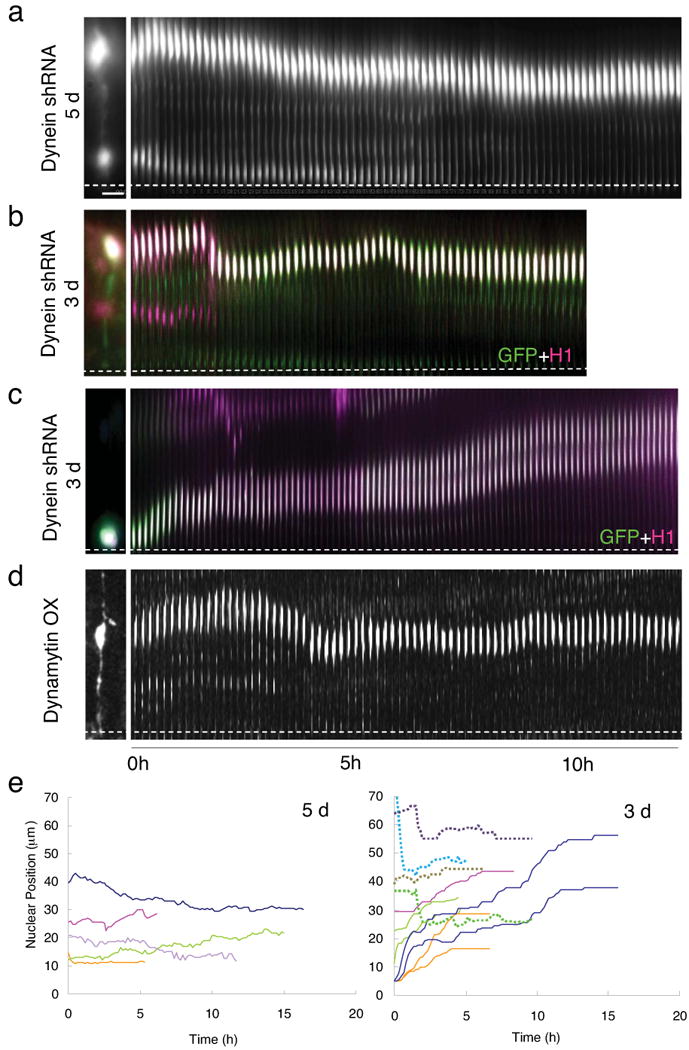
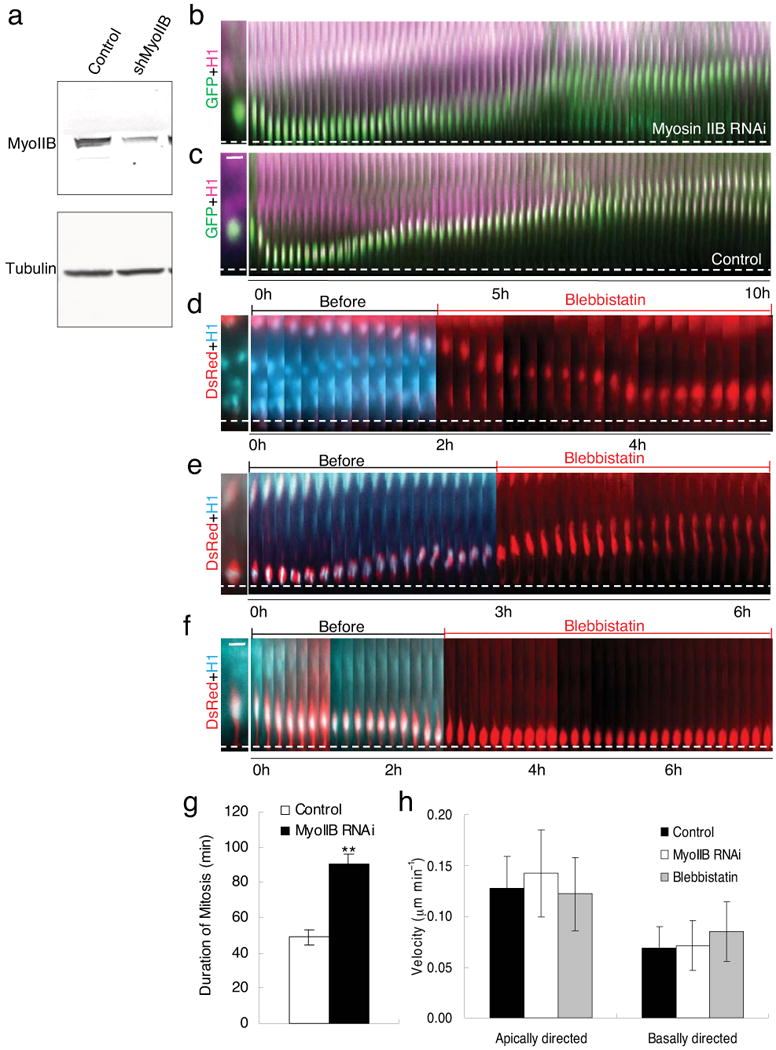
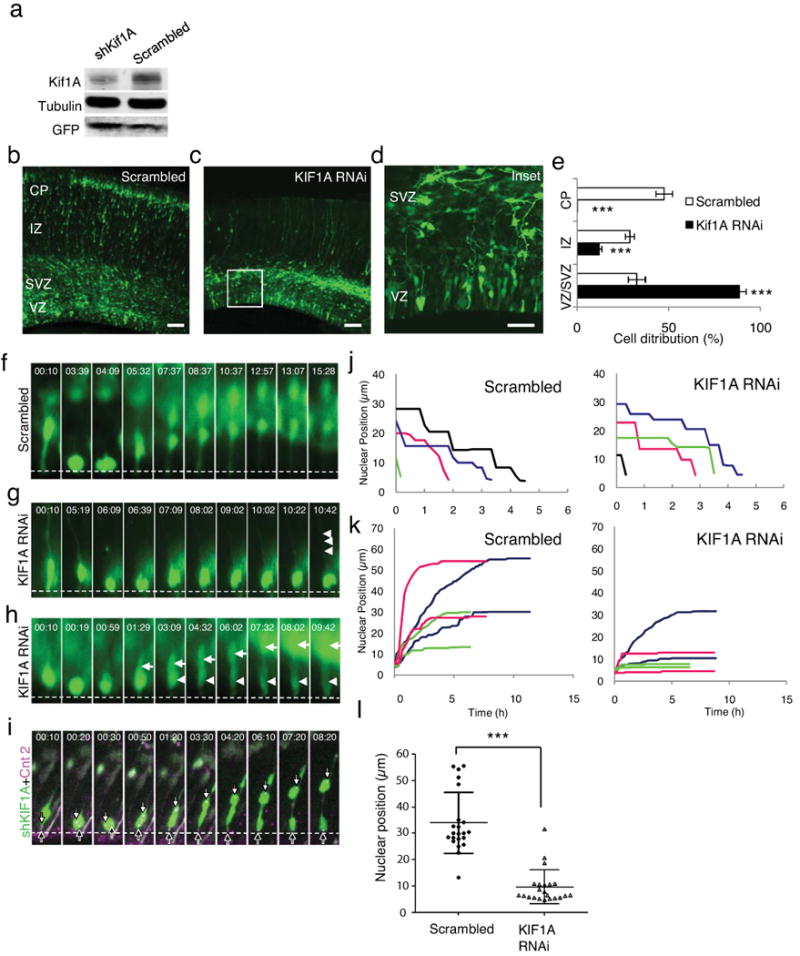
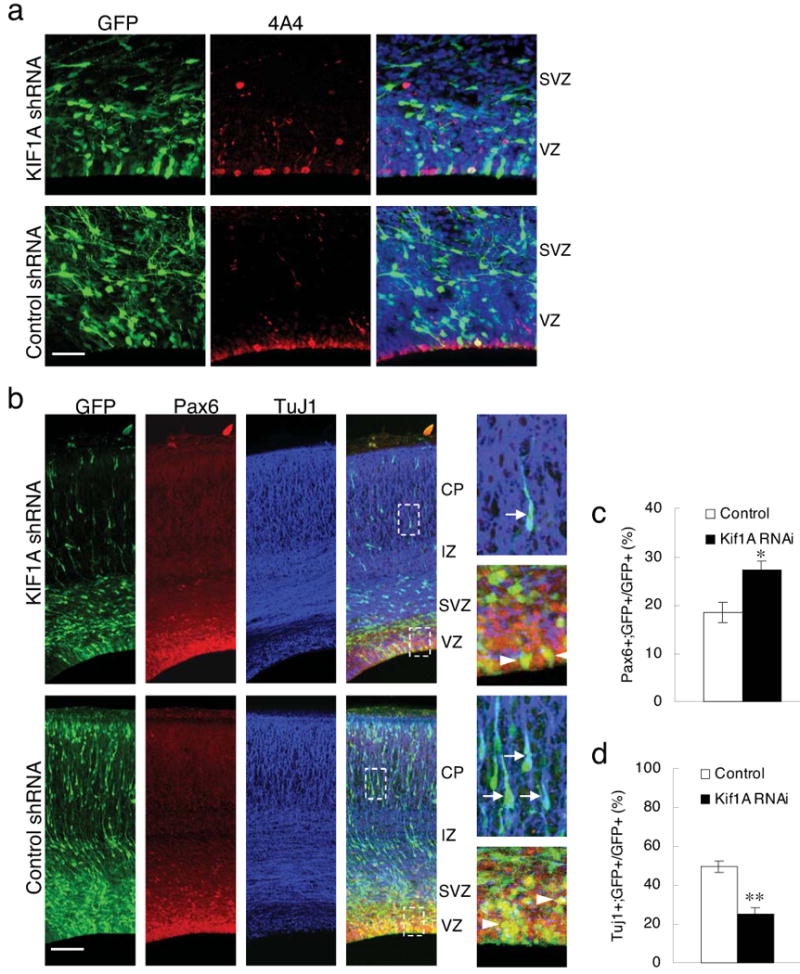
Radial glial progenitor cells exhibit bidirectional cell cycle-dependent nuclear oscillations. The purpose and underlying mechanism of this unusual 'interkinetic nuclear migration' are poorly understood. We investigated the basis for this behavior by live imaging of nuclei, centrosomes and microtubules in embryonic rat brain slices, coupled with the use of RNA interference (RNAi) and the myosin inhibitor blebbistatin. We found that nuclei migrated independent of centrosomes and unidirectionally away from or toward the ventricular surface along microtubules, which were uniformly oriented from the ventricular surface to the pial surface of the brain. RNAi directed against cytoplasmic dynein specifically inhibited nuclear movement toward the apical surface. An RNAi screen of kinesin genes identified Kif1a, a member of the kinesin-3 family, as the motor for basally directed nuclear movement. These observations provide direct evidence that kinesins are involved in nuclear migration and neurogenesis and suggest that a cell cycle-dependent switch between distinct microtubule motors drives interkinetic nuclear migration.
放射状胶质祖细胞表现出双向细胞周期依赖性核振荡。这种不寻常的“核往返迁移”的目的和潜在机制还了解甚少。我们通过对胚胎大鼠脑片的核、中心体和微管进行实时成像,并结合 RNA 干扰(RNAi)和肌球蛋白抑制剂 blebbistatin 的使用,研究了这种行为的基础。我们发现核沿着微管独立于中心体并单向地远离或朝向脑室表面迁移,微管从脑室表面到大脑的软脑膜表面均匀取向。针对细胞质动力蛋白的 RNAi 特异性抑制了核朝向顶端表面的运动。针对驱动蛋白基因的 RNAi 筛选鉴定出 Kif1a,即驱动蛋白-3 家族的成员,是基底定向核运动的马达。这些观察结果提供了直接证据,表明驱动蛋白参与核迁移和神经发生,并表明细胞周期依赖性的微管马达之间的转换驱动核往返迁移。