Department of Pathology, University of Iowa Carver College of Medicine, Iowa City, USA.
Alcohol Clin Exp Res. 2011 Jan;35(1):47-59. doi: 10.1111/j.1530-0277.2010.01321.x. Epub 2010 Oct 6.
As initiators of immune responses, dendritic cells (DCs) are required for antigen (Ag)-specific activation of naïve T cells in the defense against infectious agents. The increased susceptibility to and severity of infection seen in chronic alcoholics could be because of impaired DCs initiation of naïve T-cell responses. Specifically, these DCs may not provide adequate Signals 1 (Ag presentation), 2 (costimulation), or 3 (cytokine production) to these T cells.
Using the Meadows-Cook murine model of chronic alcohol abuse, the ability of ethanol (EtOH)-exposed DCs to stimulate T-cell proliferation, acquire and process Ag, express costimulatory molecules, and produce inflammatory cytokines was assessed.
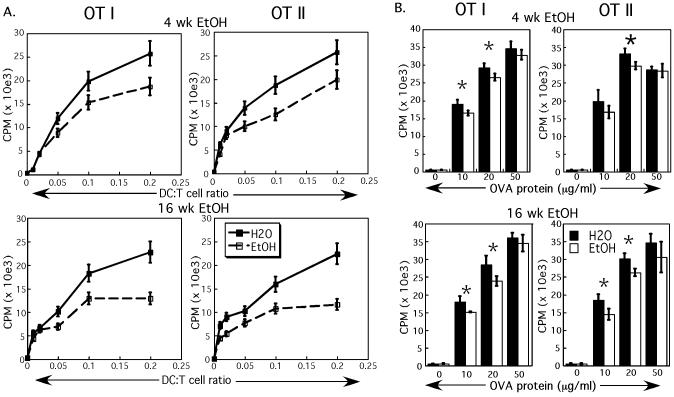
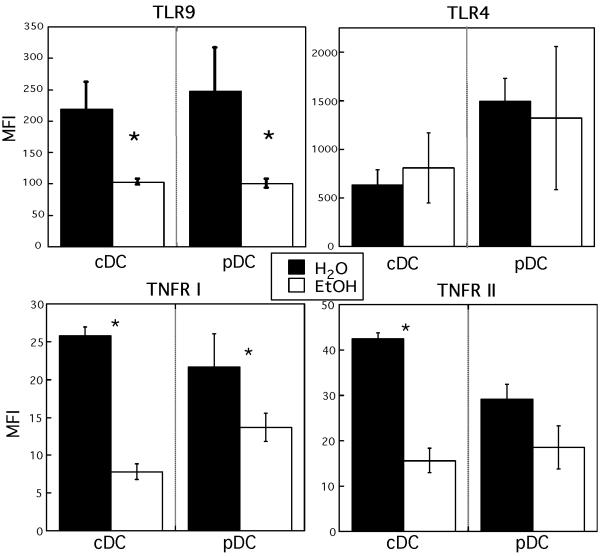
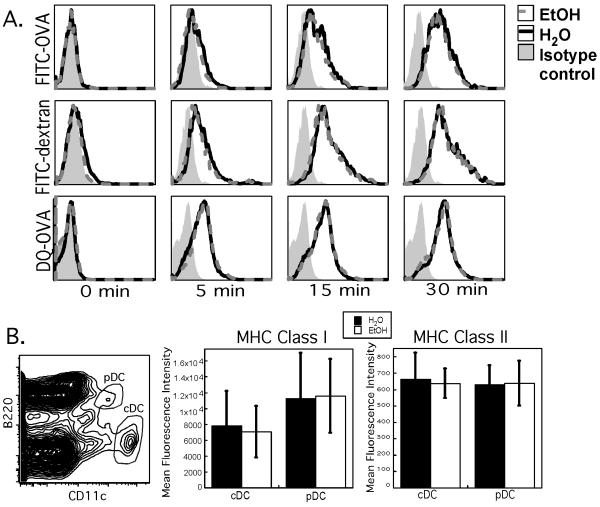
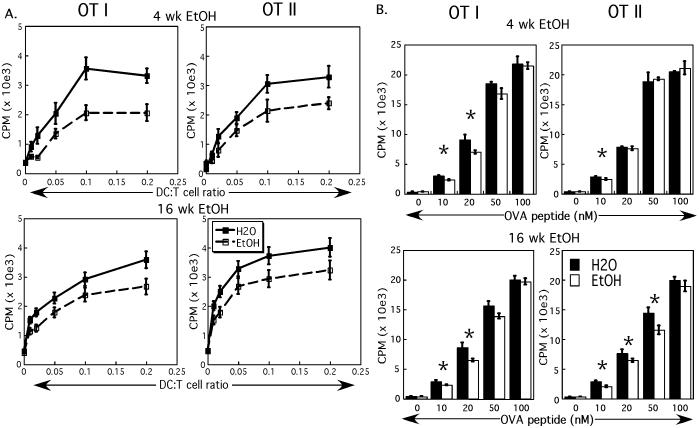
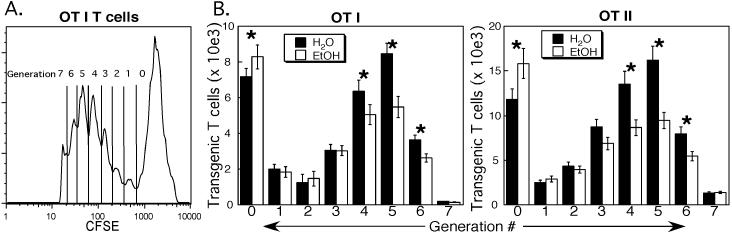
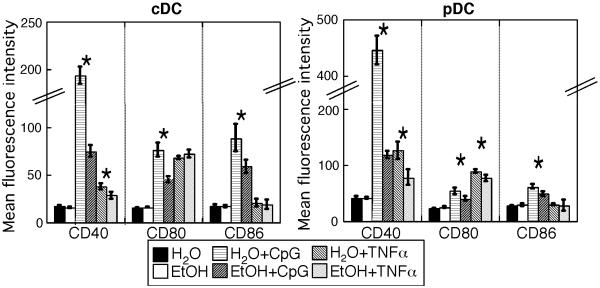
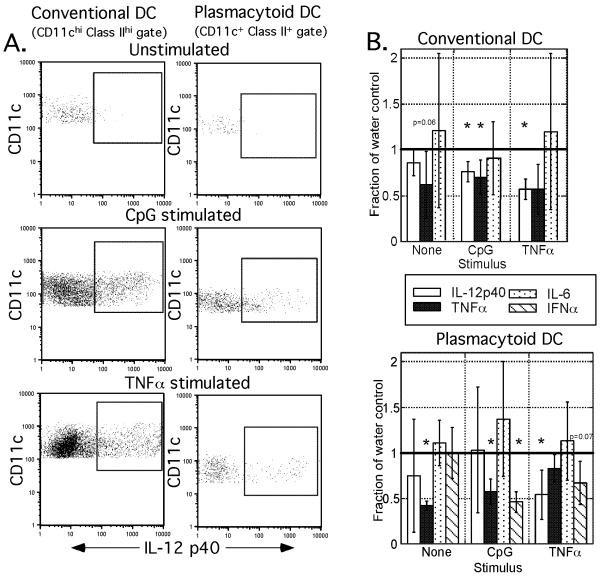
Normal naïve T cells primed by EtOH-exposed DCs showed decreased proliferation in vitro and in vivo, compared to water-fed control mice. These EtOH-exposed DCs, after activation by CpG or tumor necrosis factor alpha (TNFα), were less able to upregulate costimulatory molecules CD40, CD80, or CD86, and produced less IL-12 p40, TNFα, and IFNα than DCs from water-fed mice. TLR9 and TNF receptor expression were also reduced in/on EtOH-exposed DCs. No evidence of defective Ag acquisition or processing as a result of EtOH feeding was identified.
Inadequate proliferation of normal T cells following stimulation by EtOH-exposed DCs is likely a result of diminished Signal 2 and Signal 3. Lack of adequate inflammatory stimulation of EtOH-exposed DCs because of diminished receptors for inflammatory mediators appears to be at least partially responsible for their dysfunction. These findings provide a mechanism to explain increased morbidity and mortality from infectious diseases in alcoholics and suggest targets for therapeutic intervention.
作为免疫反应的启动者,树突状细胞(DCs)在防御感染因子时,需要对幼稚 T 细胞进行抗原(Ag)特异性激活。慢性酒精中毒者对感染的易感性增加和严重程度增加可能是由于 DCs 启动幼稚 T 细胞反应受损所致。具体来说,这些 DCs 可能无法向这些 T 细胞提供足够的信号 1(Ag 呈递)、信号 2(共刺激)或信号 3(细胞因子产生)。
使用 Meadows-Cook 慢性酒精滥用小鼠模型,评估乙醇(EtOH)暴露的 DC 刺激 T 细胞增殖、摄取和处理 Ag、表达共刺激分子以及产生炎症细胞因子的能力。
与水喂养对照小鼠相比,由 EtOH 暴露的 DC 初始的正常幼稚 T 细胞在体外和体内显示出增殖减少。这些 EtOH 暴露的 DC 在 CpG 或肿瘤坏死因子-α(TNFα)激活后,上调共刺激分子 CD40、CD80 或 CD86 的能力降低,并且产生的 IL-12 p40、TNFα 和 IFNα 比水喂养小鼠的 DC 少。TLR9 和 TNF 受体的表达也在 EtOH 暴露的 DC 中减少。没有证据表明由于 EtOH 喂养导致 Ag 摄取或处理缺陷。
由 EtOH 暴露的 DC 刺激后正常 T 细胞增殖不足可能是信号 2 和信号 3 减少的结果。由于炎症介质受体减少,EtOH 暴露的 DC 缺乏足够的炎症刺激,这似乎至少部分是其功能障碍的原因。这些发现为解释酒精中毒患者中传染病发病率和死亡率增加提供了一种机制,并提示了治疗干预的目标。