Department of Medicine and Radiology, Memorial Sloan-Kettering Cancer Center, New York, NY 10065, USA.
Int J Nanomedicine. 2010 Oct 5;5:783-802. doi: 10.2147/IJN.S13300.
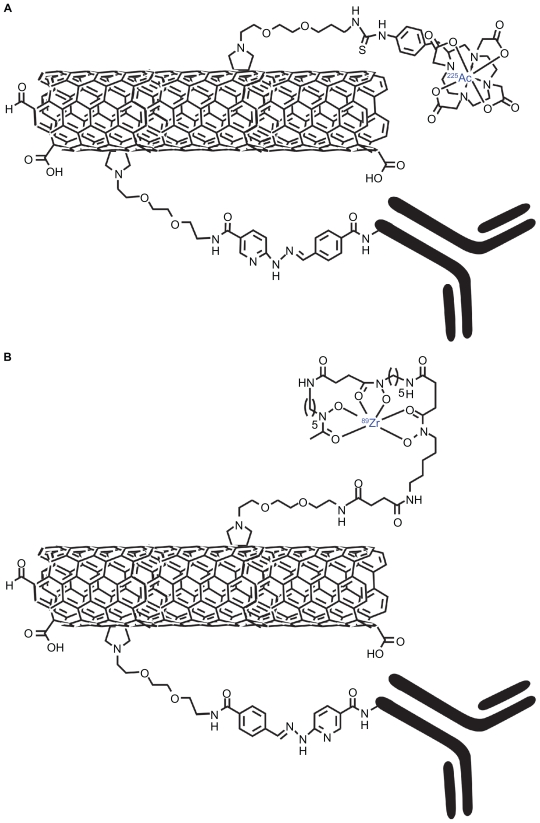
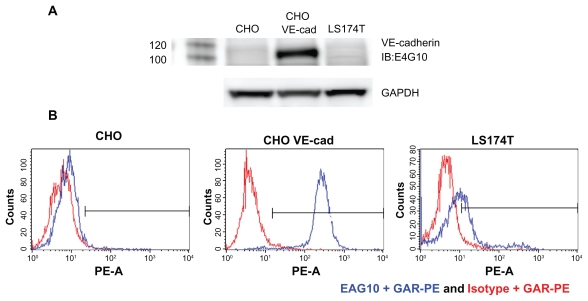
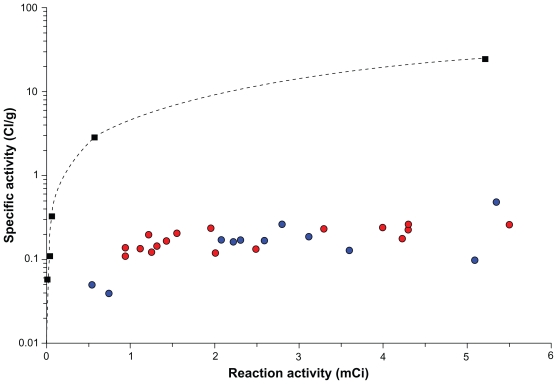
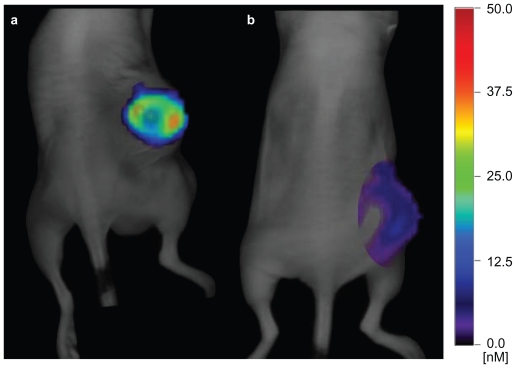
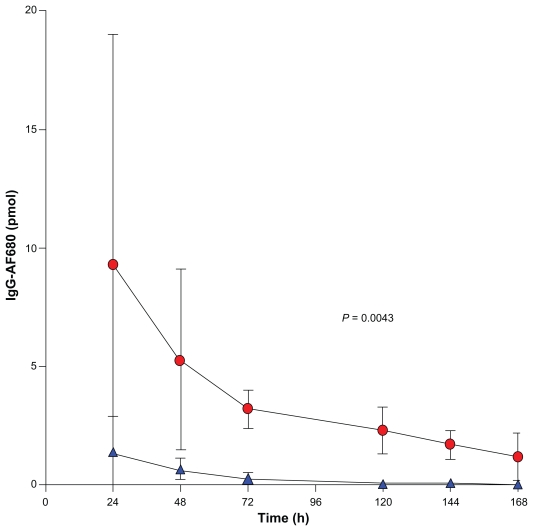
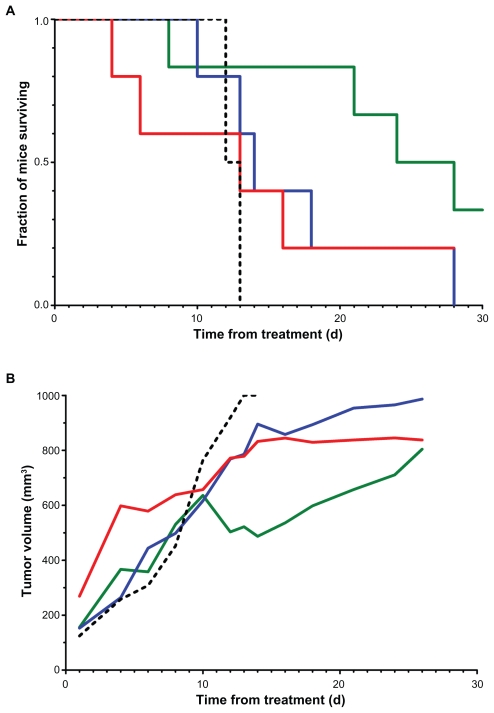
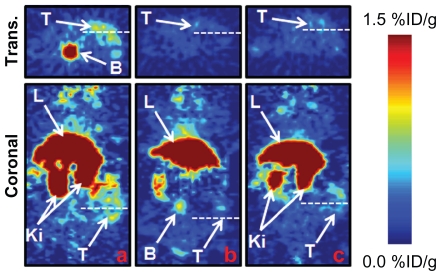
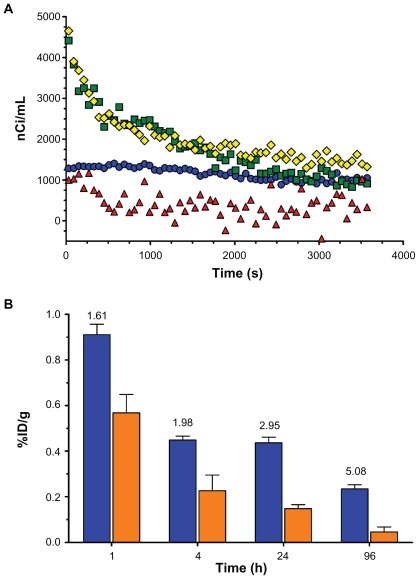
Single wall carbon nanotube (SWCNT) constructs were covalently appended with radiometal-ion chelates (1,4,7,10-tetraazacyclododecane-1,4,7,10-tetraacetic acid [DOTA] or desferrioxamine B [DFO]) and the tumor neovascular-targeting antibody E4G10. The E4G10 antibody specifically targeted the monomeric vascular endothelial-cadherin (VE-cad) epitope expressed in the tumor angiogenic vessels. The construct specific activity and blood compartment clearance kinetics were significantly improved relative to corresponding antibodyalone constructs. We performed targeted radioimmunotherapy with a SWCNT-([(225)Ac]DOTA) (E4G10) construct directed at the tumor vasculature in a murine xenograft model of human colon adenocarcinoma (LS174T). The specific construct reduced tumor volume and improved median survival relative to controls. We also performed positron emission tomographic (PET) radioimmunoimaging of the tumor vessels with a SWCNT-([(89)Zr]DFO)(E4G10) construct in the same murine LS174T xenograft model and compared the results to appropriate controls. Dynamic and longitudinal PET imaging of LS174T tumor-bearing mice demonstrated rapid blood clearance (<1 hour) and specific tumor accumulation of the specific construct. Incorporation of the SWCNT scaffold into the construct design permitted us to amplify the specific activity to improve the signal-to-noise ratio without detrimentally impacting the immunoreactivity of the targeting antibody moiety. Furthermore, we were able to exploit the SWCNT pharmacokinetic (PK) profile to favorably alter the blood clearance and provide an advantage for rapid imaging. Near-infrared three-dimensional fluorescent-mediated tomography was used to image the LS174T tumor model, collect antibody-alone PK data, and calculate the number of copies of VE-cad epitope per cell. All of these studies were performed as a single administration of construct and were found to be safe and well tolerated by the murine model. These data have implications that support further imaging and radiotherapy studies using a SWCNT-based platform and focusing on the tumor vessels as the target.
单壁碳纳米管 (SWCNT) 结构物通过共价键与放射性金属离子螯合物(1,4,7,10-四氮杂环十二烷-1,4,7,10-四乙酸 [DOTA] 或去铁胺 B [DFO])和肿瘤新生血管靶向抗体 E4G10 结合。E4G10 抗体特异性靶向肿瘤血管生成血管中表达的单体血管内皮钙黏蛋白 (VE-cad) 表位。与相应的抗体单独构建物相比,构建物的特异性活性和血液区室清除动力学得到了显著改善。我们在人结肠腺癌(LS174T)的小鼠异种移植模型中,使用靶向肿瘤血管的 SWCNT-([(225)Ac]DOTA)(E4G10)构建物进行了靶向放射性免疫治疗。与对照组相比,特异性构建物减少了肿瘤体积并延长了中位生存时间。我们还使用 SWCNT-([(89)Zr]DFO)(E4G10) 构建物在相同的小鼠 LS174T 异种移植模型中对肿瘤血管进行了正电子发射断层扫描(PET)放射性免疫成像,并将结果与适当的对照组进行了比较。LS174T 荷瘤小鼠的动态和纵向 PET 成像显示,特异性构建物具有快速的血液清除(<1 小时)和特异性肿瘤积累。将 SWCNT 支架纳入构建物设计中,使我们能够放大特异性活性,提高信噪比,而不会损害靶向抗体部分的免疫反应性。此外,我们能够利用 SWCNT 的药代动力学 (PK) 谱来有利地改变血液清除率,并为快速成像提供优势。近红外三维荧光介导断层扫描用于对 LS174T 肿瘤模型进行成像,收集抗体单独的 PK 数据,并计算每个细胞的 VE-cad 表位的拷贝数。所有这些研究都是在单次给药构建物后进行的,并且被发现对小鼠模型是安全且耐受良好的。这些数据表明,支持进一步使用基于 SWCNT 的平台进行成像和放射治疗研究,并将肿瘤血管作为目标。