Kennel Club Genetics Centre at the Animal Health Trust, Animal Health Trust, Newmarket, United Kingdom.
PLoS One. 2010 Oct 22;5(10):e12797. doi: 10.1371/journal.pone.0012797.
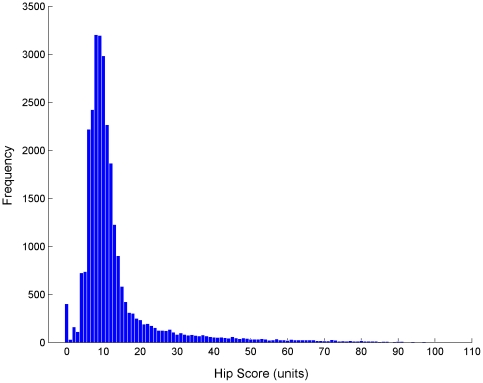
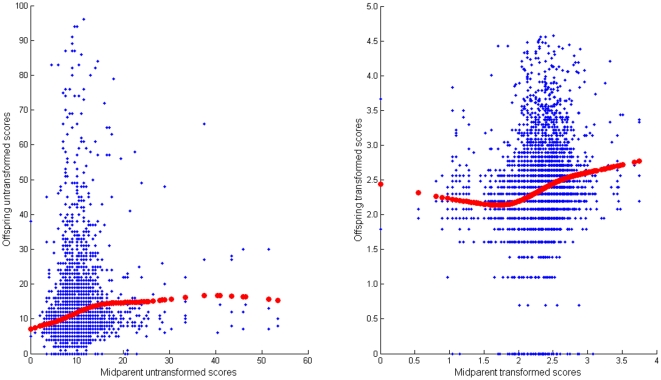
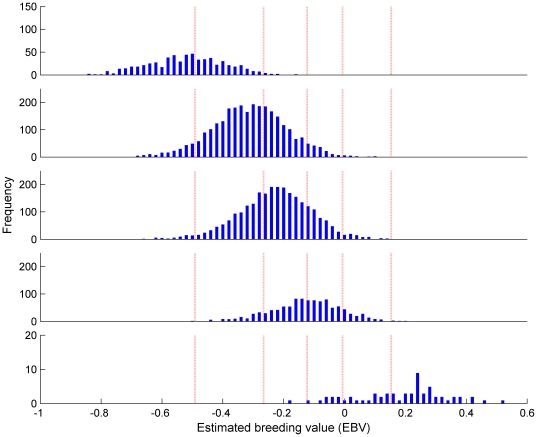
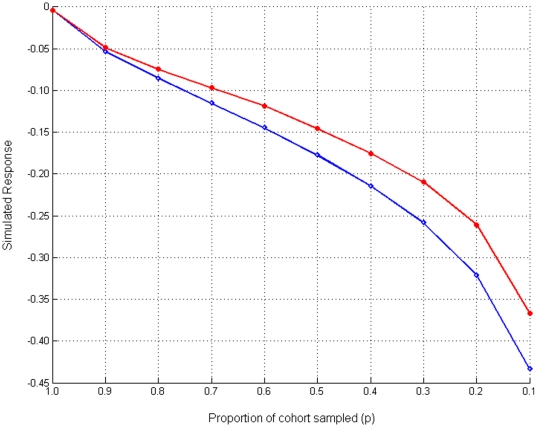
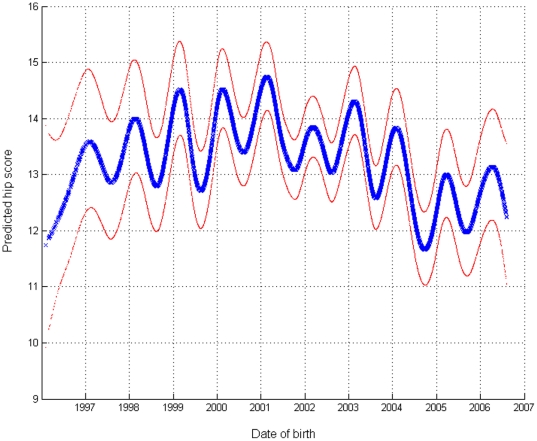
Hip dysplasia is an important and complex genetic disease in dogs with both genetic and environmental influences. Since the osteoarthritis that develops is irreversible the only way to improve welfare, through reducing the prevalence, is through genetic selection. This study aimed to evaluate the progress of selection against hip dysplasia, to quantify potential improvements in the response to selection via use of genetic information and increases in selection intensity, and to prepare for public provision of estimated breeding values (EBV) for hip dysplasia in the UK. Data consisted of 25,243 single records of hip scores of Labrador Retrievers between one and four years old, from radiographs evaluated between 2000 and 2007 as part of the British Veterinary Association (BVA) hip score scheme. A natural logarithm transformation was applied to improve normality and linear mixed models were evaluated using ASREML. Genetic correlations between left and right scores, and total hip scores at one, two and three years of age were found to be close to one, endorsing analysis of total hip score in dogs aged one to three as an appropriate approach. A heritability of 0.35±0.016 and small but significant litter effect (0.07±0.009) were estimated. The observed trends in both mean hip score and mean EBV over year of birth indicate that a small genetic improvement has been taking place, approximately equivalent to avoiding those dogs with the worst 15% of scores. Deterministic analysis supported by simulations showed that a 19% greater response could be achieved using EBV compared to phenotype through increases in accuracy alone. This study establishes that consistent but slow genetic improvement in the hip score of UK Labrador Retrievers has been achieved over the previous decade, and demonstrates that progress may be easily enhanced through the use of EBVs and more intense selection.
髋关节发育不良是一种重要且复杂的遗传性犬病,受遗传和环境因素的共同影响。由于发展为骨关节炎是不可逆转的,因此改善福利的唯一方法是通过遗传选择来降低其患病率。本研究旨在评估针对髋关节发育不良的选择进展,通过使用遗传信息和增加选择强度来量化选择反应的潜在改进,并为英国髋关节发育不良的估计育种值(EBV)的公开提供准备。数据包括 25243 条拉布拉多猎犬一至四岁髋关节评分的单记录,这些评分是 2000 年至 2007 年期间作为英国兽医协会(BVA)髋关节评分计划的一部分通过射线照相评估得出的。应用自然对数转换来改善正态性,并使用 ASREML 评估线性混合模型。发现左右髋关节评分之间以及一、二和三岁的总髋关节评分之间的遗传相关性接近 1,这支持了对一至三岁的总髋关节评分的分析是一种合适的方法。估计出的遗传力为 0.35±0.016,且存在较小但显著的窝效应(0.07±0.009)。在出生年份中观察到的平均髋关节评分和平均 EBV 的趋势表明,遗传改良一直在进行,大约相当于避免了评分最差的 15%的犬只。通过模拟支持的确定性分析表明,仅通过提高准确性,使用 EBV 相对于表型可实现 19%更大的响应。本研究确立了在过去十年中,英国拉布拉多猎犬的髋关节评分已经实现了持续但缓慢的遗传改良,并且表明通过使用 EBV 和更严格的选择,进展可以很容易地得到增强。