Department of Chemistry, MS 015, Brandeis University, Waltham, Massachusetts 02454-9110, USA.
J Org Chem. 2010 Dec 3;75(23):8224-33. doi: 10.1021/jo101826p. Epub 2010 Nov 2.
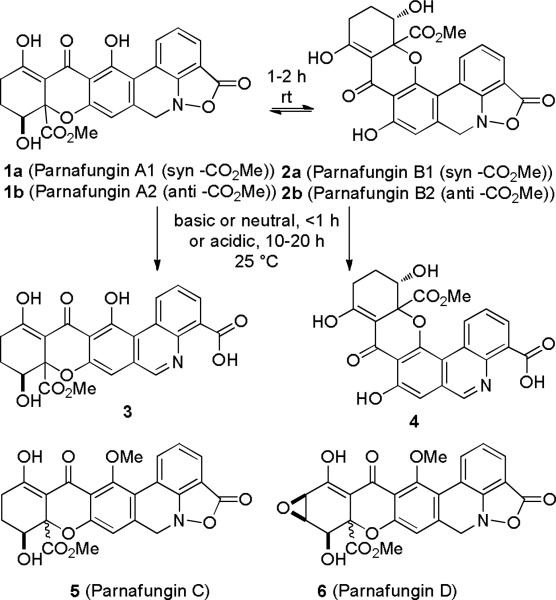
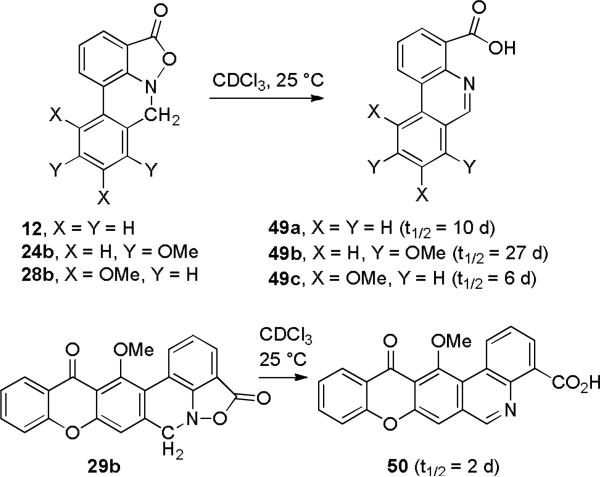
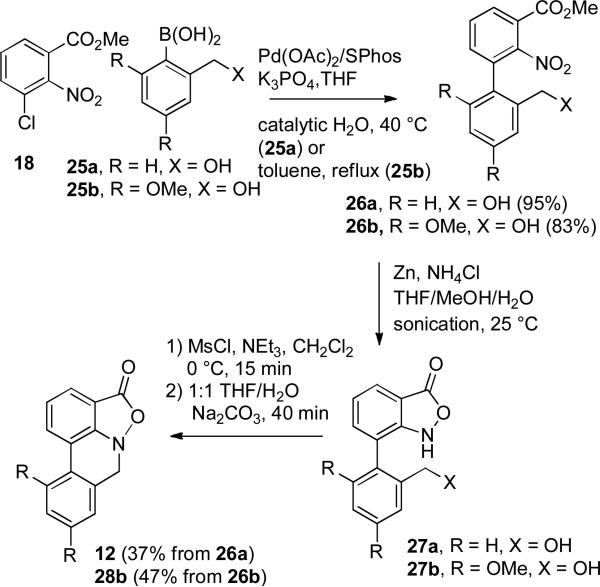
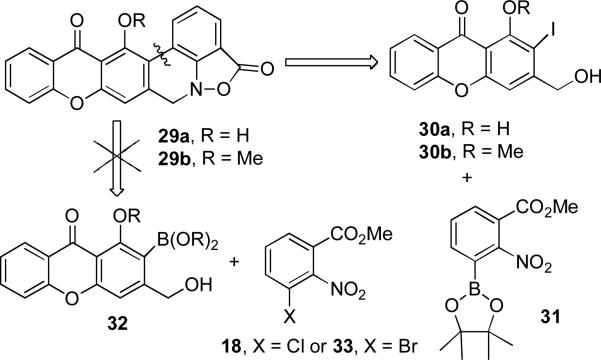
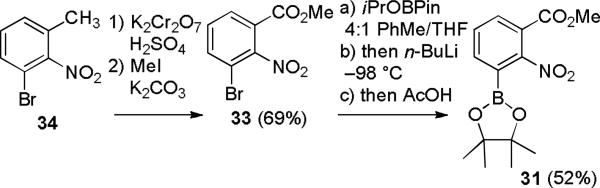
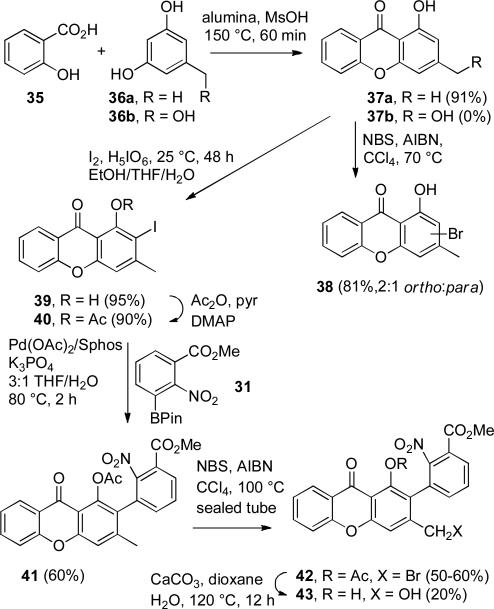
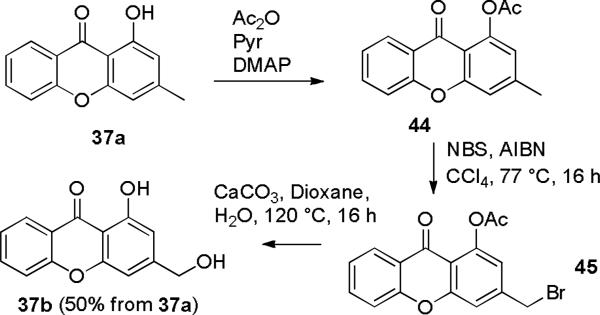
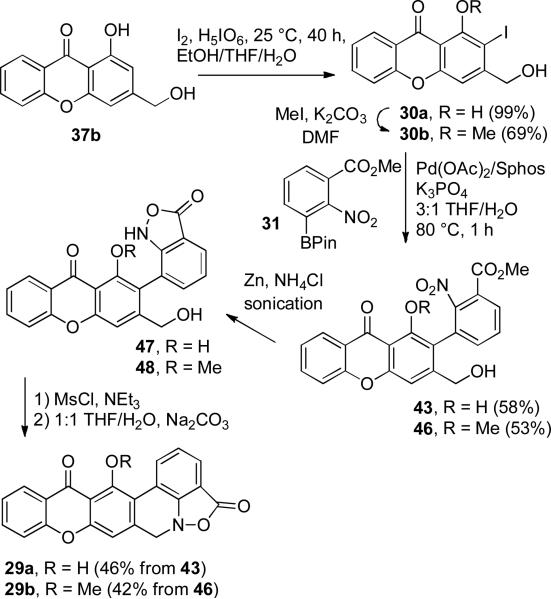
A convergent, practical route to unstable hexacyclic parnafungin A and C models has been developed. Two iodoxanthones were prepared in four or five steps (33-50% overall yield). Suzuki-Miyaura coupling of the iodoxanthones with excess readily available 3-carbomethoxy-2-nitrophenyl pinacol boronate afforded the hindered highly functionalized 2-arylxanthones (53-58%) in the first key step. In the second key step, zinc reduction gave benzisoxazolinones that were treated with MsCl and then base to generate the unstable hexacyclic parnafungin A (13% overall yield for 8 steps) and C (8% overall yield for 9 steps) models. Analogously to the parnafungins, hexacyclic parnafungin C model decomposes to a phenanthridine with a half-life of 2 d in CDCl(3).
已经开发出一种不稳定的六环巴纳芬菌素 A 和 C 模型的收敛、实用路线。两种碘二酮在四到五个步骤中制备(总收率为 33-50%)。碘二酮与过量易得的 3-甲氧基-2-硝基苯基频哪醇硼酸酯的 Suzuki-Miyaura 偶联在第一个关键步骤中提供了受阻的高度官能化的 2-芳基黄烷酮(53-58%)。在第二个关键步骤中,锌还原得到苯并异恶唑啉酮,用 MsCl 处理,然后用碱处理生成不稳定的六环巴纳芬菌素 A(8 步总收率为 13%)和 C(9 步总收率为 8%)模型。类似于巴纳芬菌素,六环巴纳芬菌素 C 模型在 CDCl(3)中分解为半衰期为 2 d 的菲啶。