Department of Neurosciences, Medical University of South Carolina, Charleston, South Carolina, United States of America.
PLoS One. 2010 Nov 10;5(11):e15475. doi: 10.1371/journal.pone.0015475.
Pavlovian conditioning plays a critical role in both drug addiction and binge eating. Recent animal research suggests that certain individuals are highly sensitive to conditioned cues, whether they signal food or drugs. Are certain humans also more reactive to both food and drug cues?
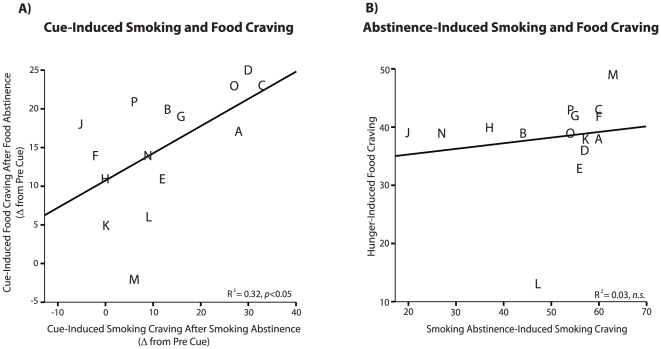
We examined cue-induced craving for both cigarettes and food, in the same individuals (n = 15 adult smokers). Subjects viewed smoking-related or food-related images after abstaining from either smoking or eating.
Certain individuals reported strong cue-induced craving after both smoking and food cues. That is, subjects who reported strong cue-induced craving for cigarettes also rated stronger cue-induced food craving.
In humans, like in nonhumans, there may be a "cue-reactive" phenotype, consisting of individuals who are highly sensitive to conditioned stimuli. This finding extends recent reports from nonhuman studies. Further understanding this subgroup of smokers may allow clinicians to individually tailor therapies for smoking cessation.
巴甫洛夫条件反射在药物成瘾和暴食症中都起着关键作用。最近的动物研究表明,某些人对条件线索非常敏感,无论是食物还是药物的信号。某些人对食物和药物线索是否也更敏感?
我们在同一批个体(15 名成年吸烟者)中检查了对香烟和食物的条件性渴望。受试者在戒烟或禁食后观看与吸烟或食物相关的图像。
某些人在吸烟和食物线索后都报告了强烈的条件性渴望。也就是说,对香烟有强烈条件性渴望的受试者也对食物有更强的条件性渴望。
在人类中,就像在非人类中一样,可能存在一种“线索反应”表型,由对条件刺激高度敏感的个体组成。这一发现扩展了最近非人类研究的报告。进一步了解这组吸烟者,可能有助于临床医生为戒烟量身定制治疗方案。