Infectious Diseases and Microbiology, Institute of Child Health, London, United Kingdom.
PLoS One. 2010 Nov 9;5(11):e15398. doi: 10.1371/journal.pone.0015398.
Campylobacter jejuni is the most prevalent cause of bacterial gastroenteritis worldwide. Despite the significant health burden this infection presents, molecular understanding of C. jejuni-mediated disease pathogenesis remains poorly defined. Here, we report the characterisation of the early, innate immune response to C. jejuni using an ex-vivo human gut model of infection. Secondly, impact of bacterial-driven dendritic cell activation on T-cell mediated immunity was also sought.
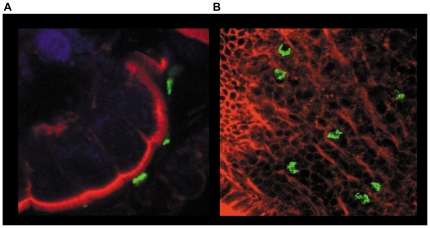
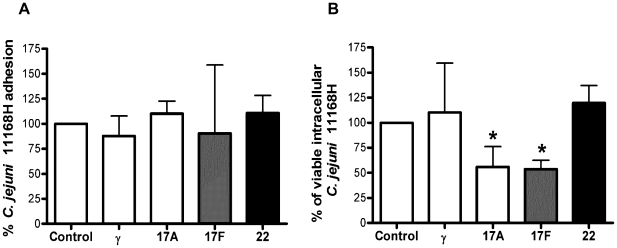
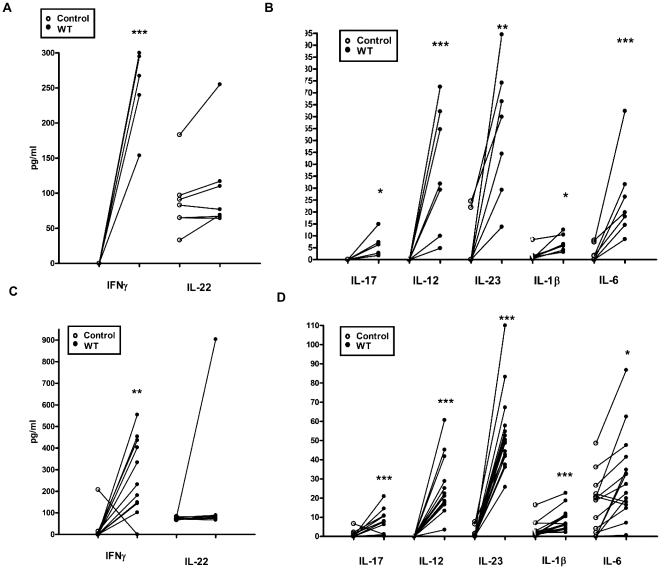
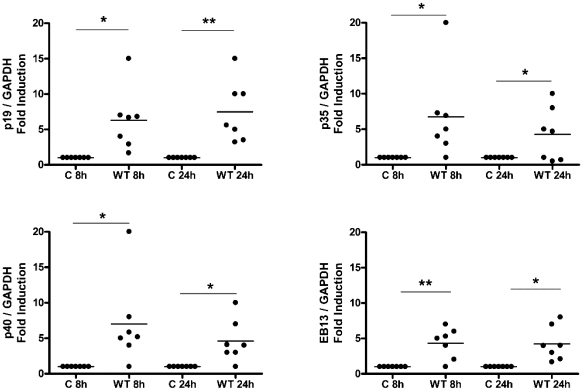
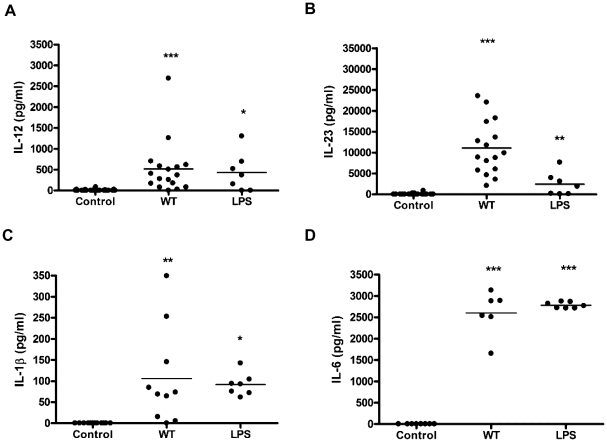
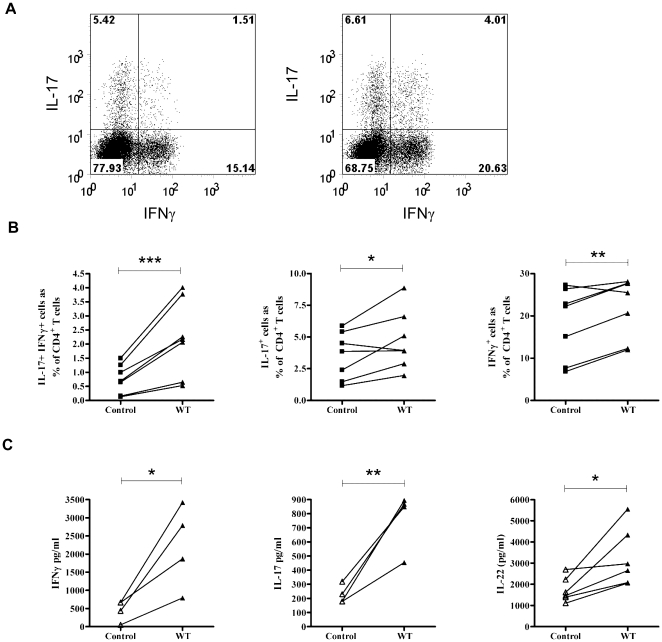
Healthy, control paediatric terminal ileum or colonic biopsy tissue was infected with C. jejuni for 8-12 hours. Bacterial colonisation was followed by confocal microscopy and mucosal innate immune responses measured by ELISA. Marked induction of IFNγ with modest increase in IL-22 and IL-17A was noted. Increased mucosal IL-12, IL-23, IL-1β and IL-6 were indicative of a cytokine milieu that may modulate subsequent T-cell mediated immunity. C. jejuni-driven human monocyte-derived dendritic cell activation was followed by analyses of T cell immune responses utilising flow cytometry and ELISA. Significant increase in Th-17, Th-1 and Th-17/Th-1 double-positive cells and corresponding cytokines was observed. The ability of IFNγ, IL-22 and IL-17 cytokines to exert host defence via modulation of C. jejuni adhesion and invasion to intestinal epithelia was measured by standard gentamicin protection assay.
Both innate and adaptive T cell-immunity to C. jejuni infection led to the release of IFNγ, IL-22 and IL-17A; suggesting a critical role for this cytokine triad in establishing host anti-microbial immunity during the acute and effectors phase of infection. In addition, to their known anti-microbial functions; IL-17A and IL-17F reduced the number of intracellular C. jejuni in intestinal epithelia, highlighting a novel aspect of how IL-17 family members may contribute to protective immunity against C. jejuni.
空肠弯曲菌是全球最常见的细菌性肠胃炎致病菌。尽管这种感染给健康带来了巨大的负担,但人们对空肠弯曲菌介导的疾病发病机制的分子认识仍不清楚。在这里,我们使用体外人肠道感染模型报告了对空肠弯曲菌的早期固有免疫反应的特征。其次,还研究了细菌驱动树突状细胞激活对 T 细胞介导免疫的影响。
用空肠弯曲菌感染健康的、对照的小儿末端回肠或结肠活检组织 8-12 小时。通过共聚焦显微镜和 ELISA 测量粘膜固有免疫反应来跟踪细菌定植。结果表明 IFNγ 的诱导明显增加,IL-22 和 IL-17A 适度增加。粘膜 IL-12、IL-23、IL-1β 和 IL-6 的增加表明可能调节随后 T 细胞介导免疫的细胞因子环境。通过流式细胞术和 ELISA 分析,对空肠弯曲菌驱动的人单核细胞衍生树突状细胞激活进行了后续分析。观察到 Th-17、Th-1 和 Th-17/Th-1 双阳性细胞及其相应细胞因子的显著增加。通过标准庆大霉素保护试验测量 IFNγ、IL-22 和 IL-17 细胞因子通过调节空肠弯曲菌对肠道上皮的粘附和侵袭来发挥宿主防御作用的能力。
空肠弯曲菌感染的固有和适应性 T 细胞免疫导致 IFNγ、IL-22 和 IL-17A 的释放;这表明该细胞因子三联体在感染的急性和效应阶段建立宿主抗微生物免疫中起关键作用。此外,除了它们已知的抗微生物功能外;IL-17A 和 IL-17F 减少了肠道上皮细胞内的空肠弯曲菌数量,突出了 IL-17 家族成员如何有助于保护性免疫抵抗空肠弯曲菌的新方面。