EMBL-CRG Systems Biology Unit, ICREA, CRG, UPF, Barcelona, Spain.
Cell Mol Life Sci. 2011 Mar;68(6):1005-10. doi: 10.1007/s00018-010-0589-y. Epub 2010 Nov 30.
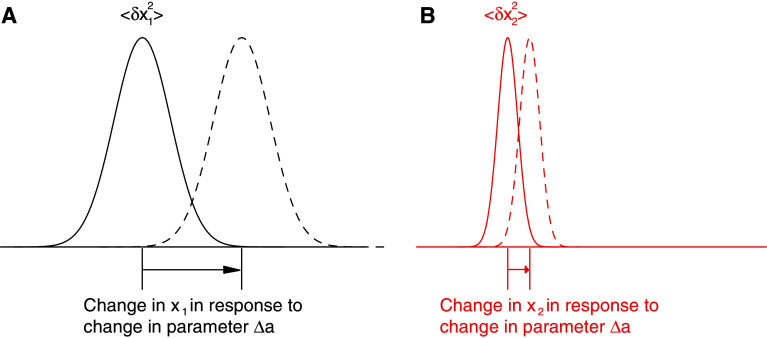
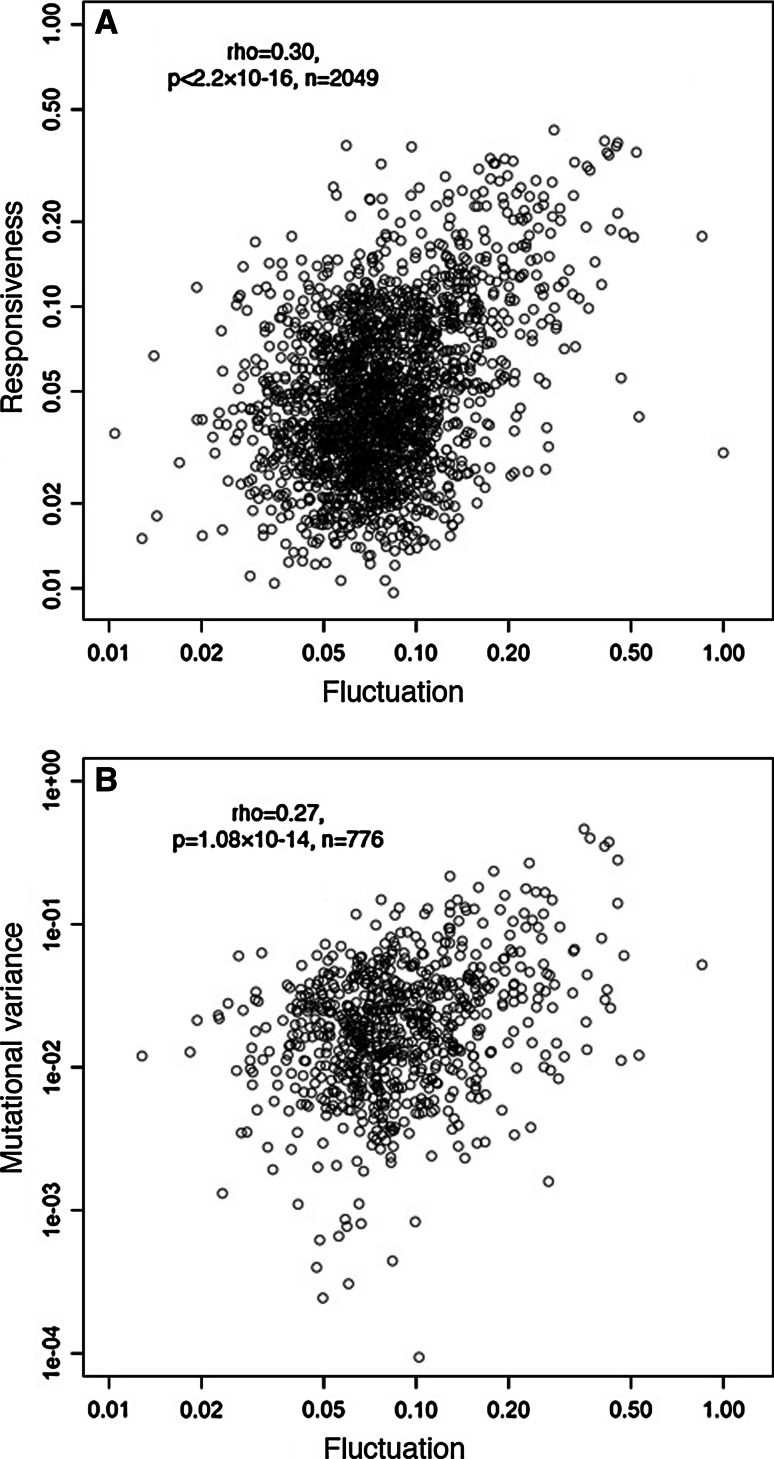
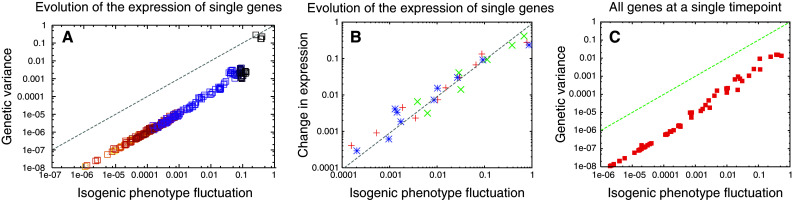
In 1905, Albert Einstein proposed that the forces that cause the random Brownian motion of a particle also underlie the resistance to macroscopic motion when a force is applied. This insight, of a coupling between fluctuation (stochastic behavior) and responsiveness (non-stochastic behavior), founded an important branch of physics. Here we argue that his insight may also be relevant for understanding evolved biological systems, and we present a 'fluctuation-response relationship' for biology. The relationship is consistent with the idea that biological systems are similarly canalized to stochastic, environmental, and genetic perturbations. It is also supported by in silico evolution experiments, and by the observation that 'noisy' gene expression is often both more responsive and more 'evolvable'. More generally, we argue that in biology there is (and always has been) an important role for macroscopic theory that considers the general behavior of systems without concern for their intimate molecular details.
1905 年,阿尔伯特·爱因斯坦(Albert Einstein)提出,导致粒子随机布朗运动的力也构成了宏观运动阻力的基础,当施加力时。这一关于波动(随机行为)和响应性(非随机行为)之间耦合的见解,为物理学的一个重要分支奠定了基础。在这里,我们认为他的见解也可能与理解进化生物系统有关,并提出了生物学的“波动-响应关系”。该关系与生物系统同样被引导至随机、环境和遗传干扰的观点一致。它也得到了计算机进化实验的支持,并且观察到“嘈杂”的基因表达通常更具响应性和更“可进化性”。更广泛地说,我们认为在生物学中,一直存在着一种重要的宏观理论,它考虑了系统的一般行为,而不关心其内部的分子细节。