Teagasc, Moorepark Food Research Centre, Fermoy, Cork, Ireland.
BMC Genomics. 2010 Nov 30;11:679. doi: 10.1186/1471-2164-11-679.
Lantibiotics are lanthionine-containing, post-translationally modified antimicrobial peptides. These peptides have significant, but largely untapped, potential as preservatives and chemotherapeutic agents. Type 1 lantibiotics are those in which lanthionine residues are introduced into the structural peptide (LanA) through the activity of separate lanthionine dehydratase (LanB) and lanthionine synthetase (LanC) enzymes. Here we take advantage of the conserved nature of LanC enzymes to devise an in silico approach to identify potential lantibiotic-encoding gene clusters in genome sequenced bacteria.
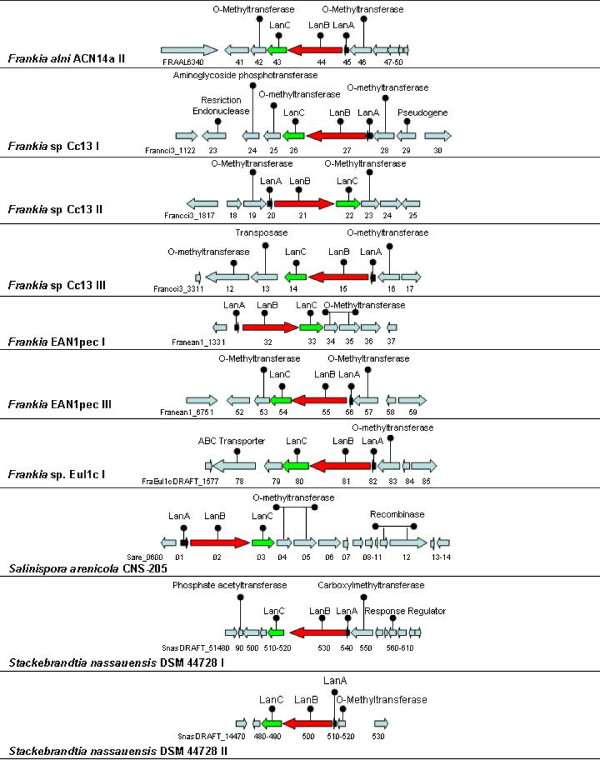
In total 49 novel type 1 lantibiotic clusters were identified which unexpectedly were associated with species, genera and even phyla of bacteria which have not previously been associated with lantibiotic production.
Multiple type 1 lantibiotic gene clusters were identified at a frequency that suggests that these antimicrobials are much more widespread than previously thought. These clusters represent a rich repository which can yield a large number of valuable novel antimicrobials and biosynthetic enzymes.
类细菌素是含有链桥氨酸的翻译后修饰抗菌肽。这些肽具有重要的、但在很大程度上尚未开发的作为防腐剂和化疗药物的潜力。1 型类细菌素是通过单独的链桥氨酸脱水酶(LanB)和链桥氨酸合成酶(LanC)酶的活性将链桥氨酸残基引入结构肽(LanA)中形成的。在这里,我们利用 LanC 酶的保守性质,设计了一种计算方法来鉴定基因组测序细菌中潜在的类细菌素编码基因簇。
总共鉴定出 49 个新型 1 型类细菌素簇,这些簇出人意料地与以前从未与类细菌素产生相关的细菌的物种、属甚至门有关。
以一种表明这些抗生素比以前认为的更为广泛的频率鉴定出多种 1 型类细菌素基因簇。这些簇代表了一个丰富的储存库,可以产生大量有价值的新型抗生素和生物合成酶。