Grunert Klaus G, Fernández-Celemín Laura, Wills Josephine M, Storcksdieck Genannt Bonsmann Stefan, Nureeva Liliya
Z Gesundh Wiss. 2010 Jun;18(3):261-277. doi: 10.1007/s10389-009-0307-0. Epub 2010 Jan 6.
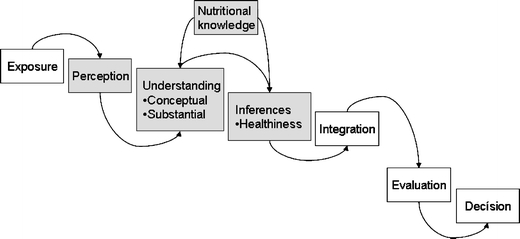
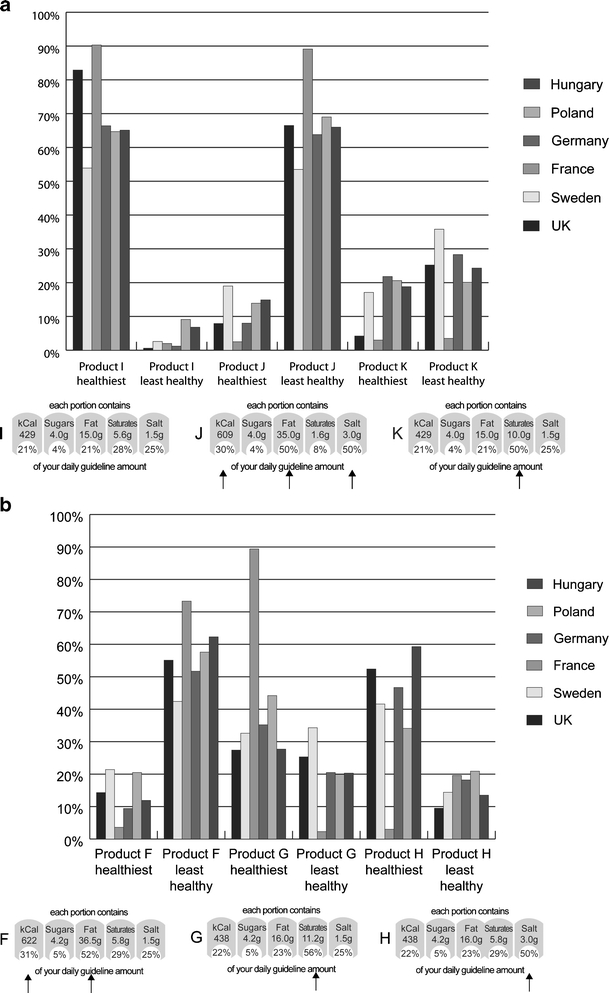
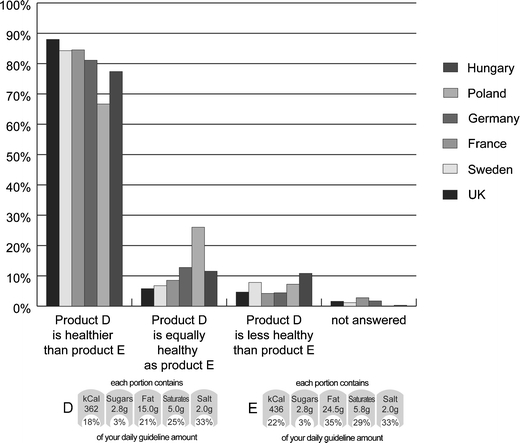
The goal of the study was to investigate the use of nutrition information on food labels and understanding of guideline daily amount (GDA) front-of-pack nutrition labels in six European countries. SUBJECTS AND METHODS: In-store observations and in-store interviews were conducted in major retailers in the UK (n = 2019), Sweden (n = 1858), France (n = 2337), Germany (n = 1963), Poland (n = 1800) and Hungary (n = 1804), supplemented by questionnaires filled out at home and returned (overall response rate 50.3%). Use of labels was measured by combining in-store observations and in-store interviews on concrete purchases in six product categories. Understanding of GDA front-of-pack nutrition labels was measured by a variety of tasks dealing with conceptual understanding, substantial understanding and health inferences. Demographics, nutrition knowledge and interest in healthy eating were measured as potential determinants. RESULTS: Across six product categories, 16.8% of shoppers were found to have looked for nutrition information on the label, with the nutrition grid (table or list), GDA labels and the ingredients list as the main sources consulted and calories, fat and sugar the information most often looked for. Understanding of GDA labels was high in the UK, Sweden and Germany, and more limited in the other countries. Regression analysis showed that, in addition to country-specific differences, use and understanding are also affected by differences in interest in healthy eating and in nutrition knowledge and by social grade. CONCLUSION: Understanding of nutrition information seems to be more widespread than use, suggesting that lack of use is a question of not only understanding, but also motivation. Considerable national differences exist in both understanding and use, some of which may be attributed to different histories of the role of nutrition in the public debate.
本研究旨在调查六个欧洲国家食品标签上营养信息的使用情况以及对每日营养素参考摄入量(GDA)包装正面营养标签的理解。
在英国(n = 2019)、瑞典(n = 1858)、法国(n = 2337)、德国(n = 1963)、波兰(n = 1800)和匈牙利(n = 1804)的主要零售商处进行店内观察和店内访谈,并辅以在家填写并返还的问卷(总体回复率50.3%)。通过结合店内观察和店内访谈对六个产品类别的具体购买情况来衡量标签的使用情况。通过一系列涉及概念理解、实质理解和健康推断的任务来衡量对GDA包装正面营养标签的理解。测量人口统计学、营养知识以及对健康饮食的兴趣作为潜在决定因素。
在六个产品类别中,发现16.8%的购物者会查看标签上的营养信息,其中营养表格(表格或列表)、GDA标签和成分列表是主要查阅来源,卡路里、脂肪和糖是最常查看的信息。英国、瑞典和德国对GDA标签的理解程度较高,而其他国家则较为有限。回归分析表明,除了国家间的差异外,使用和理解还受到对健康饮食的兴趣、营养知识以及社会阶层差异的影响。
对营养信息的理解似乎比使用更为普遍,这表明不使用不仅是理解的问题,也是动机的问题。在理解和使用方面存在相当大的国家差异,其中一些可能归因于营养在公众辩论中作用的不同历史。