Département Microorganismes, UMR7156 Université de Strasbourg/CNRS, Génétique Moléculaire, Génomique et Microbiologie, 28 rue Goethe, 67083 Strasbourg cedex, France.
BMC Genomics. 2010 Dec 17;11:709. doi: 10.1186/1471-2164-11-709.
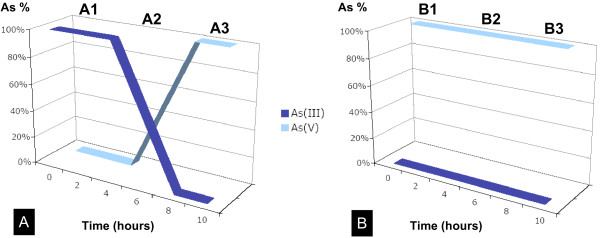
Arsenic is present in numerous ecosystems and microorganisms have developed various mechanisms to live in such hostile environments. Herminiimonas arsenicoxydans, a bacterium isolated from arsenic contaminated sludge, has acquired remarkable capabilities to cope with arsenic. In particular our previous studies have suggested the existence of a temporal induction of arsenite oxidase, a key enzyme in arsenic metabolism, in the presence of As(III).
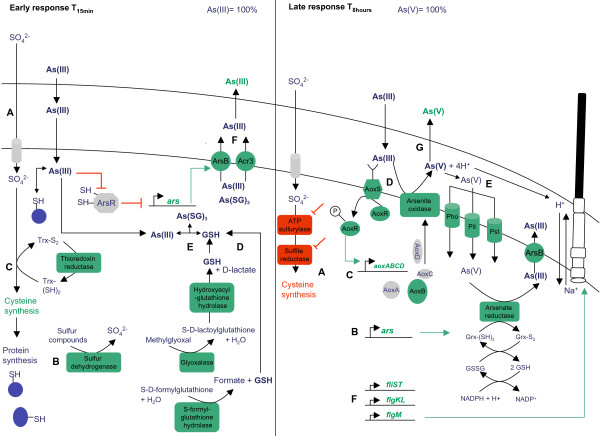
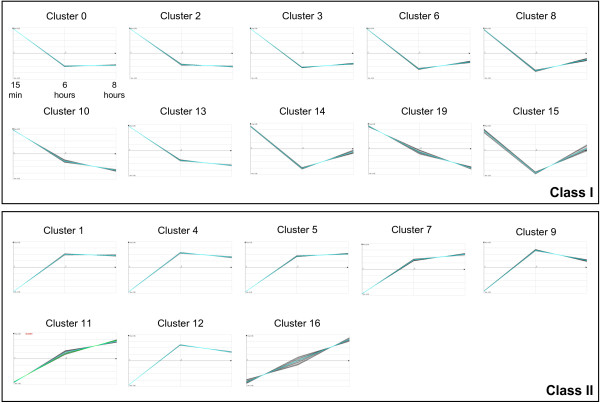
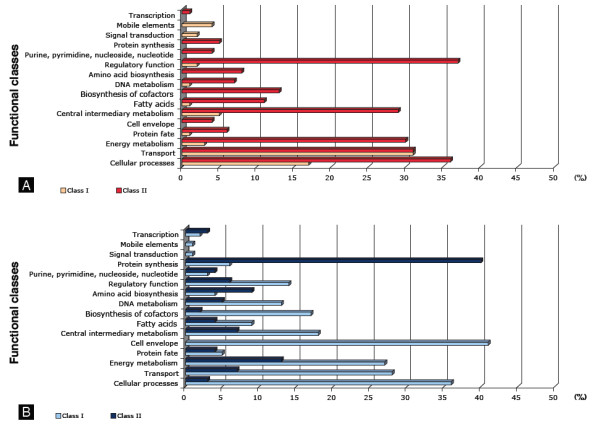
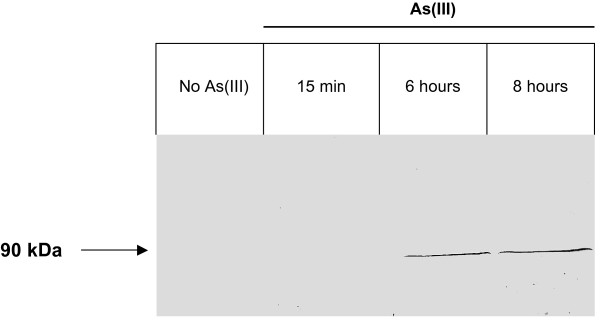
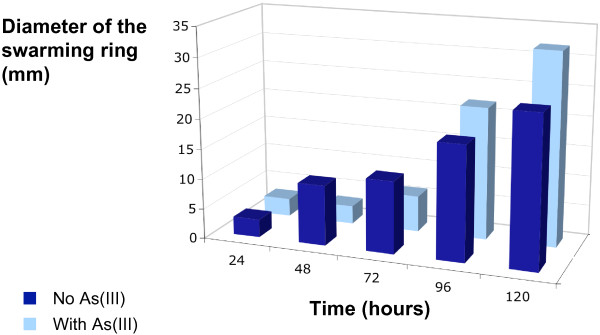
Microarrays were designed to compare gene transcription profiles under a temporal As(III) exposure. Transcriptome kinetic analysis demonstrated the existence of two phases in arsenic response. The expression of approximatively 14% of the whole genome was significantly affected by an As(III) early stress and 4% by an As(III) late exposure. The early response was characterized by arsenic resistance, oxidative stress, chaperone synthesis and sulfur metabolism. The late response was characterized by arsenic metabolism and associated mechanisms such as phosphate transport and motility. The major metabolic changes were confirmed by chemical, transcriptional, physiological and biochemical experiments. These early and late responses were defined as general stress response and specific response to As(III), respectively.
Gene expression patterns suggest that the exposure to As(III) induces an acute response to rapidly minimize the immediate effects of As(III). Upon a longer arsenic exposure, a broad metabolic response was induced. These data allowed to propose for the first time a kinetic model of the As(III) response in bacteria.
砷存在于众多生态系统中,微生物已经发展出各种机制来在这种恶劣的环境中生存。从砷污染的污泥中分离出的细菌 Herminiimonas arsenicoxydans 具有很强的适应砷的能力。特别是我们之前的研究表明,在存在 As(III) 的情况下,亚砷酸盐氧化酶(砷代谢中的关键酶)会出现时间诱导。
设计了微阵列来比较在 As(III) 暴露下的基因转录谱。转录组动力学分析表明,砷响应存在两个阶段。整个基因组约 14%的基因表达受到 As(III)早期应激的显著影响,4%受到 As(III)晚期暴露的影响。早期反应的特征是砷抗性、氧化应激、伴侣合成和硫代谢。晚期反应的特征是砷代谢和相关机制,如磷酸盐转运和运动。通过化学、转录、生理和生化实验证实了这些主要的代谢变化。这些早期和晚期反应分别被定义为一般应激反应和对 As(III)的特异性反应。
基因表达模式表明,暴露于 As(III)会引发急性反应,以迅速减轻 As(III)的直接影响。在较长时间的砷暴露后,会诱导广泛的代谢反应。这些数据首次提出了细菌对 As(III)反应的动力学模型。