Department of Bioengineering, University of Washington, William H, Foege Building, Box 355061, Seattle, WA 98195-5061, USA.
J Biol Eng. 2010 Dec 17;4:16. doi: 10.1186/1754-1611-4-16.
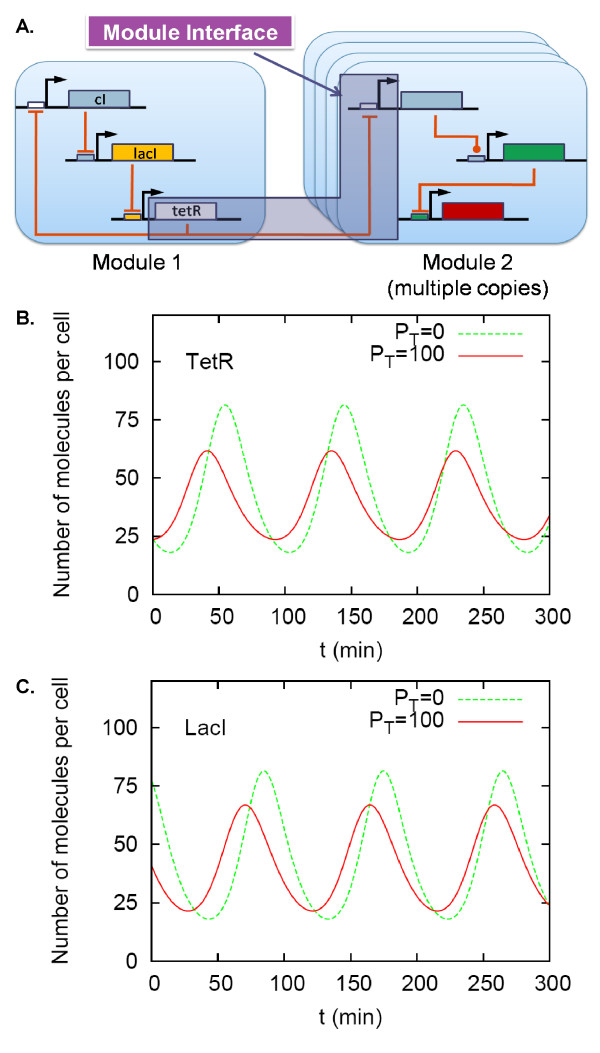
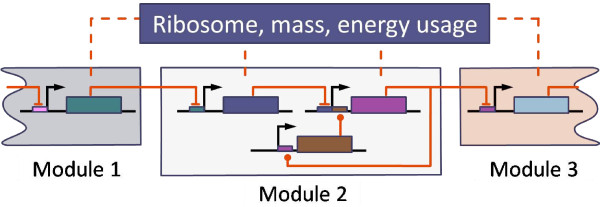
In synthetic biology, gene regulatory circuits are often constructed by combining smaller circuit components. Connections between components are achieved by transcription factors acting on promoters. If the individual components behave as true modules and certain module interface conditions are satisfied, the function of the composite circuits can in principle be predicted.
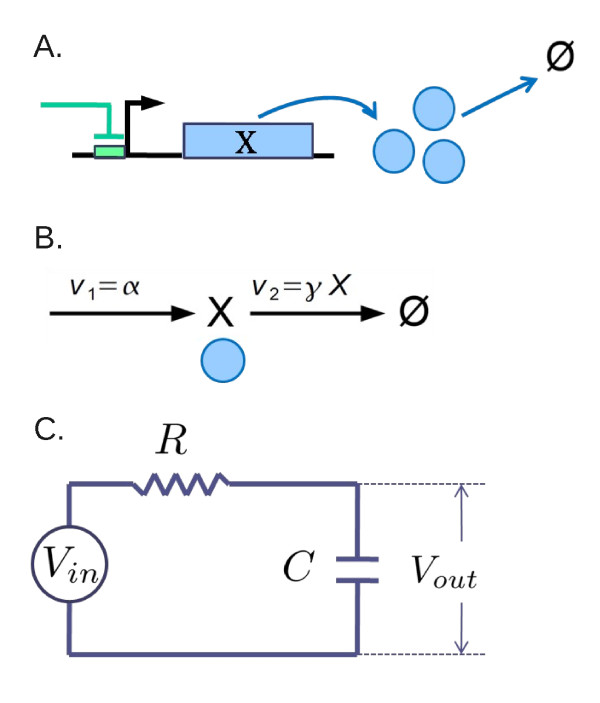
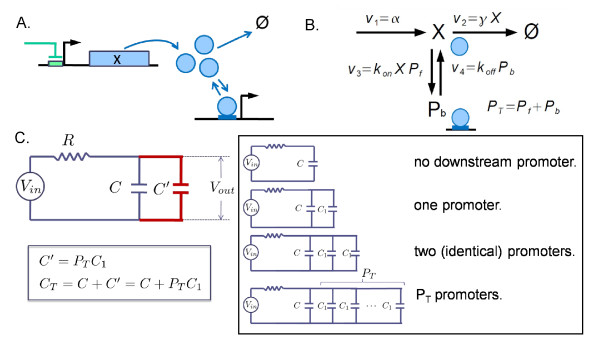
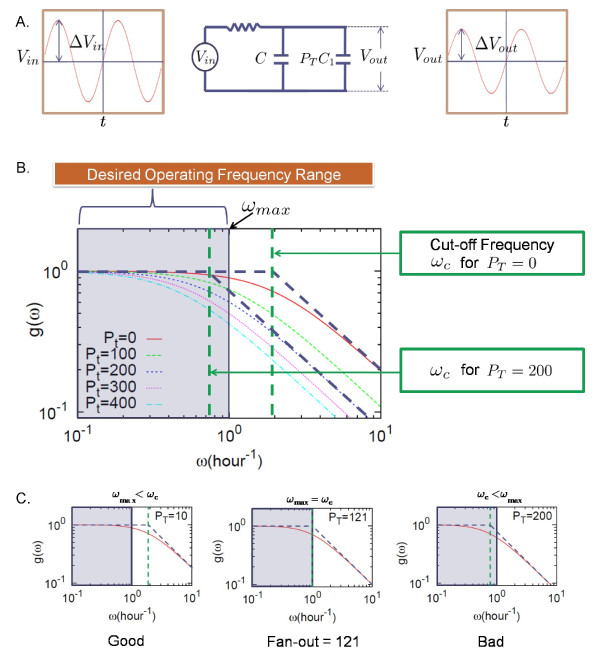
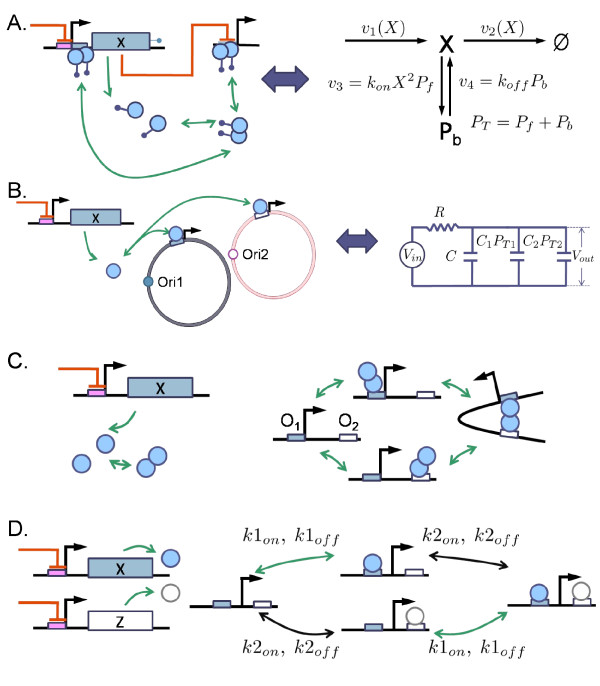
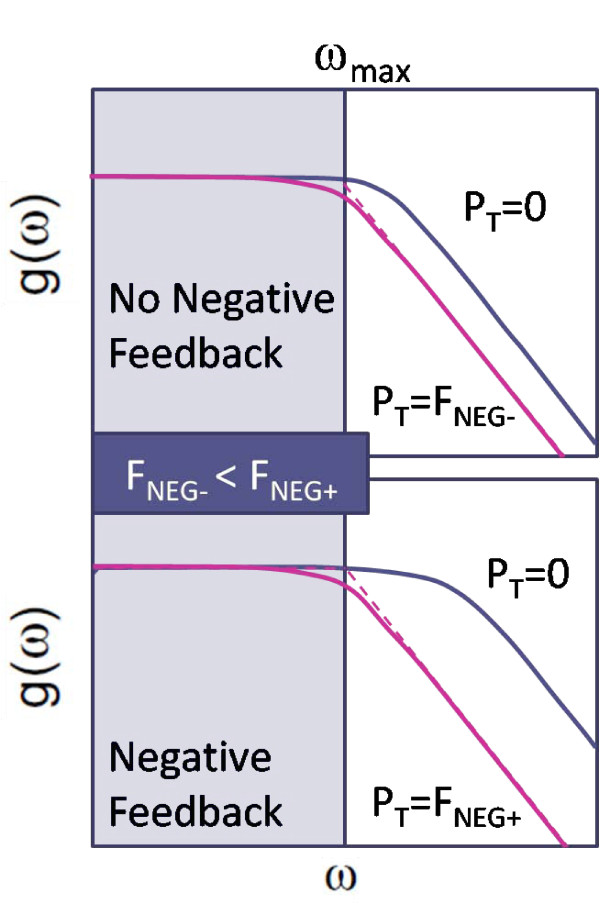
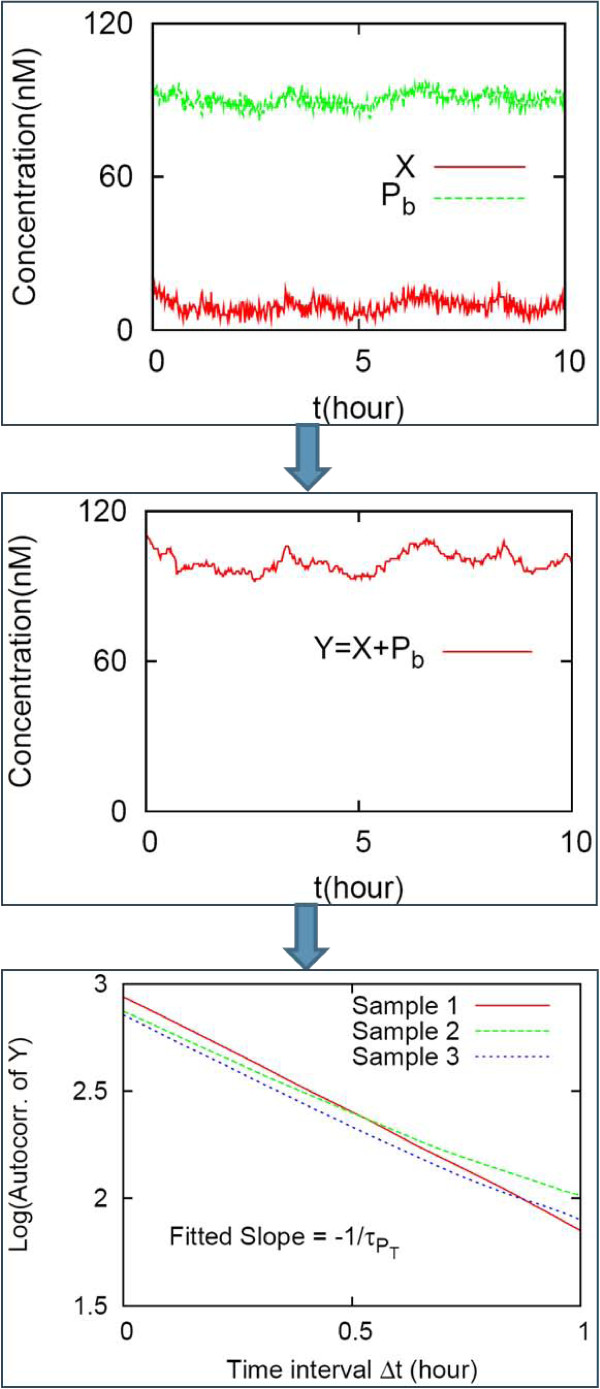
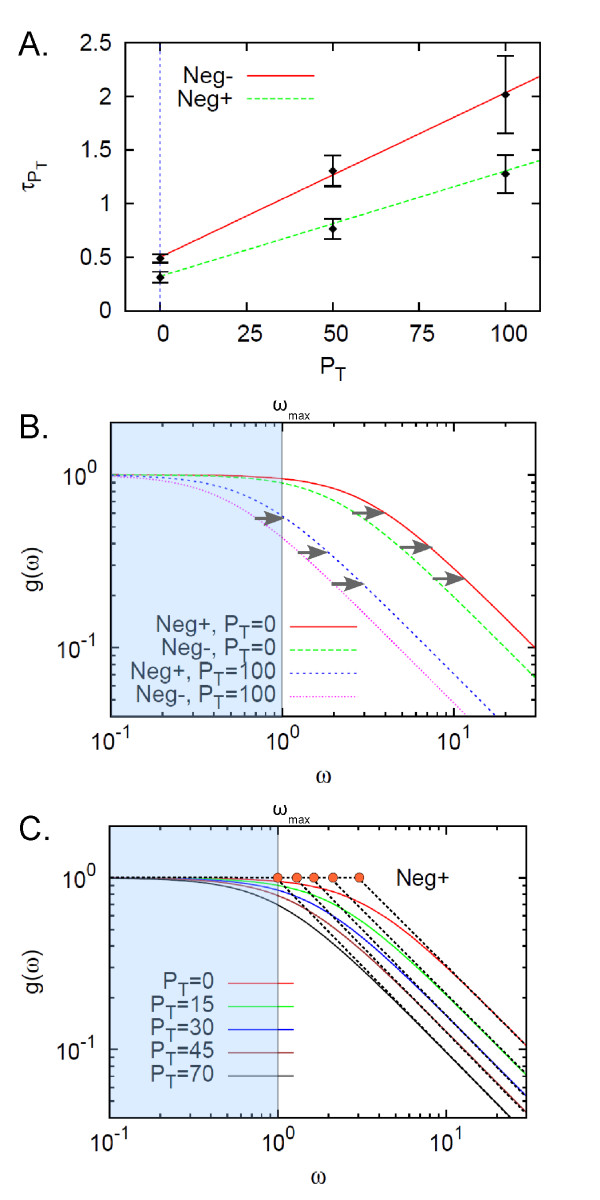
In this paper, we investigate one of the interface conditions: fan-out. We quantify the fan-out, a concept widely used in electrical engineering, to indicate the maximum number of the downstream inputs that an upstream output transcription factor can regulate. The fan-out is shown to be closely related to retroactivity studied by Del Vecchio, et al. An efficient operational method for measuring the fan-out is proposed and shown to be applied to various types of module interfaces. The fan-out is also shown to be enhanced by self-inhibitory regulation on the output. The potential role of an inhibitory regulation is discussed.
The proposed estimation method for fan-out not only provides an experimentally efficient way for quantifying the level of modularity in gene regulatory circuits but also helps characterize and design module interfaces, enabling the modular construction of gene circuits.
在合成生物学中,基因调控回路通常通过组合更小的电路元件来构建。元件之间的连接通过作用于启动子的转录因子来实现。如果单个元件表现为真正的模块并且满足某些模块接口条件,则可以从原理上预测组合电路的功能。
在本文中,我们研究了接口条件之一:扇出。我们量化了扇出,这是电气工程中广泛使用的概念,表示上游输出转录因子可以调节的下游输入的最大数量。结果表明,扇出与 Del Vecchio 等人研究的反活性密切相关。提出了一种用于测量扇出的有效操作方法,并证明其适用于各种类型的模块接口。还表明输出的自我抑制调节会增强扇出。讨论了抑制调节的潜在作用。
提出的扇出估计方法不仅为量化基因调控回路的模块化程度提供了一种实验效率高的方法,而且有助于对模块接口进行特征描述和设计,从而能够对基因电路进行模块化构建。