Institute of Epidemiology, Helmholtz Zentrum München, German Research Center for Environmental Health, Neuherberg, Germany.
Environ Health Perspect. 2011 Jun;119(6):778-83. doi: 10.1289/ehp.1002543. Epub 2010 Dec 17.
Exposure of humans to air pollutants such as ozone and particulate matter (PM) may result in airway and systemic inflammation and altered immune function. One putative mechanism may be through modification of cell-surface costimulatory molecules.
We examined whether changes in expression of costimulatory molecules on circulating cells are associated with ambient levels of fine PM [aerodynamic diameter ≤ 2.5 μm (PM2.5)] in a susceptible population of diabetic individuals.
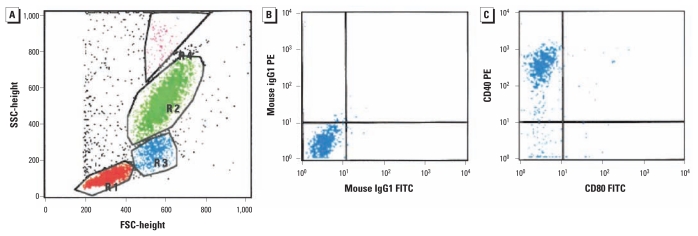
Twenty subjects were studied for 4 consecutive days. Daily measurements of PM2.5 and meteorologic data were acquired on the rooftop of the exam site. Circulating cell-surface markers that mediate innate immune and inflammatory responses were assessed by flow cytometry on each day. Sensitivity analysis was conducted on glutathione S-transferase M1 (GSTM1) genotype, body mass index, and glycosylated hemoglobin A1c (HbA1c) levels to determine their role as effect modifiers. Data were analyzed using random effects models adjusting for season, weekday, and meteorology.
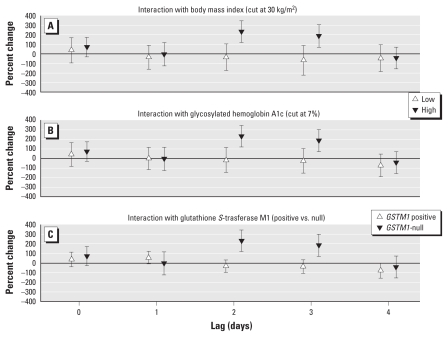
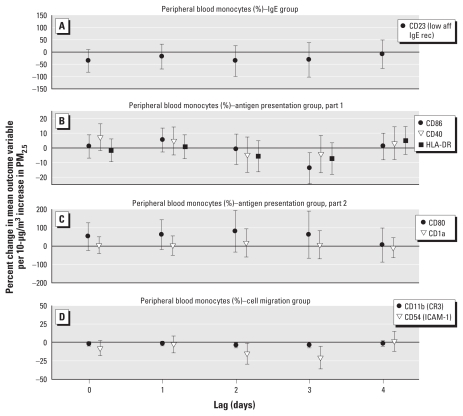
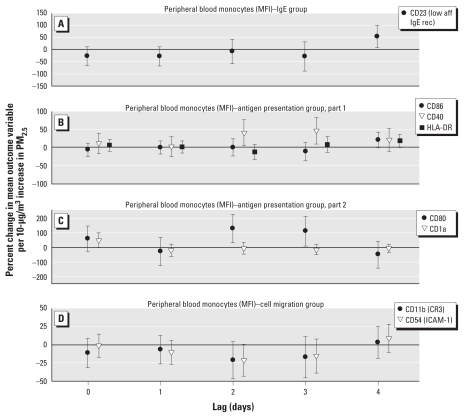
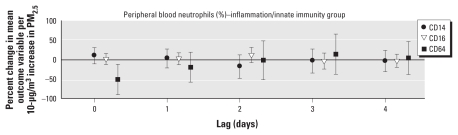
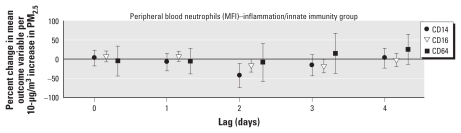
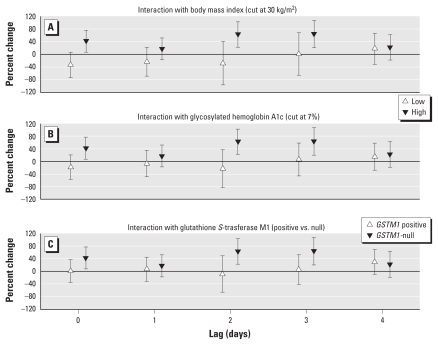
We found significantly increased monocyte expression (mean fluorescent intensity) of CD80, CD40, CD86, HLA-DR, and CD23 per 10-μg/m3 increase in PM2.5 at 2- to 4-day lag times after exposure. These findings were significantly higher in obese individuals, in individuals with HbA1c > 7%, and in participants who were GSTM1 null.
Exposure to PM2.5 can enhance antigen-presenting cell phenotypes on circulating cells, which may have consequences in the development of allergic or autoimmune diseases. These effects are amplified in diabetic individuals with characteristics that are associated with insulin resistance or with oxidative stress.
人类暴露于臭氧和颗粒物(PM)等空气污染物可能导致气道和全身炎症以及免疫功能改变。一个推测的机制可能是通过改变细胞表面共刺激分子。
我们研究了在易感人群的糖尿病患者中,循环细胞表面共刺激分子的表达变化是否与细颗粒物(空气动力学直径≤2.5μm(PM2.5))的环境水平有关。
20 名受试者连续 4 天接受研究。每天在检查现场的屋顶上采集 PM2.5 和气象数据。通过流式细胞术每天评估介导固有免疫和炎症反应的循环细胞表面标志物。对谷胱甘肽 S-转移酶 M1(GSTM1)基因型、体重指数和糖化血红蛋白 A1c(HbA1c)水平进行敏感性分析,以确定它们作为效应修饰剂的作用。使用随机效应模型分析数据,调整季节、周几和气象因素。
我们发现,暴露后 2-4 天,PM2.5 每增加 10μg/m3,单核细胞表达(平均荧光强度)的 CD80、CD40、CD86、HLA-DR 和 CD23 显著增加。这些发现在前肥胖个体、HbA1c>7%的个体以及 GSTM1 缺失的参与者中显著更高。
暴露于 PM2.5 可增强循环细胞上的抗原呈递细胞表型,这可能对过敏性或自身免疫性疾病的发展产生影响。在具有与胰岛素抵抗或氧化应激相关特征的糖尿病个体中,这些影响会被放大。