Duke Institute for Genome Sciences and Policy, Duke University, Durham, North Carolina 27710, USA.
Cancer Res. 2011 Mar 1;71(5):1772-80. doi: 10.1158/0008-5472.CAN-10-1735. Epub 2010 Dec 17.
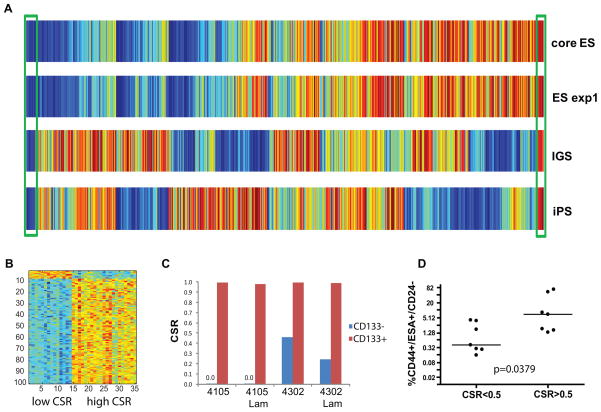
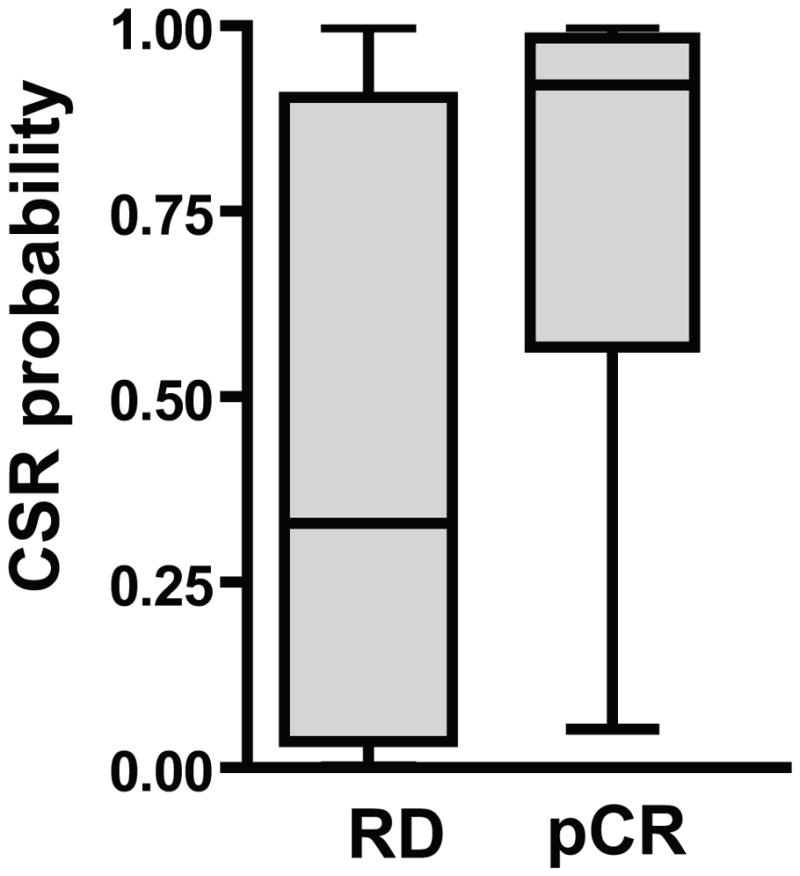
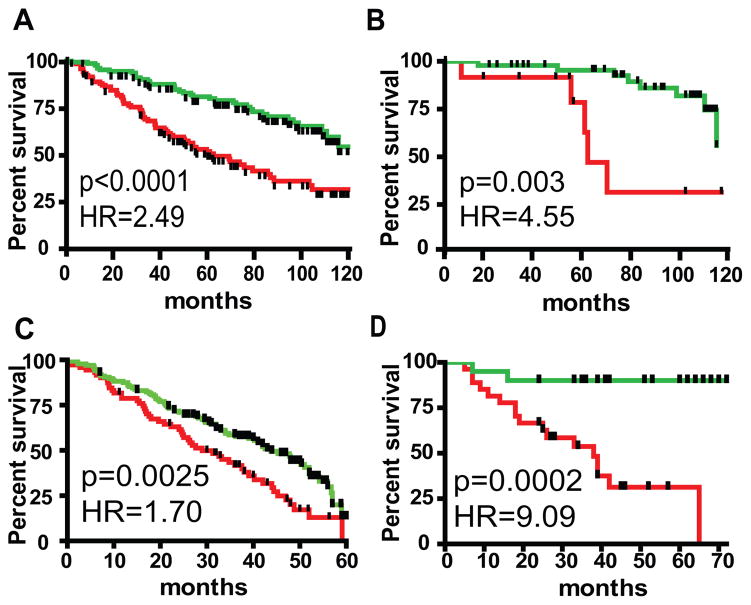
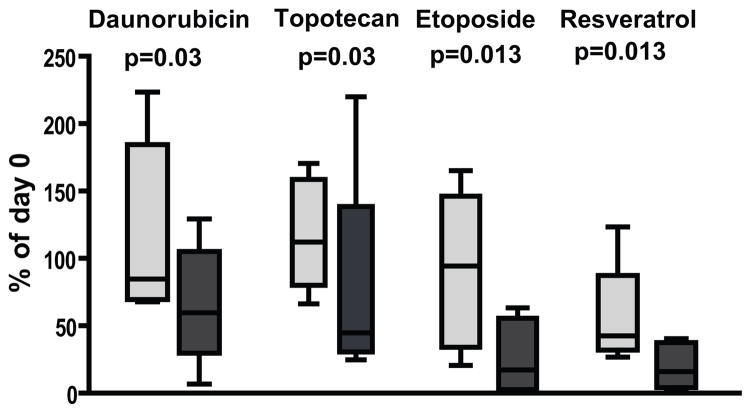
Given the very substantial heterogeneity of most human cancers, it is likely that most cancer therapeutics will be active in only a small fraction of any population of patients. As such, the development of new therapeutics, coupled with methods to match a therapy with the individual patient, will be critical to achieving significant gains in disease outcome. One such opportunity is the use of expression signatures to identify key oncogenic phenotypes that can serve not only as biomarkers but also as a means of identifying therapeutic compounds that might specifically target these phenotypes. Given the potential importance of targeting tumors exhibiting a stem-like phenotype, we have developed an expression signature that reflects common biological aspects of various stem-like characteristics. The consensus stemness ranking (CSR) signature is upregulated in cancer stem cell-enriched samples at advanced tumor stages and is associated with poor prognosis in multiple cancer types. Using two independent computational approaches we utilized the CSR signature to identify clinically useful compounds that could target the CSR phenotype. In vitro assays confirmed selectivity of several predicted compounds including topoisomerase inhibitors and resveratrol towards breast cancer cell lines that exhibit a high-CSR phenotype. Importantly, the CSR signature could predict clinical response of breast cancer patients to a neoadjuvant regimen that included a CSR-specific agent. Collectively, these results suggest therapeutic opportunities to target the CSR phenotype in a relevant cohort of cancer patients.
鉴于大多数人类癌症的高度异质性,大多数癌症疗法可能仅在患者群体的一小部分中有效。因此,开发新的疗法,再加上将疗法与个体患者相匹配的方法,对于在疾病结果方面取得重大进展至关重要。这样的机会之一是利用表达谱来识别关键的致癌表型,这些表型不仅可以作为生物标志物,还可以作为识别可能专门针对这些表型的治疗化合物的手段。鉴于靶向表现出类似干细胞表型的肿瘤的潜在重要性,我们开发了一种表达谱,反映了各种类似干细胞特征的常见生物学方面。共识干性排名 (CSR) 特征在肿瘤晚期富含癌症干细胞的样本中上调,并与多种癌症类型的预后不良相关。使用两种独立的计算方法,我们利用 CSR 特征来识别具有临床应用价值的化合物,这些化合物可能针对 CSR 表型。体外实验证实了几种预测化合物的选择性,包括拓扑异构酶抑制剂和白藜芦醇对表现出高 CSR 表型的乳腺癌细胞系。重要的是,CSR 特征可以预测接受包括 CSR 特异性药物在内的新辅助方案的乳腺癌患者的临床反应。总的来说,这些结果表明在相关的癌症患者群体中靶向 CSR 表型存在治疗机会。