Division of Biomedical Informatics, Cincinnati Children's Research Foundation, 3333 Burnet Avenue, Cincinnati, OH 45229, USA.
Nat Cell Biol. 2011 Jan;13(1):22-9. doi: 10.1038/ncb2141. Epub 2010 Dec 19.
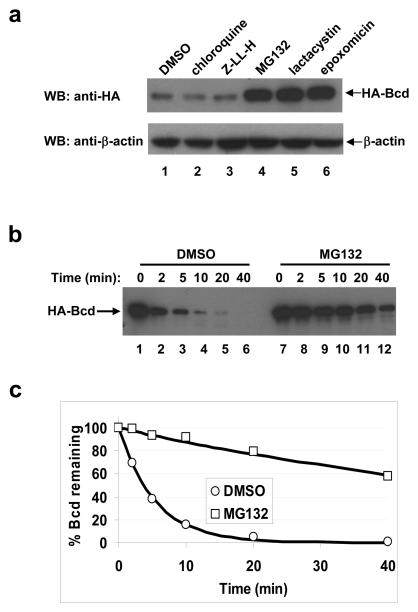
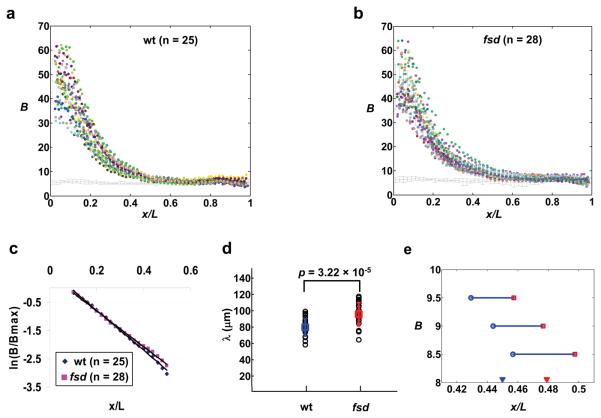
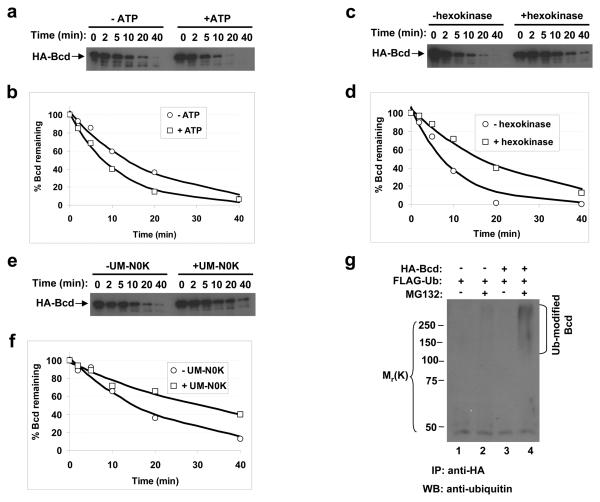
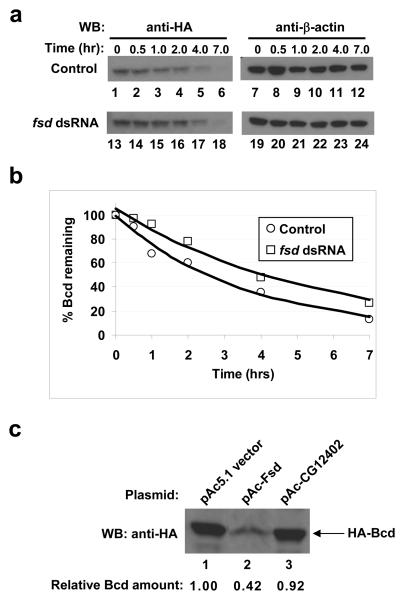
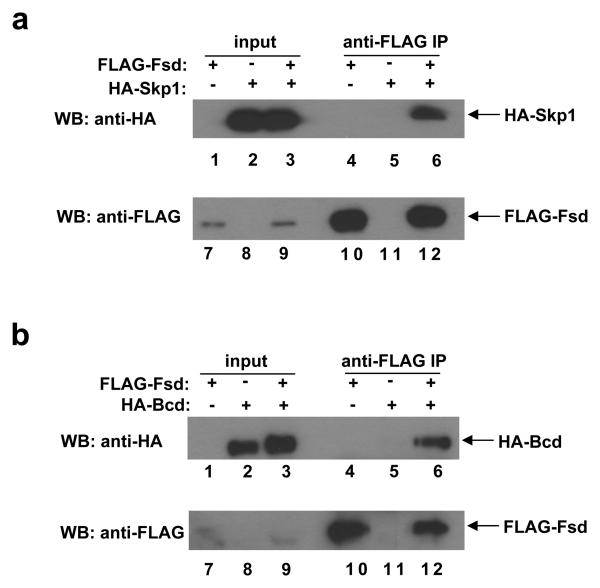
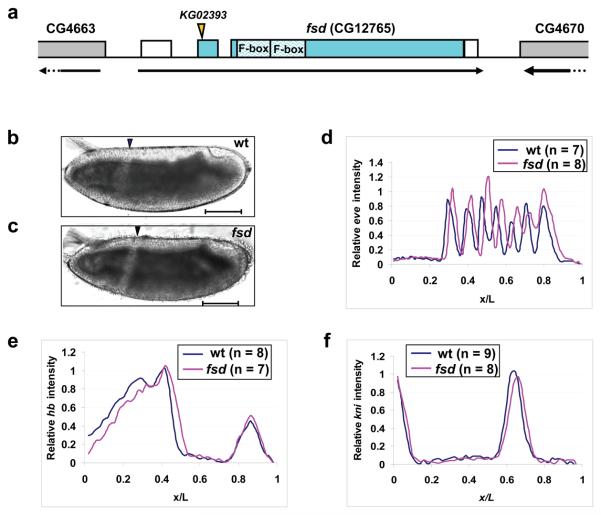
Bicoid (Bcd) is a morphogenetic protein that instructs patterning along the anterior-posterior (A-P) axis in Drosophila melanogaster embryos. Despite extensive studies, what controls the formation of a normal concentration gradient of Bcd remains an unresolved and controversial question. Here, we show that Bcd protein degradation is mediated by the ubiquitin-proteasome pathway. We have identified an F-box protein, encoded by fates-shifted (fsd), that has an important role in Bcd protein degradation by targeting it for ubiquitylation. Embryos from females lacking fsd have an altered Bcd gradient profile, resulting in a shift of the fatemap along the A-P axis. Our study is an experimental demonstration that, contrary to an alternative hypothesis, Bcd protein degradation is required for normal gradient formation and developmental fate determination.
Bicoid (Bcd) 是一种形态发生蛋白,它在果蝇胚胎中沿前后轴(A-P)指导模式形成。尽管进行了广泛的研究,但控制 Bcd 正常浓度梯度形成的机制仍然是一个未解决的有争议的问题。在这里,我们表明 Bcd 蛋白降解是由泛素-蛋白酶体途径介导的。我们已经鉴定出一种由命运转变(fsd)编码的 F-box 蛋白,它通过靶向 ubiquitylation 对 Bcd 蛋白降解具有重要作用。缺乏 fsd 的雌性胚胎具有改变的 Bcd 梯度分布,导致 fatemap 在 A-P 轴上发生移位。我们的研究是一个实验证明,与另一种假说相反,Bcd 蛋白降解对于正常的梯度形成和发育命运决定是必需的。