Division of Developmental Biology, Department of Biology, University of Erlangen-Nuremberg, Erlangen, Germany.
PLoS One. 2010 Dec 15;5(12):e14323. doi: 10.1371/journal.pone.0014323.
Patterning and differentiation of developing musculatures require elaborate networks of transcriptional regulation. In Drosophila, significant progress has been made into identifying the regulators of muscle development and defining their interactive networks. One major family of transcription factors involved in these processes consists of homeodomain proteins. In flies, several members of this family serve as muscle identity genes to specify the fates of individual muscles, or groups thereof, during embryonic and/or adult muscle development. Herein, we report on the expression and function of a new Drosophila homeobox gene during both embryonic and adult muscle development.
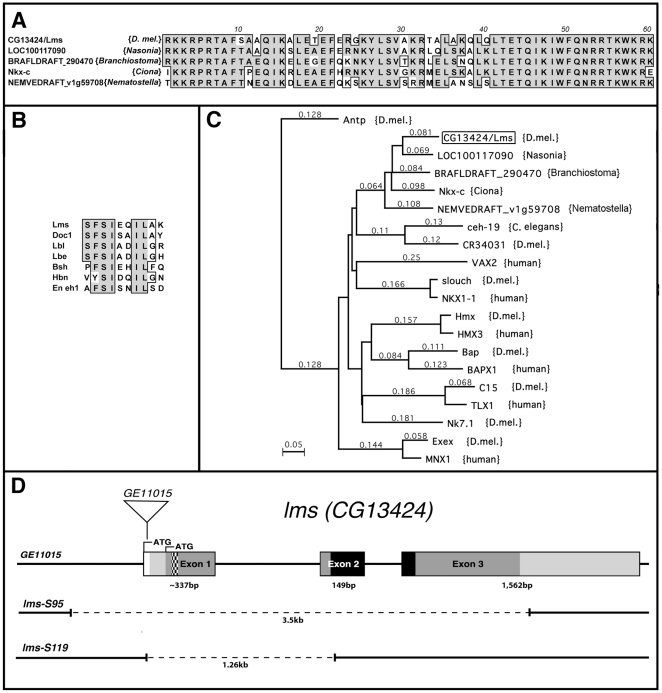
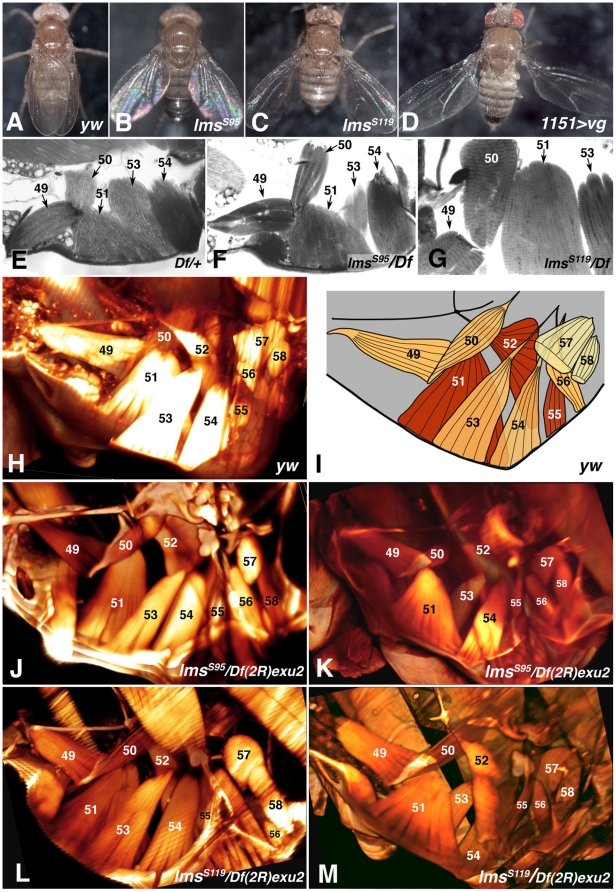
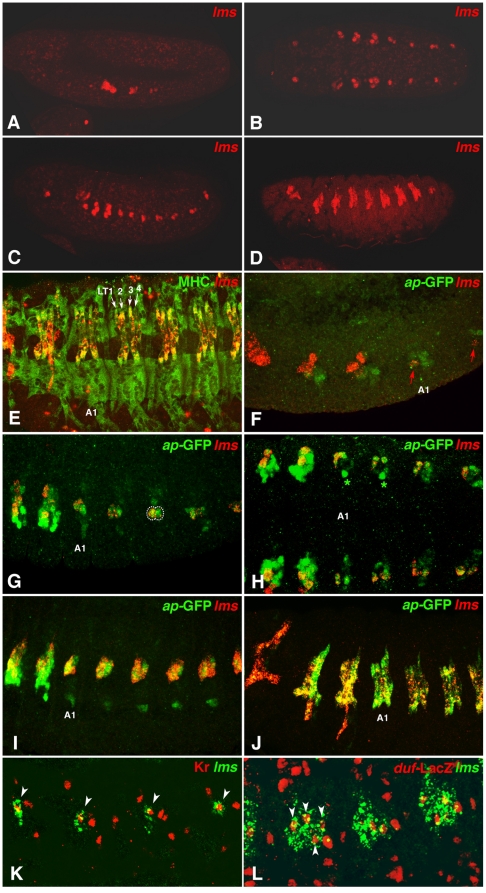
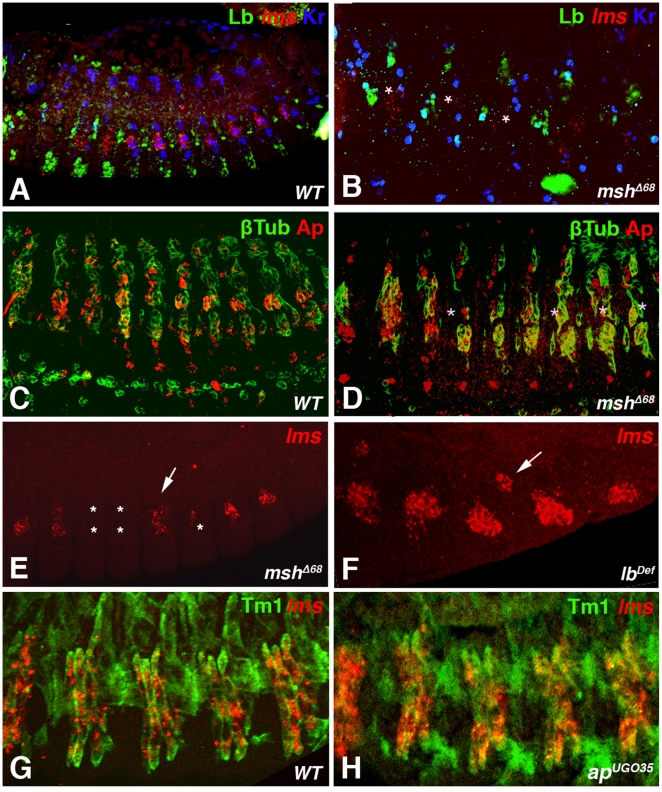
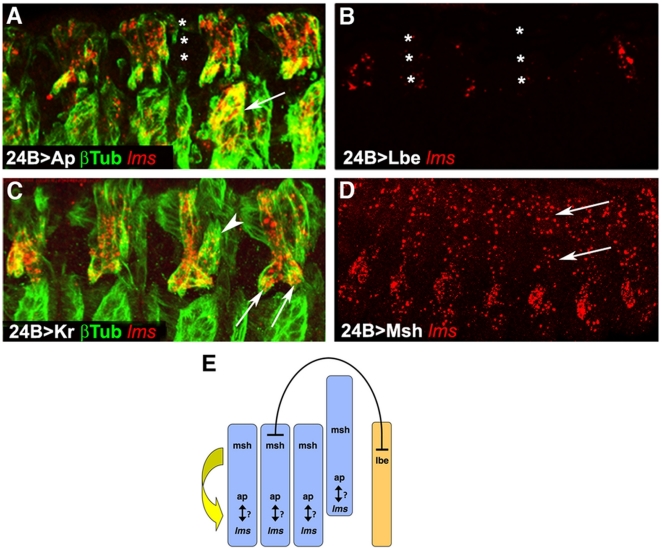
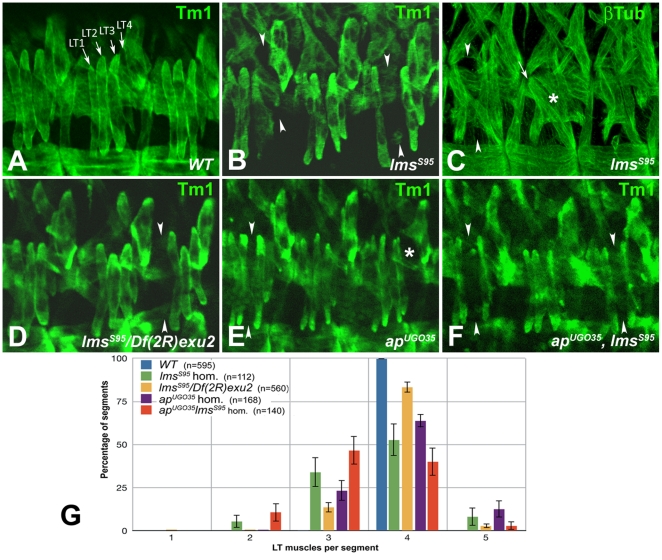
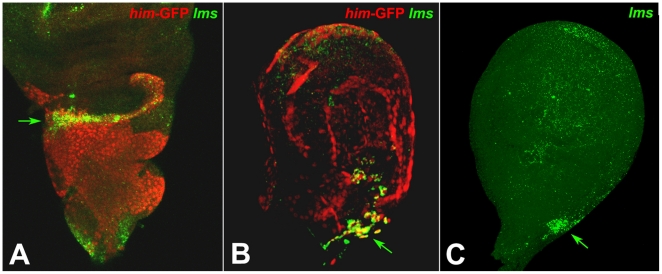
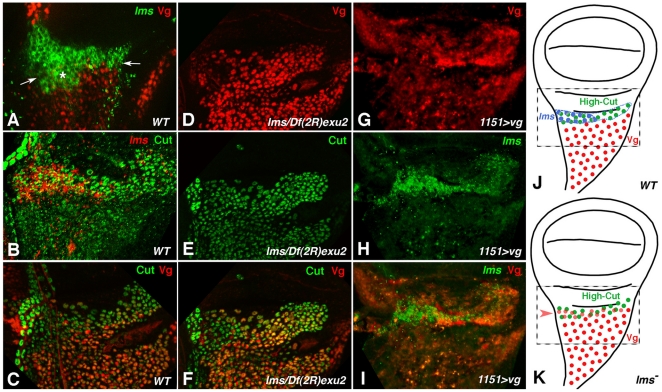
METHODOLOGY/PRINCIPAL FINDINGS: The newly described homeobox gene, termed lateral muscles scarcer (lms), which has yet uncharacterized orthologs in other invertebrates and primitive chordates but not in vertebrates, is expressed exclusively in subsets of developing muscle tissues. In embryos, lms is expressed specifically in the four lateral transverse (LT) muscles and their founder cells in each hemisegment, whereas in larval wing imaginal discs, it is expressed in myoblasts that develop into direct flight muscles (DFMs), which are important for proper wing positioning. We have analyzed the regulatory inputs of various other muscle identity genes with overlapping or complementary expression patterns towards the cell type specific regulation of lms expression. Further we demonstrate that lms null mutants exhibit reduced numbers of embryonic LT muscles, and null mutant adults feature held-out-wing phenotypes. We provide a detailed description of the pattern and morphology of the direct flight muscles in the wild type and lms mutant flies by using the recently-developed ultramicroscopy and show that, in the mutants, all DFMs are present and present normal morphologies.
CONCLUSIONS/SIGNIFICANCE: We have identified the homeobox gene lms as a new muscle identity gene and show that it interacts with various previously-characterized muscle identity genes to regulate normal formation of embryonic lateral transverse muscles. In addition, the direct flight muscles in the adults require lms for reliably exerting their functions in controlling wing postures.
发育中的肌肉组织的模式形成和分化需要精细的转录调控网络。在果蝇中,已经取得了重大进展,确定了肌肉发育的调节因子,并定义了它们的相互作用网络。涉及这些过程的主要转录因子家族之一由同源域蛋白组成。在果蝇中,该家族的几个成员作为肌肉身份基因,在胚胎和/或成体肌肉发育过程中指定单个肌肉或其群体的命运。在此,我们报告了一个新的果蝇同源盒基因在胚胎和成体肌肉发育过程中的表达和功能。
方法/主要发现:新描述的同源盒基因,称为侧肌较少(lms),在其他无脊椎动物和原始脊索动物中尚未有特征化的同源物,但在脊椎动物中没有,它仅在发育中的肌肉组织的亚群中表达。在胚胎中,lms 特异性地在每个半节的四个横向(LT)肌肉及其创始细胞中表达,而在幼虫翅 imaginal 盘中,它在发育成直接飞行肌肉(DFMs)的成肌细胞中表达,这对于正确的翅膀定位很重要。我们分析了各种其他肌肉身份基因的调节输入,这些基因的表达模式与 lms 表达的细胞类型特异性调节重叠或互补。此外,我们证明 lms 缺失突变体表现出胚胎 LT 肌肉数量减少,而缺失突变体成虫表现出翅膀持留的表型。我们通过使用最近开发的超微技术详细描述了野生型和 lms 突变体果蝇中直接飞行肌肉的模式和形态,并表明在突变体中,所有 DFMs 都存在且具有正常的形态。
结论/意义:我们已经确定了同源盒基因 lms 作为一个新的肌肉身份基因,并表明它与各种先前表征的肌肉身份基因相互作用,以调节胚胎横向横向肌肉的正常形成。此外,成虫中的直接飞行肌肉需要 lms 来可靠地发挥其控制翅膀姿势的功能。