Department of Mathematics and Statistics, York University, Toronto, Ontario, Canada.
PLoS One. 2010 Dec 20;5(12):e14307. doi: 10.1371/journal.pone.0014307.
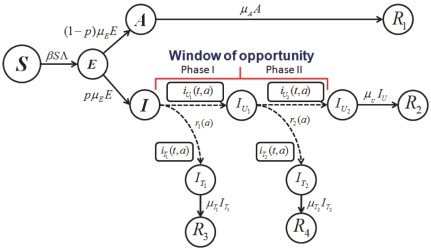
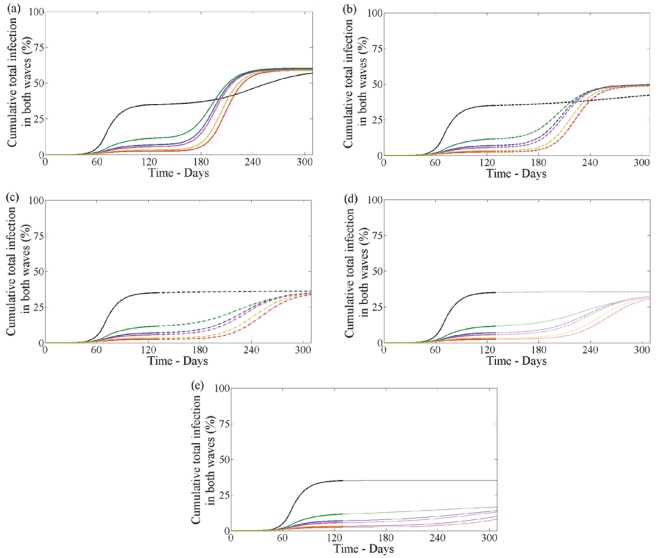
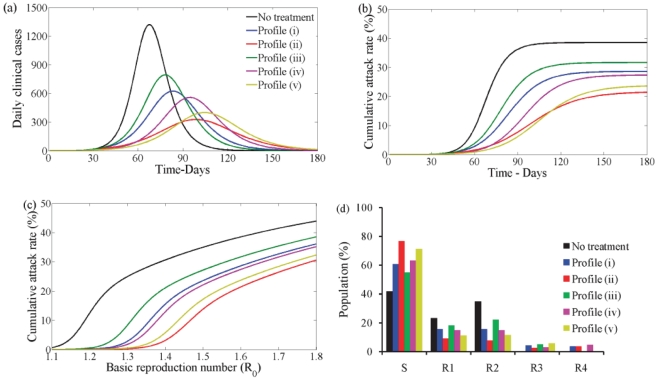
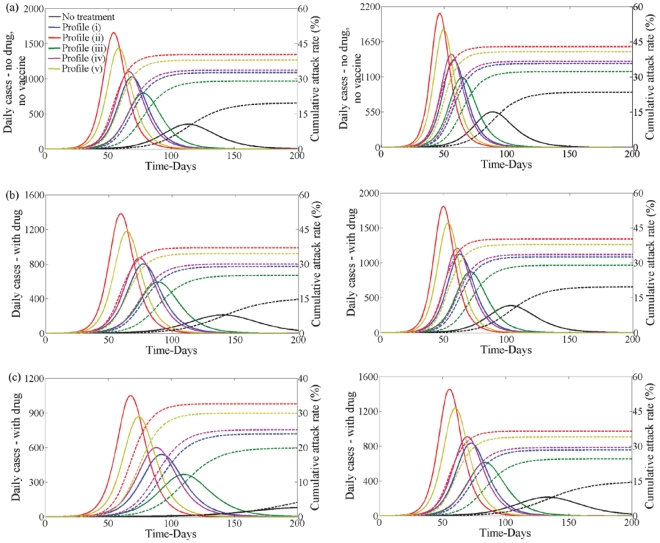
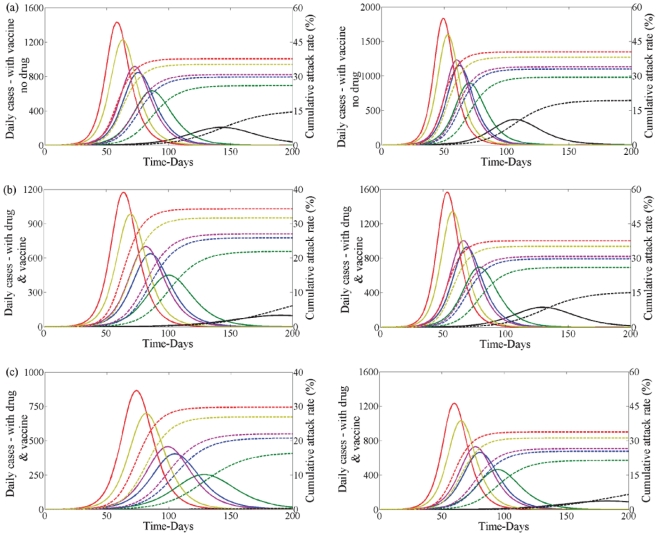
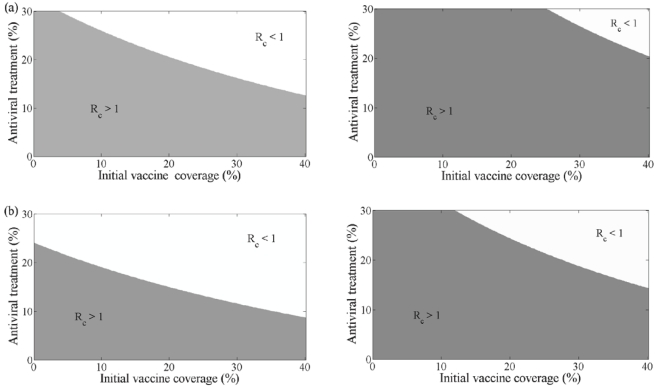
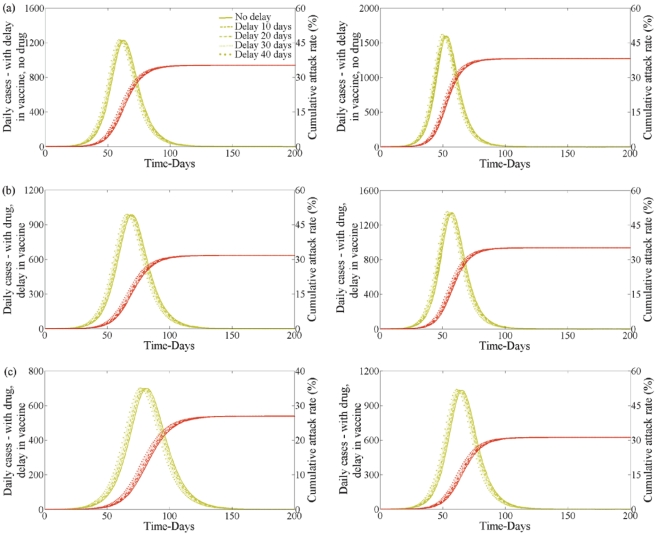
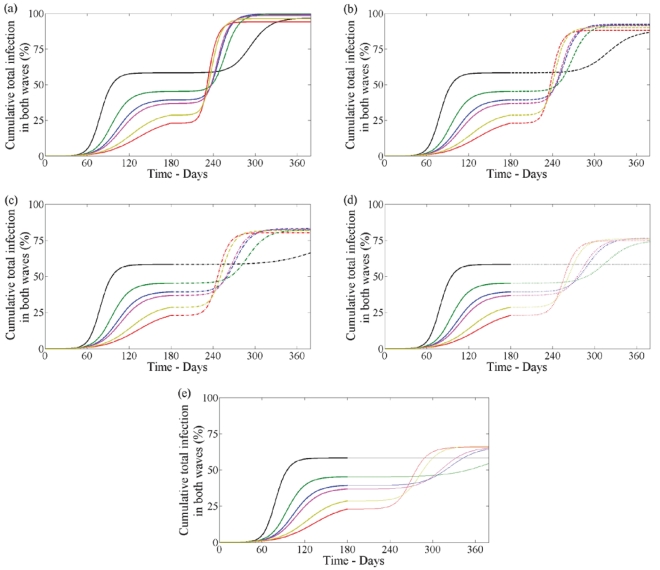
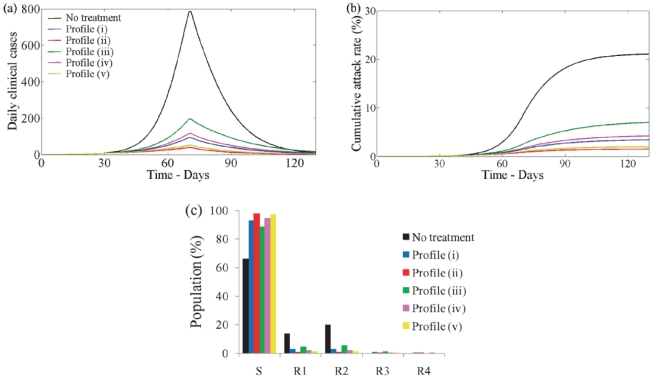
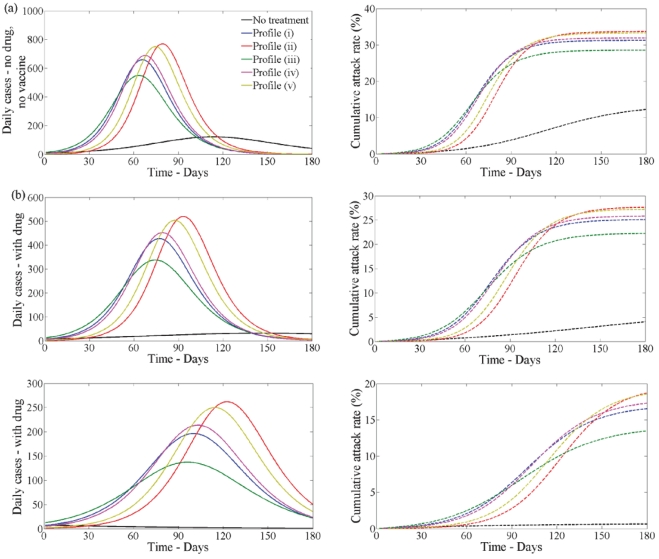
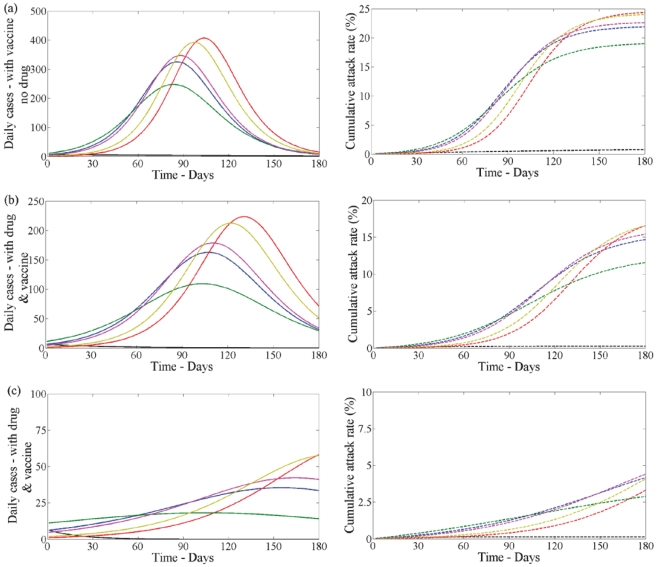
A significant feature of influenza pandemics is multiple waves of morbidity and mortality over a few months or years. The size of these successive waves depends on intervention strategies including antivirals and vaccination, as well as the effects of immunity gained from previous infection. However, the global vaccine manufacturing capacity is limited. Also, antiviral stockpiles are costly and thus, are limited to very few countries. The combined effect of antivirals and vaccination in successive waves of a pandemic has not been quantified. The effect of acquired immunity from vaccination and previous infection has also not been characterized. In times of a pandemic threat countries must consider the effects of a limited vaccine, limited antiviral use and the effects of prior immunity so as to adopt a pandemic strategy that will best aid the population. We developed a mathematical model describing the first and second waves of an influenza pandemic including drug therapy, vaccination and acquired immunity. The first wave model includes the use of antiviral drugs under different treatment profiles. In the second wave model the effects of antivirals, vaccination and immunity gained from the first wave are considered. The models are used to characterize the severity of infection in a population under different drug therapy and vaccination strategies, as well as school closure, so that public health policies regarding future influenza pandemics are better informed.
流感大流行的一个显著特征是在数月或数年内出现多次发病和死亡高峰。这些连续波的大小取决于干预策略,包括抗病毒药物和疫苗接种,以及先前感染获得的免疫效果。然而,全球疫苗生产能力有限。此外,抗病毒药物储备成本高昂,因此仅限于极少数国家。大流行连续波中抗病毒药物和疫苗接种的综合效果尚未量化。疫苗接种和先前感染获得的免疫效果也尚未确定。在大流行威胁时期,各国必须考虑到疫苗有限、抗病毒药物使用有限以及先前免疫的影响,以便采取最有助于人口的大流行策略。我们开发了一个数学模型,描述了流感大流行的第一波和第二波,包括药物治疗、疫苗接种和获得性免疫。第一波模型包括在不同治疗方案下使用抗病毒药物。在第二波模型中,考虑了抗病毒药物、疫苗接种和第一波获得的免疫的影响。该模型用于描述不同药物治疗和疫苗接种策略下人群中感染的严重程度,以及学校关闭,以便为未来的流感大流行制定更好的公共卫生政策。