Ogasawara Hideaki, Kawato Mitsuo
National Institute of Information and Communications Technology, 2-2-2, Hikaridai, Seika, Kyoto 619-0288, Japan.
BMC Syst Biol. 2010 Dec 31;4:181. doi: 10.1186/1752-0509-4-181.
Protein kinase Mζ (PKMζ), the brain-specific, atypical protein kinase C isoform, plays a key role in long-term maintenance of memory. This molecule is essential for long-term potentiation of the neuron and various modalities of learning such as spatial memory and fear conditioning. It is unknown, however, how PKMζ stores information for long periods of time despite molecular turnover.
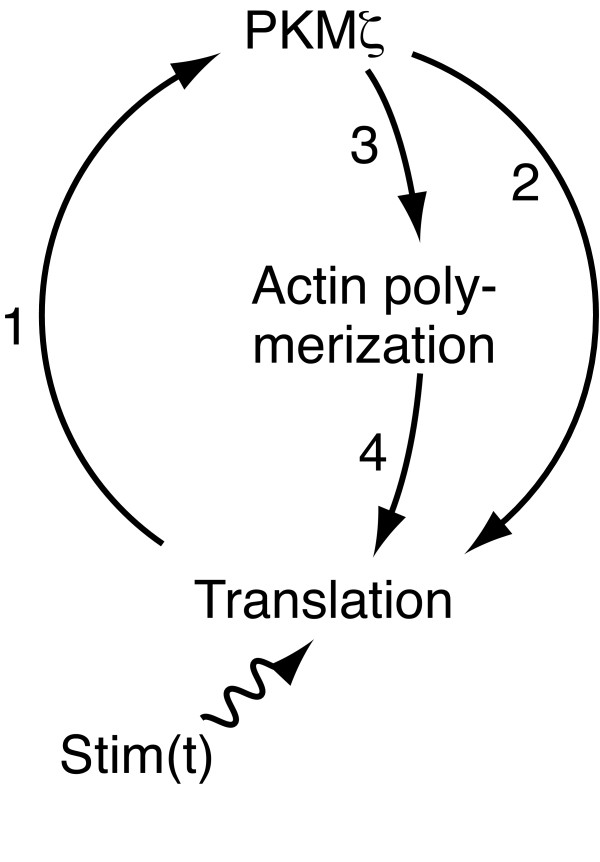
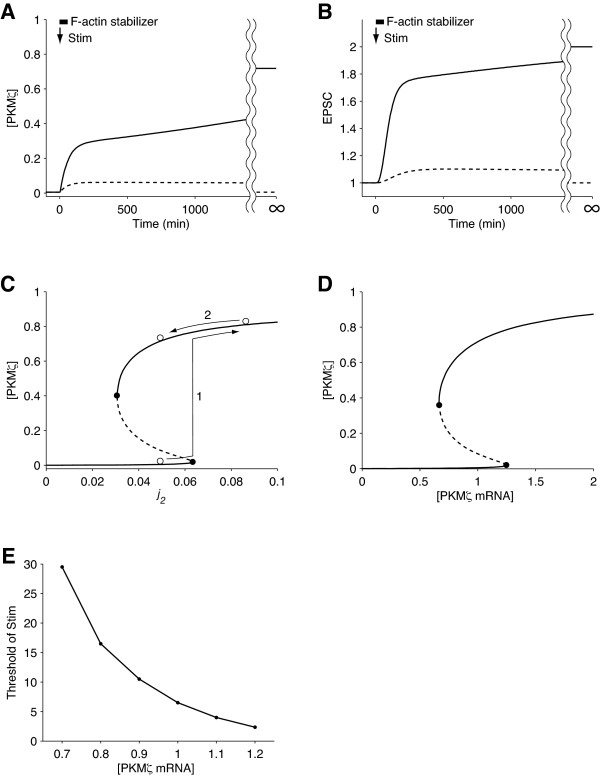
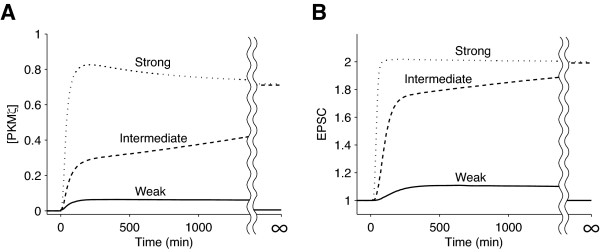
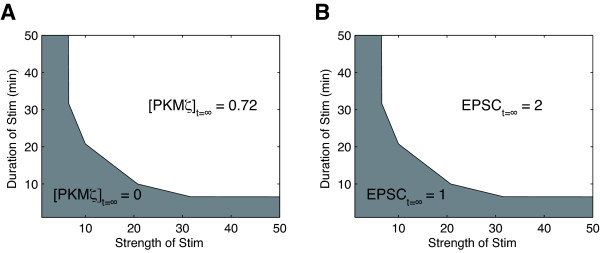
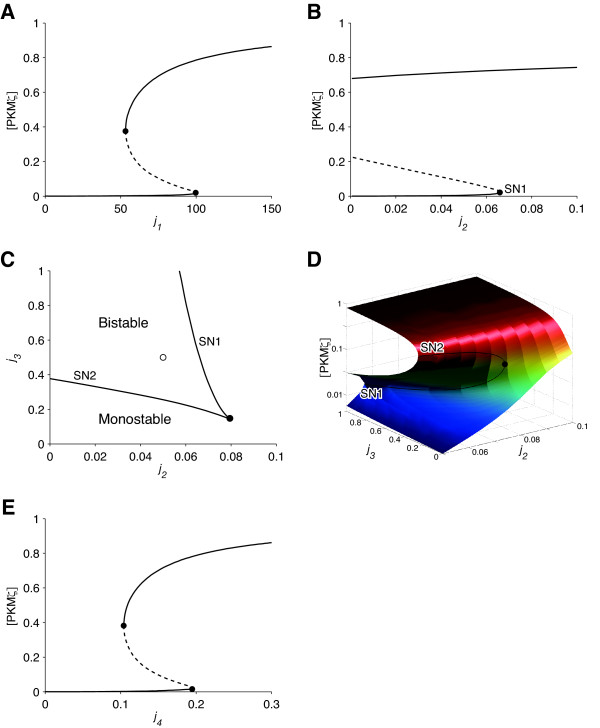
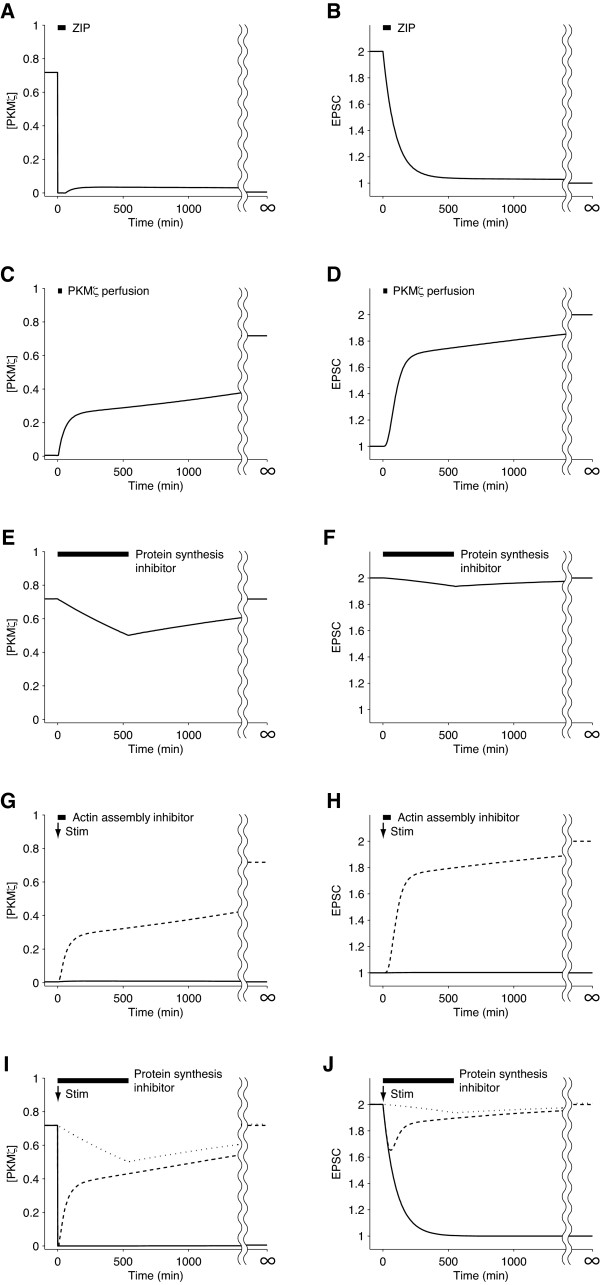
We hypothesized that PKMζ forms a bistable switch because it appears to constitute a positive feedback loop (PKMζ induces its local synthesis) part of which is ultrasensitive (PKMζ stimulates its synthesis through dual pathways). To examine this hypothesis, we modeled the biochemical network of PKMζ with realistic kinetic parameters. Bifurcation analyses of the model showed that the system maintains either the up state or the down state according to previous inputs. Furthermore, the model was able to reproduce a variety of previous experimental results regarding synaptic plasticity and learning, which suggested that it captures the essential mechanism for neuronal memory. We proposed in vitro and in vivo experiments that would critically examine the validity of the model and illuminate the pivotal role of PKMζ in synaptic plasticity and learning.
This study revealed bistability of the PKMζ network and supported its pivotal role in long-term storage of memory.
蛋白激酶Mζ(PKMζ)是大脑特异性的非典型蛋白激酶C亚型,在记忆的长期维持中起关键作用。该分子对于神经元的长期增强以及各种学习模式(如空间记忆和恐惧条件反射)至关重要。然而,尽管存在分子周转,PKMζ如何长时间存储信息尚不清楚。
我们假设PKMζ形成了一个双稳态开关,因为它似乎构成了一个正反馈回路(PKMζ诱导其局部合成),其中一部分是超敏感的(PKMζ通过双重途径刺激其合成)。为了检验这一假设,我们用实际动力学参数对PKMζ的生化网络进行了建模。对该模型的分岔分析表明,系统根据先前的输入维持上状态或下状态。此外,该模型能够重现先前关于突触可塑性和学习的各种实验结果,这表明它捕捉到了神经元记忆的基本机制。我们提出了体外和体内实验,以严格检验该模型的有效性,并阐明PKMζ在突触可塑性和学习中的关键作用。
本研究揭示了PKMζ网络的双稳态,并支持其在记忆长期存储中的关键作用。