• 文献检索
  • 文档翻译
  • 深度研究
  • 学术资讯
  • Suppr Zotero 插件Zotero 插件
  • 邀请有礼
  • 套餐&价格
  • 历史记录
应用&插件
Suppr Zotero 插件Zotero 插件浏览器插件Mac 客户端Windows 客户端微信小程序
定价
高级版会员购买积分包购买API积分包
服务
文献检索文档翻译深度研究API 文档MCP 服务
关于我们
关于 Suppr公司介绍联系我们用户协议隐私条款
关注我们

Suppr 超能文献

核心技术专利:CN118964589B侵权必究
粤ICP备2023148730 号-1Suppr @ 2026

文献检索

告别复杂PubMed语法,用中文像聊天一样搜索,搜遍4000万医学文献。AI智能推荐,让科研检索更轻松。

立即免费搜索

文件翻译

保留排版,准确专业,支持PDF/Word/PPT等文件格式,支持 12+语言互译。

免费翻译文档

深度研究

AI帮你快速写综述,25分钟生成高质量综述,智能提取关键信息,辅助科研写作。

立即免费体验

墨西哥可食用鳞翅目昆虫:地理分布、民族、对农村人民的经济和营养重要性。

Edible Lepidoptera in Mexico: Geographic distribution, ethnicity, economic and nutritional importance for rural people.

机构信息

Instituto de Biología, UNAM, Apartado Postal 70-153, 04510, México DF, México.

出版信息

J Ethnobiol Ethnomed. 2011 Jan 6;7:2. doi: 10.1186/1746-4269-7-2.

DOI:10.1186/1746-4269-7-2
PMID:21211040
原文链接:https://pmc.ncbi.nlm.nih.gov/articles/PMC3034662/
Abstract

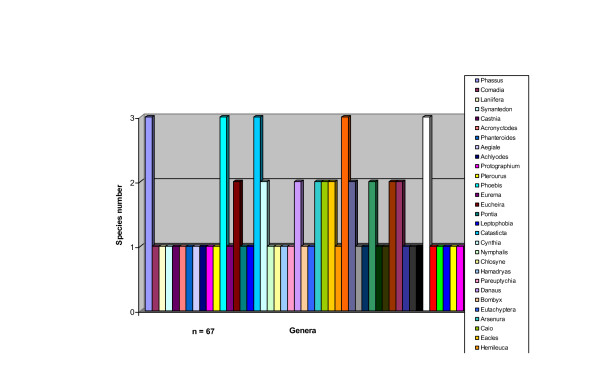
In this paper, we reported the butterflies and moths that are consumed in Mexico. We identified 67 species of Lepidoptera that are eaten principally in their larval stage in 17 states of Mexico. These species belong to 16 families: Arctiidae, Bombycidae, Castniidae, Cossidae, Geometridae, Hepialidae, Hesperiidae, Lasiocampidae, Noctuidae, Nymphalidae, Papilionidae, Pieridae, Pyralidae, Saturniidae, Sesiidae, and Sphingidae.Saturniidae, Pieridae, Noctuidae and Nymphalidae were the more species consumed with 16, 11, 9, and 8 species, respectively. The genera with the largest numbers of species were: Phassus, Phoebis, Hylesia and Spodoptera, with three species.Their local distribution, corresponding to each state of Mexico, is also presented.

摘要

本文报告了墨西哥食用的蝴蝶和蛾类。我们在墨西哥的 17 个州鉴定出 67 种鳞翅目昆虫,主要以幼虫期食用。这些物种属于 16 个科:天蛾科、蚕蛾科、天蚕蛾科、绒蛾科、尺蛾科、蛱蝶科、弄蝶科、夜蛾科、凤蝶科、粉蝶科、蛞蝓科、灯蛾科、优若蠊科、卷叶蛾科、天蚕蛾科、夜蛾科和蜂形目科。天蚕蛾科、粉蝶科、夜蛾科和凤蝶科分别有 16、11、9 和 8 种被食用。Phassus、Phoebis、Hylesia 和 Spodoptera 等属的物种数量最多,均有 3 种。本文还介绍了它们在墨西哥每个州的当地分布情况。

https://cdn.ncbi.nlm.nih.gov/pmc/blobs/fe95/3034662/5040eb2de8c4/1746-4269-7-2-18.jpg
https://cdn.ncbi.nlm.nih.gov/pmc/blobs/fe95/3034662/90514c17919d/1746-4269-7-2-1.jpg
https://cdn.ncbi.nlm.nih.gov/pmc/blobs/fe95/3034662/e53ad57aa0e5/1746-4269-7-2-2.jpg
https://cdn.ncbi.nlm.nih.gov/pmc/blobs/fe95/3034662/608ed9c22739/1746-4269-7-2-3.jpg
https://cdn.ncbi.nlm.nih.gov/pmc/blobs/fe95/3034662/545318203c9f/1746-4269-7-2-4.jpg
https://cdn.ncbi.nlm.nih.gov/pmc/blobs/fe95/3034662/59c451a64344/1746-4269-7-2-5.jpg
https://cdn.ncbi.nlm.nih.gov/pmc/blobs/fe95/3034662/1bd632bd2fe8/1746-4269-7-2-6.jpg
https://cdn.ncbi.nlm.nih.gov/pmc/blobs/fe95/3034662/77b60b5e9413/1746-4269-7-2-7.jpg
https://cdn.ncbi.nlm.nih.gov/pmc/blobs/fe95/3034662/9e570fd0e283/1746-4269-7-2-8.jpg
https://cdn.ncbi.nlm.nih.gov/pmc/blobs/fe95/3034662/3459b22c5511/1746-4269-7-2-9.jpg
https://cdn.ncbi.nlm.nih.gov/pmc/blobs/fe95/3034662/b59068015ed2/1746-4269-7-2-10.jpg
https://cdn.ncbi.nlm.nih.gov/pmc/blobs/fe95/3034662/e203507f830d/1746-4269-7-2-11.jpg
https://cdn.ncbi.nlm.nih.gov/pmc/blobs/fe95/3034662/13eca8dde17a/1746-4269-7-2-12.jpg
https://cdn.ncbi.nlm.nih.gov/pmc/blobs/fe95/3034662/0f7fb84b84ca/1746-4269-7-2-13.jpg
https://cdn.ncbi.nlm.nih.gov/pmc/blobs/fe95/3034662/0d66075c2f66/1746-4269-7-2-14.jpg
https://cdn.ncbi.nlm.nih.gov/pmc/blobs/fe95/3034662/1908586b8732/1746-4269-7-2-15.jpg
https://cdn.ncbi.nlm.nih.gov/pmc/blobs/fe95/3034662/d40df9248885/1746-4269-7-2-16.jpg
https://cdn.ncbi.nlm.nih.gov/pmc/blobs/fe95/3034662/452093d984dc/1746-4269-7-2-17.jpg
https://cdn.ncbi.nlm.nih.gov/pmc/blobs/fe95/3034662/5040eb2de8c4/1746-4269-7-2-18.jpg
https://cdn.ncbi.nlm.nih.gov/pmc/blobs/fe95/3034662/90514c17919d/1746-4269-7-2-1.jpg
https://cdn.ncbi.nlm.nih.gov/pmc/blobs/fe95/3034662/e53ad57aa0e5/1746-4269-7-2-2.jpg
https://cdn.ncbi.nlm.nih.gov/pmc/blobs/fe95/3034662/608ed9c22739/1746-4269-7-2-3.jpg
https://cdn.ncbi.nlm.nih.gov/pmc/blobs/fe95/3034662/545318203c9f/1746-4269-7-2-4.jpg
https://cdn.ncbi.nlm.nih.gov/pmc/blobs/fe95/3034662/59c451a64344/1746-4269-7-2-5.jpg
https://cdn.ncbi.nlm.nih.gov/pmc/blobs/fe95/3034662/1bd632bd2fe8/1746-4269-7-2-6.jpg
https://cdn.ncbi.nlm.nih.gov/pmc/blobs/fe95/3034662/77b60b5e9413/1746-4269-7-2-7.jpg
https://cdn.ncbi.nlm.nih.gov/pmc/blobs/fe95/3034662/9e570fd0e283/1746-4269-7-2-8.jpg
https://cdn.ncbi.nlm.nih.gov/pmc/blobs/fe95/3034662/3459b22c5511/1746-4269-7-2-9.jpg
https://cdn.ncbi.nlm.nih.gov/pmc/blobs/fe95/3034662/b59068015ed2/1746-4269-7-2-10.jpg
https://cdn.ncbi.nlm.nih.gov/pmc/blobs/fe95/3034662/e203507f830d/1746-4269-7-2-11.jpg
https://cdn.ncbi.nlm.nih.gov/pmc/blobs/fe95/3034662/13eca8dde17a/1746-4269-7-2-12.jpg
https://cdn.ncbi.nlm.nih.gov/pmc/blobs/fe95/3034662/0f7fb84b84ca/1746-4269-7-2-13.jpg
https://cdn.ncbi.nlm.nih.gov/pmc/blobs/fe95/3034662/0d66075c2f66/1746-4269-7-2-14.jpg
https://cdn.ncbi.nlm.nih.gov/pmc/blobs/fe95/3034662/1908586b8732/1746-4269-7-2-15.jpg
https://cdn.ncbi.nlm.nih.gov/pmc/blobs/fe95/3034662/d40df9248885/1746-4269-7-2-16.jpg
https://cdn.ncbi.nlm.nih.gov/pmc/blobs/fe95/3034662/452093d984dc/1746-4269-7-2-17.jpg
https://cdn.ncbi.nlm.nih.gov/pmc/blobs/fe95/3034662/5040eb2de8c4/1746-4269-7-2-18.jpg

相似文献

1
Edible Lepidoptera in Mexico: Geographic distribution, ethnicity, economic and nutritional importance for rural people.墨西哥可食用鳞翅目昆虫:地理分布、民族、对农村人民的经济和营养重要性。
J Ethnobiol Ethnomed. 2011 Jan 6;7:2. doi: 10.1186/1746-4269-7-2.
2
[Distribution of butterflies (Lepidoptera: Hesperioidea and Papilionoidea) from Mexico State, Mexico].[墨西哥州蝴蝶(鳞翅目:弄蝶总科和凤蝶总科)的分布情况]
Rev Biol Trop. 2008 Sep;56(3):1309-41.
3
Taxonomic Analysis of Some Edible Insects From the State of Michoacán, Mexico.墨西哥米却肯州一些可食用昆虫的分类分析
Front Vet Sci. 2021 Mar 4;8:629194. doi: 10.3389/fvets.2021.629194. eCollection 2021.
4
Altitudinal and seasonal distribution of butterflies (Lepidoptera, Papilionoidea) in Cerro Bufa El Diente, Tamaulipas, Mexico.墨西哥塔毛利帕斯州塞罗布法埃尔迪恩特蝴蝶(鳞翅目,凤蝶总科)的海拔和季节分布
Zookeys. 2019 Dec 31;900:31-68. doi: 10.3897/zookeys900.36978. eCollection 2019.
5
Cyanogenesis-a general phenomenon in the lepidoptera?在鳞翅目昆虫中氰化物的产生是否是一个普遍现象?
J Chem Ecol. 1987 Aug;13(8):1789-809. doi: 10.1007/BF01013229.
6
Identification based on morphological and molecular characters of Phassus huebneri (Geyer) (Lepidoptera: Hepialidae), a ghost moth feeding on blackberry in Michoacán, Mexico: its biology and parasitoids.基于形态学和分子特征对墨西哥米却肯州以黑莓为食的幽灵蛾胡伯纳幽灵蛾(Geyer)(鳞翅目:蝙蝠蛾科)的鉴定:其生物学特性及寄生蜂
Zootaxa. 2022 Dec 5;5214(4):496-506. doi: 10.11646/zootaxa.5214.4.2.
7
[Altitudinal richness patterns of Papilionidae, Pieridae and Nymphalidae (Lepidoptera) in Mexican mountain areas].[墨西哥山区凤蝶科、粉蝶科和蛱蝶科(鳞翅目)的海拔丰富度模式]
Rev Biol Trop. 2013 Sep;61(3):1509-20.
8
Twenty-two new species in the genus Townsend (Diptera: Tachinidae) from Area de Conservación Guanacaste, with a key to the species of Mesoamerica.来自瓜纳卡斯特保护区的汤森属(双翅目:寄蝇科)的22个新物种,以及中美洲物种检索表。
Biodivers Data J. 2019 Jun 28;7:e29553. doi: 10.3897/BDJ.7.e29553. eCollection 2019.
9
[Diversity of the order Lepidoptera (Hesperioidea and Papilionoidea) from Corrientes city, Argentina].[阿根廷科连特斯市鳞翅目(弄蝶总科和凤蝶总科)的多样性]
Rev Biol Trop. 2011 Mar;59(1):299-308.
10
Diversity and abundance of Lepidoptera populations in the Theniet El Had National Park (Algeria).塞尼耶特哈德国立公园(阿尔及利亚)鳞翅目昆虫种群的多样性与丰富度。
Zootaxa. 2020 Feb 24;4743(1):zootaxa.4743.1.3. doi: 10.11646/zootaxa.4743.1.3.

引用本文的文献

1
Diversity and Functional Potential of Gut Bacteria Associated with the Insect (Lepidoptera: Saturniidae).与昆虫(鳞翅目:天蚕蛾科)相关的肠道细菌的多样性和功能潜力
Insects. 2025 Jul 10;16(7):711. doi: 10.3390/insects16070711.
2
Mezcal worm in a bottle: DNA evidence suggests a single moth species.瓶中的龙舌兰虫:DNA 证据表明只有一种蛾类物种。
PeerJ. 2023 Mar 8;11:e14948. doi: 10.7717/peerj.14948. eCollection 2023.
3
When Do We Start Caring About Insect Welfare?我们何时开始关心昆虫福利?

本文引用的文献

1
The importance of leaf- and litter-feeding invertebrates as sources of animal protein for the Amazonian Amerindians.以树叶和落叶为食的无脊椎动物作为亚马逊印第安人动物蛋白来源的重要性。
Proc Biol Sci. 2000 Nov 22;267(1459):2247-52. doi: 10.1098/rspb.2000.1275.
Neotrop Entomol. 2023 Feb;52(1):5-10. doi: 10.1007/s13744-022-01023-z. Epub 2023 Jan 19.
4
Human Consumption of Insects in Sub-Saharan Africa: Lepidoptera and Potential Species for Breeding.撒哈拉以南非洲地区人类对昆虫的食用:鳞翅目及潜在养殖物种
Insects. 2022 Sep 29;13(10):886. doi: 10.3390/insects13100886.
5
Pollinator diversity benefits natural and agricultural ecosystems, environmental health, and human welfare.传粉者多样性有益于自然和农业生态系统、环境健康以及人类福祉。
Plant Divers. 2022 Feb 3;44(5):429-435. doi: 10.1016/j.pld.2022.01.005. eCollection 2022 Sep.
6
Building an Ethnic Food Ethic: The Case of the Ngigua Indigenous People of Southern Puebla, Mexico.构建一种民族饮食伦理:以墨西哥普埃布拉南部的恩吉瓜原住民为例。
Food Ethics. 2022;7(1):3. doi: 10.1007/s41055-021-00095-8. Epub 2021 Oct 31.
7
Insect Cultural Services: How Insects Have Changed Our Lives and How Can We Do Better for Them.昆虫文化服务:昆虫如何改变了我们的生活以及我们如何能为它们做得更好。
Insects. 2021 Apr 22;12(5):377. doi: 10.3390/insects12050377.
8
Tenebrio molitor (Coleoptera: Tenebrionidae)-Optimization of Rearing Conditions to Obtain Desired Nutritional Values.黄粉虫(鞘翅目:拟步行虫科)——优化饲养条件以获得所需营养价值。
J Insect Sci. 2020 Sep 1;20(5). doi: 10.1093/jisesa/ieaa100.
9
Use and management of wild fauna by people of the Tehuacán-Cuicatlán Valley and surrounding areas, Mexico.墨西哥特瓦坎-华西坎谷及周边地区人类对野生动物的利用和管理
J Ethnobiol Ethnomed. 2020 Jan 28;16(1):4. doi: 10.1186/s13002-020-0354-8.
10
Nutritional Potential of Selected Insect Species Reared on the Island of Sumatra.在苏门答腊岛饲养的选定昆虫物种的营养潜力
Int J Environ Res Public Health. 2017 May 12;14(5):521. doi: 10.3390/ijerph14050521.