Urquhart Aaron J, Gatei Magtouf, Richard Derek J, Khanna Kum Kum
Signal Transduction Laboratory, Queensland Institute of Medical Research, Brisbane, Queensland 4006, Australia.
Genome Integr. 2011 Jan 10;2(1):1. doi: 10.1186/2041-9414-2-1.
In order to maintain cellular viability and genetic integrity cells must respond quickly following the induction of cytotoxic double strand DNA breaks (DSB). This response requires a number of processes including stabilisation of the DSB, signalling of the break and repair. It is becoming increasingly apparent that one key step in this process is chromatin remodelling.
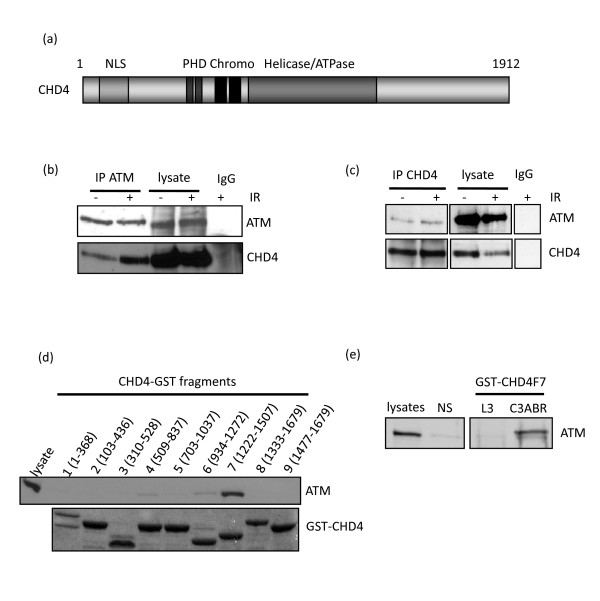
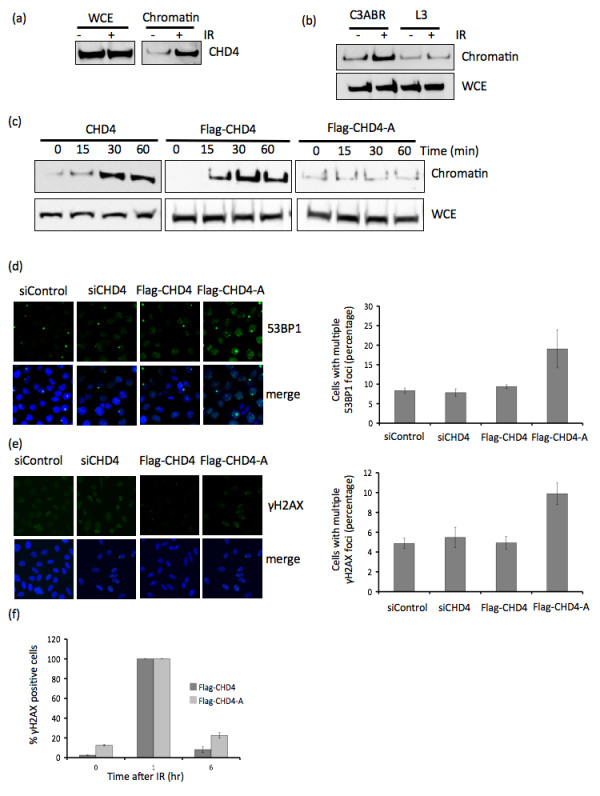
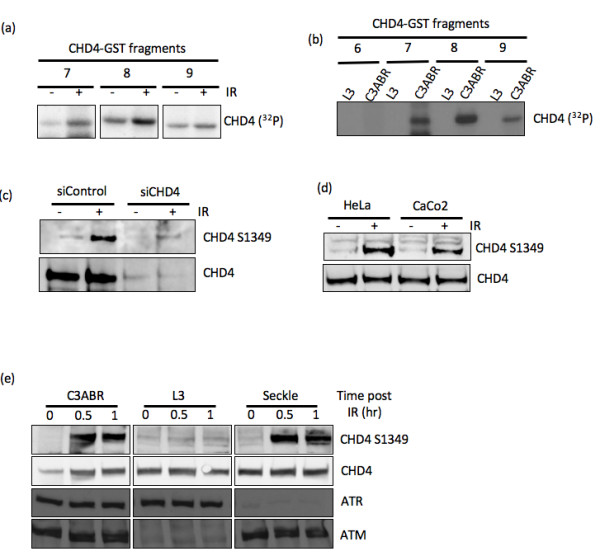
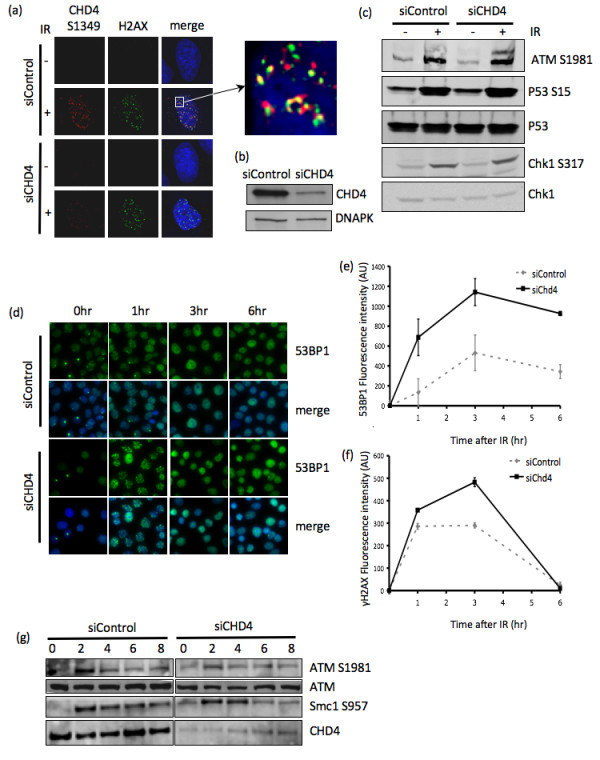
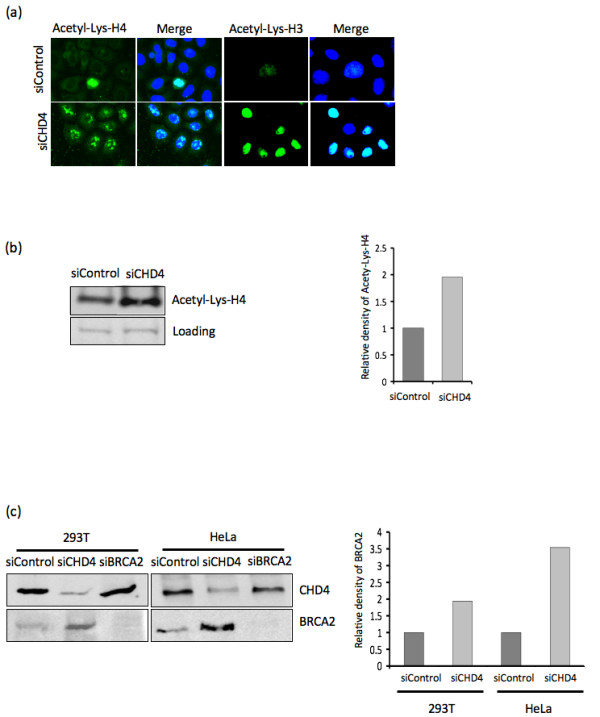
Here we describe the chromodomain helicase DNA-binding protein (CHD4) as a target of ATM kinase. We show that ionising radiation (IR)-induced phosphorylation of CHD4 affects its intranuclear organization resulting in increased chromatin binding/retention. We also show assembly of phosphorylated CHD4 foci at sites of DNA damage, which might be required to fulfil its function in the regulation of DNA repair. Consistent with this, cells overexpressing a phospho-mutant version of CHD4 that cannot be phosphorylated by ATM fail to show enhanced chromatin retention after DSBs and display high rates of spontaneous damage.
These results provide insight into how CHD4 phosphorylation might be required to remodel chromatin around DNA breaks allowing efficient DNA repair to occur.
为了维持细胞活力和遗传完整性,细胞在细胞毒性双链DNA断裂(DSB)诱导后必须迅速做出反应。这种反应需要一系列过程,包括DSB的稳定、断裂信号传导和修复。越来越明显的是,这一过程中的一个关键步骤是染色质重塑。
在这里,我们将染色质结构域解旋酶DNA结合蛋白(CHD4)描述为ATM激酶的一个靶点。我们表明,电离辐射(IR)诱导的CHD4磷酸化影响其核内组织,导致染色质结合/保留增加。我们还展示了磷酸化的CHD4在DNA损伤位点的聚集,这可能是其在DNA修复调节中发挥功能所必需的。与此一致的是,过表达不能被ATM磷酸化的CHD4磷酸化突变体的细胞,在DSB后未能显示出增强的染色质保留,并表现出高自发损伤率。
这些结果为理解CHD4磷酸化如何可能需要重塑DNA断裂周围的染色质以允许有效DNA修复的发生提供了见解。