Department of Pharmacology, Simmons Comprehensive Cancer Center, University of Texas Southwestern Medical Center at Dallas, Texas 75390, USA.
Clin Cancer Res. 2011 Jan 15;17(2):275-85. doi: 10.1158/1078-0432.CCR-10-1983. Epub 2011 Jan 11.
Pancreatic cancer is the fourth leading cause of cancer-related deaths, in which the 5-year survival rate is less than 5%. Current standard of care therapies offer little selectivity and high toxicity. Novel, tumor-selective approaches are desperately needed. Although prior work suggested that β-lapachone (β-lap) could be used for the treatment of pancreatic cancers, the lack of knowledge of the compound's mechanism of action prevented optimal use of this agent.
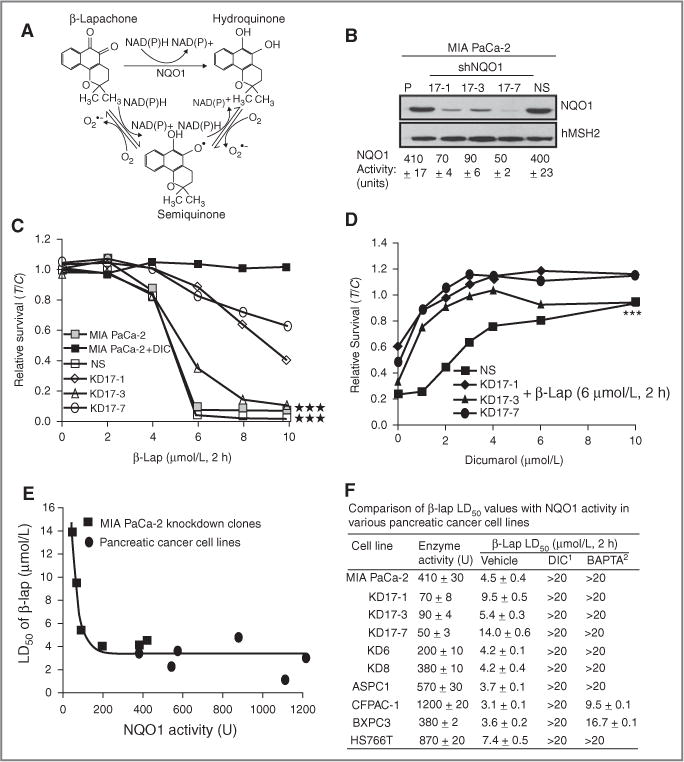
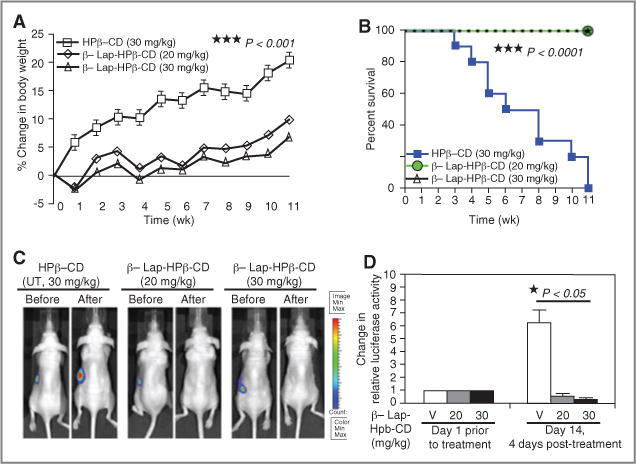
We examined the role of NAD(P)H:quinone oxidoreductase-1 (NQO1) in β-lap-mediated antitumor activity, using a series of MIA PaCa-2 pancreatic cancer clones varying in NQO1 levels by stable shRNA knockdown. The antitumor efficacy of β-lap was determined using an optimal hydroxypropyl-β-cyclodextran (HPβ-CD) vehicle formulation in metastatic pancreatic cancer models.
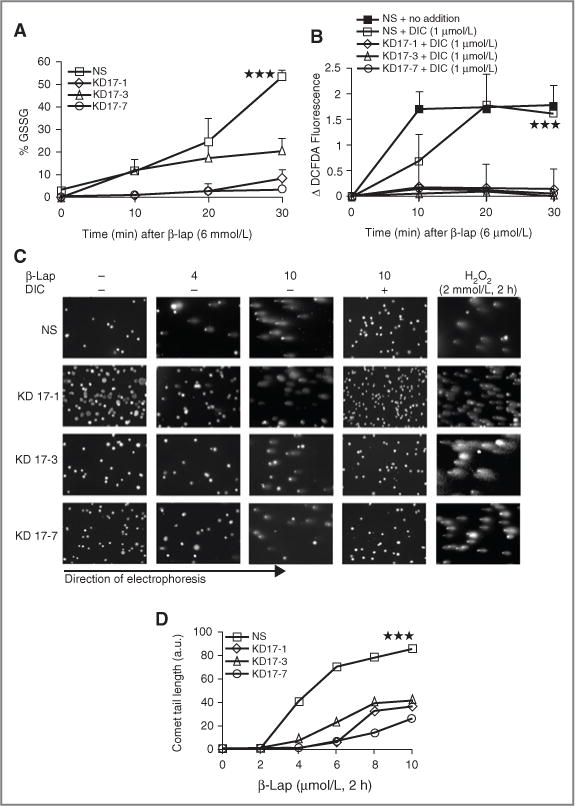
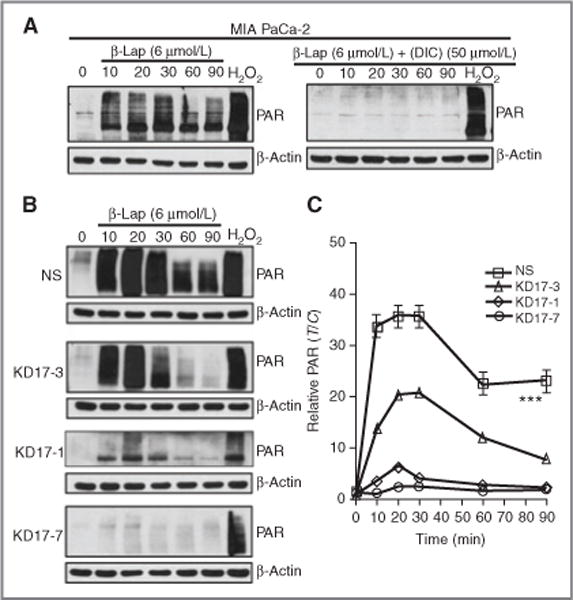
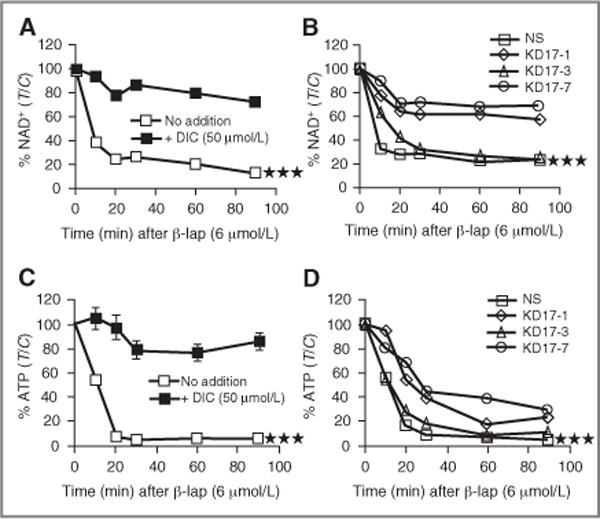
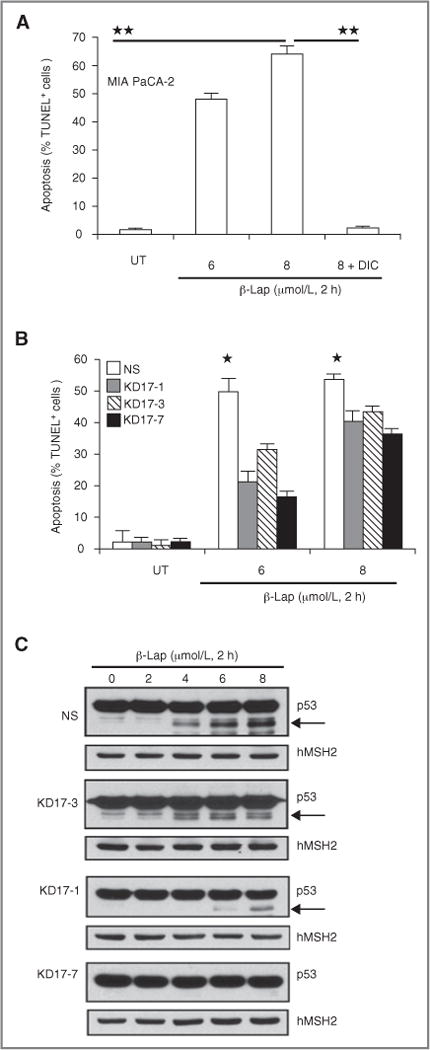
β-Lap-mediated cell death required ∼90 enzymatic units of NQO1. Essential downstream mediators of lethality were as follows: (i) reactive oxygen species (ROS); (ii) single-strand DNA breaks induced by ROS; (iii) poly(ADP-ribose)polymerase-1 (PARP1) hyperactivation; (iv) dramatic NAD(+)/ATP depletion; and (v) programmed necrosis. We showed that 1 regimen of β-lap therapy (5 treatments every other day) efficaciously regressed and reduced human pancreatic tumor burden and dramatically extended the survival of athymic mice, using metastatic pancreatic cancer models.
Because NQO1 enzyme activities are easily measured and commonly overexpressed (i.e., >70%) in pancreatic cancers 5- to 10-fold above normal tissue, strategies using β-lap to efficaciously treat pancreatic cancers are indicated. On the basis of optimal drug formulation and efficacious antitumor efficacy, such a therapy should be extremely safe and not accompanied with normal tissue toxicity or hemolytic anemia.
胰腺癌是癌症相关死亡的第四大原因,其 5 年生存率低于 5%。目前的标准治疗方法选择性低,毒性高。迫切需要新的、肿瘤选择性的方法。尽管先前的工作表明β-拉帕酮(β-lap)可用于治疗胰腺癌,但由于缺乏对该化合物作用机制的了解,限制了该药物的最佳应用。
我们使用一系列通过稳定 shRNA 敲低 NQO1 水平的 MIA PaCa-2 胰腺癌细胞克隆,研究 NAD(P)H:醌氧化还原酶-1 (NQO1) 在β-拉帕酮介导的抗肿瘤活性中的作用。在转移性胰腺癌细胞模型中,使用最佳羟丙基-β-环糊精(HPβ-CD)载体配方来确定β-拉帕酮的抗肿瘤疗效。
β-拉帕酮介导的细胞死亡需要约 90 个单位的 NQO1 酶。致死作用的必需下游介质如下:(i)活性氧(ROS);(ii)ROS 引起的单链 DNA 断裂;(iii)聚(ADP-核糖)聚合酶-1(PARP1)超活化;(iv)NAD(+) / ATP 耗竭严重;和(v)程序性坏死。我们表明,在转移性胰腺癌细胞模型中,使用 1 种β-拉帕酮治疗方案(每隔一天进行 5 次治疗)可有效地消退和减少人胰腺肿瘤负担,并显著延长无胸腺小鼠的存活时间。
由于 NQO1 酶活性很容易测量,并且在胰腺癌细胞中通常过表达(即比正常组织高 5-10 倍),因此使用β-拉帕酮有效治疗胰腺癌的策略是可行的。基于最佳药物配方和有效的抗肿瘤疗效,这种治疗方法应该非常安全,不会伴有正常组织毒性或溶血性贫血。