Institute of Nuclear Medicine, University College London Hospitals National Health Service Trust, London, United Kingdom.
Ann Saudi Med. 2011 Jan-Feb;31(1):3-13. doi: 10.4103/0256-4947.75771.
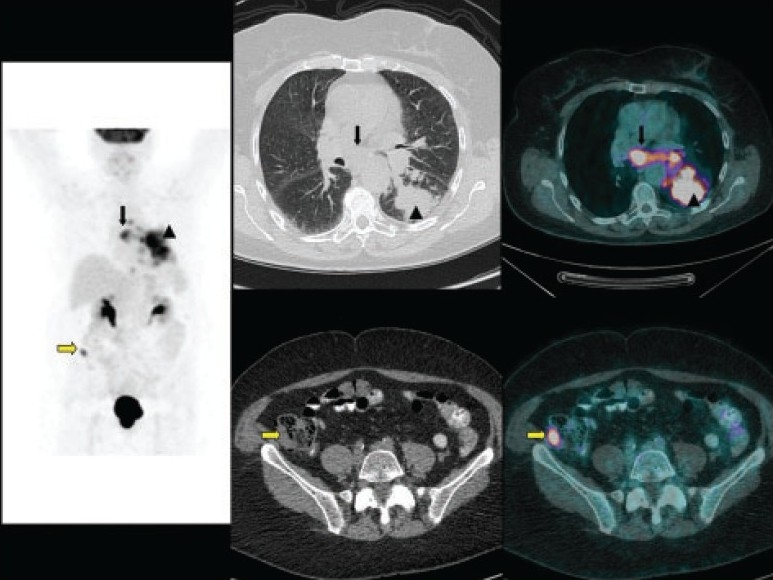
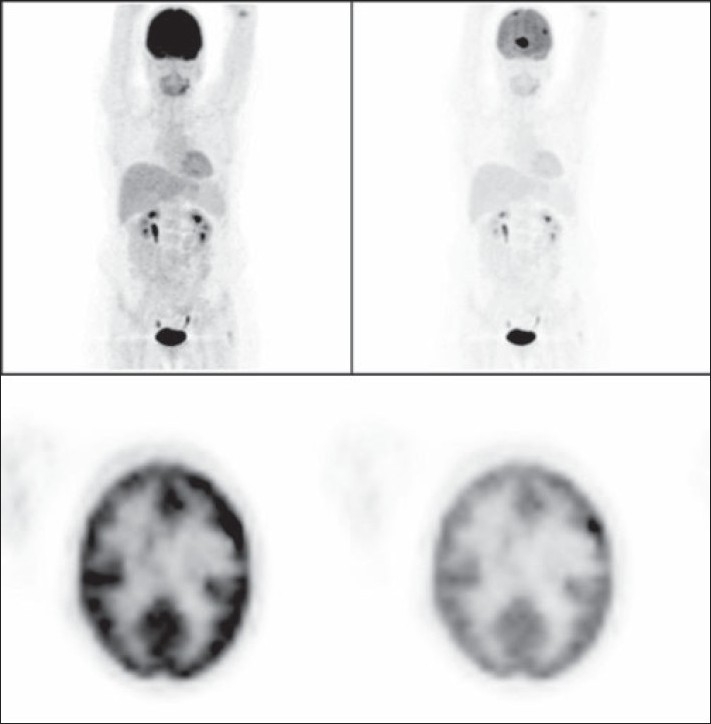
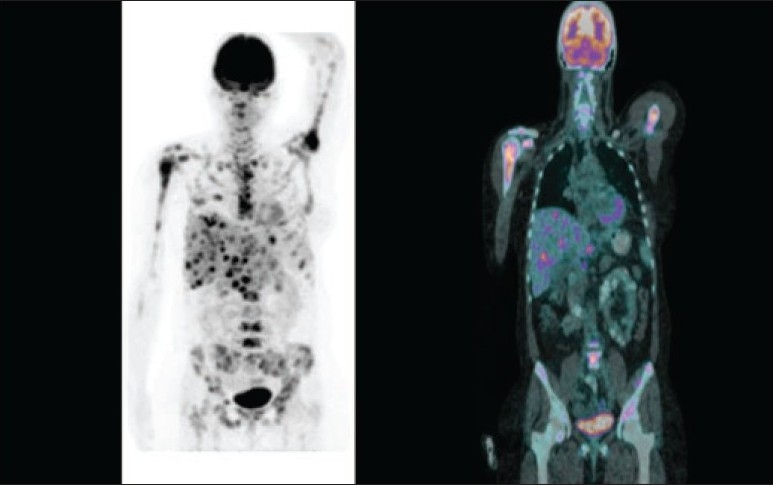
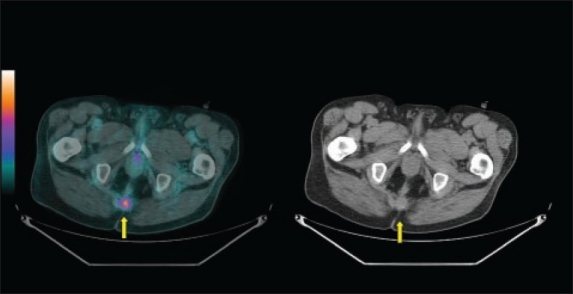
Accurate diagnosis and staging are essential for the optimal management of cancer patients. Positron emission tomography with 2-deoxy-2-[fluorine-18]fluoro-D-glucose integrated with computed tomography (18F-FDG PET/CT) has emerged as a powerful imaging tool for the detection of various cancers. The combined acquisition of PET and CT has synergistic advantages over PET or CT alone and minimizes their individual limitations. It is a valuable tool for staging and restaging of some tumors and has an important role in the detection of recurrence in asymptomatic patients with rising tumor marker levels and patients with negative or equivocal findings on conventional imaging techniques. It also allows for monitoring response to therapy and permitting timely modification of therapeutic regimens. In about 27% of the patients, the course of management is changed. This review provides guidance for oncologists/radiotherapists and clinical and surgical specialists on the use of 18F-FDG PET/CT in oncology.
准确的诊断和分期对于癌症患者的最佳管理至关重要。正电子发射断层扫描与2-脱氧-2-[氟-18]氟-D-葡萄糖结合计算机断层扫描(18F-FDG PET/CT)已成为检测各种癌症的强大成像工具。PET和CT的联合采集相对于单独的PET或CT具有协同优势,并最大限度地减少了它们各自的局限性。它是一些肿瘤分期和再分期的有价值工具,在检测肿瘤标志物水平升高的无症状患者以及传统成像技术检查结果为阴性或不明确的患者的复发方面具有重要作用。它还可以监测治疗反应并允许及时修改治疗方案。在约27%的患者中,治疗过程会发生改变。本综述为肿瘤学家/放射治疗师以及临床和外科专家在肿瘤学中使用18F-FDG PET/CT提供指导。