Sălăgeanu Aurora, Tucureanu Catalin, Lerescu Lucian, Caraş Iuliana, Pitica Ramona, Gangurà Gabriel, Costea Radu, Neagu Stefan
Infection and Immunity Laboratory, Cantacuzino National Institute for Research and Development in Microbiology and Immunology, Bucharest, Romania.
J Med Life. 2010 Oct-Dec;3(4):416-20.
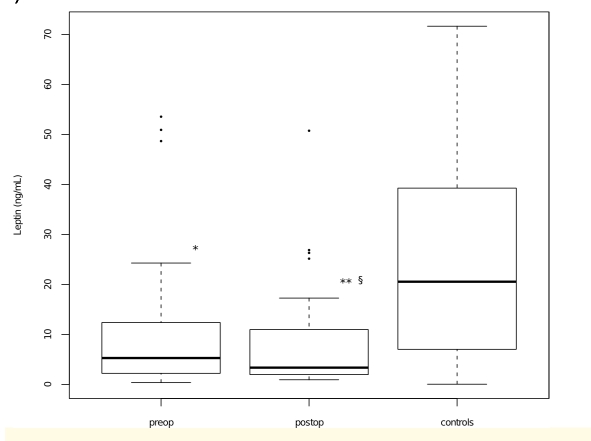
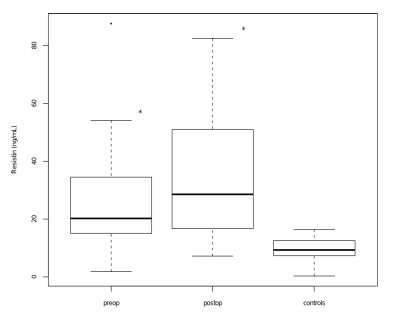
Adipose tissue displays characteristics of an endocrine organ releasing a number of adipocyte-specific factors known as adipocytokines. It has been recently suggested that adipocytokines may play a role in pathogenesis and progression of certain cancers, in particular in colorectal cancer. The aim of this study was to investigate the association between several blood adipocytokine levels and clinicopathological characteristics of colon cancer patients undergoing surgery. The study group comprised of 29 patients who underwent surgical resection for colon cancer at Emergency University Hospital Bucharest and 27 healthy volunteers. The serum levels of adipocytokines were measured using multianalyte xMap profiling technology (Luminex). Resistin levels were significantly higher in colon cancer patients while leptin serum levels were significantly lower as compared to controls. Leptin levels decreased gradually with tumor stage and aggressiveness. Taken together, these results of this study suggest that adipokines, in particular resistin and leptin may be involved in development and progression of colon cancer.
脂肪组织具有内分泌器官的特征,可释放多种被称为脂肪细胞因子的脂肪细胞特异性因子。最近有人提出,脂肪细胞因子可能在某些癌症的发病机制和进展中发挥作用,尤其是在结直肠癌中。本研究的目的是调查接受手术的结肠癌患者的几种血液脂肪细胞因子水平与临床病理特征之间的关联。研究组包括29例在布加勒斯特紧急大学医院接受结肠癌手术切除的患者和27名健康志愿者。使用多分析物xMap分析技术(Luminex)测量脂肪细胞因子的血清水平。与对照组相比,结肠癌患者的抵抗素水平显著更高,而瘦素血清水平显著更低。瘦素水平随着肿瘤分期和侵袭性逐渐降低。综上所述,本研究的这些结果表明,脂肪因子,尤其是抵抗素和瘦素可能参与结肠癌的发生和发展。