Fraenkl Stephan A, Mozaffarieh Maneli, Flammer Josef
Department of Ophthalmology, University of Basel, Mittlere Strasse 91, 4031 Basel, Switzerland.
EPMA J. 2010 Jun;1(2):253-261. doi: 10.1007/s13167-010-0025-2. Epub 2010 Jun 18.
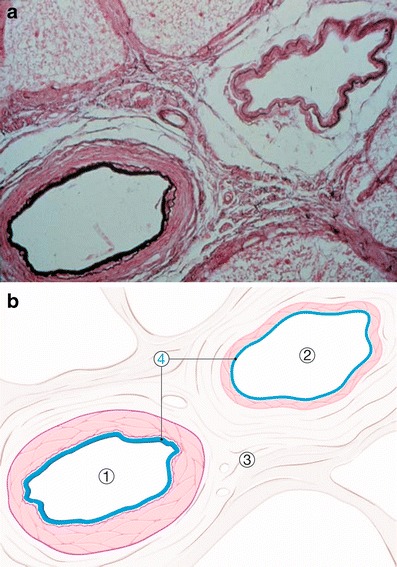
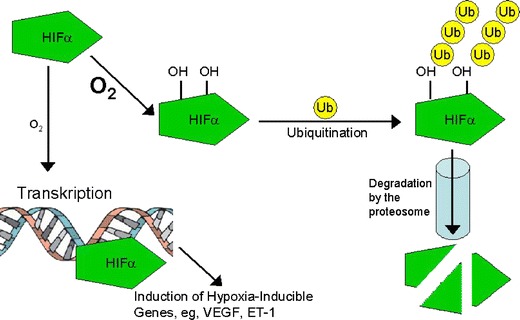
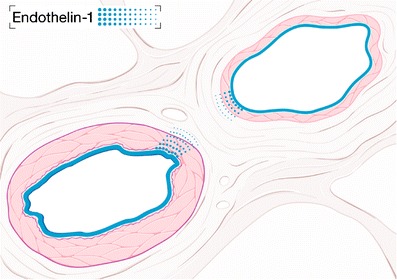
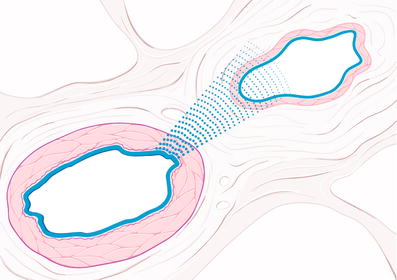
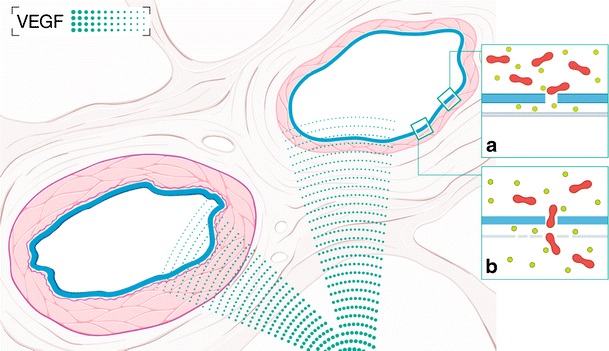
A retinal vein occlusion (RVO) is a sight threatening disease. It can be divided into central vein occlusion and branch retinal vein occlusion. The pathogenesis of the condition remains to be solved. Mechanical compression of the vessel wall or thrombotic occlusion of the vessel lumen, sometimes combined with rheological disorders, are often assumed pathomechanisms. Accordingly, the therapy relies either on mechanical decompression, lyses of thrombi or improvement of rheology. A number of observations however, such as the relationship of RVO to atherosclerotic risk factors, spontaneous reversibility particularly in young patients, rest flow observed in angiography, occlusion despite anticoagulation or thrombocytopenia and finally the positive effect of anti-VEGF therapy are not explained by the present pathogenetic concept. As a new concept we propose a local venous constriction induced by vasoconstrictive molecules diffusing from neighbouring diseased arteries and/or from other neighbouring (hypoxic) tissues. Recognizing these postulated conditions might lead to an earlier identification of impending vein occlusions as well as to a treatment more tailored to the risk factor constellation of the particular patient.
视网膜静脉阻塞(RVO)是一种威胁视力的疾病。它可分为中央静脉阻塞和视网膜分支静脉阻塞。该病的发病机制仍有待解决。血管壁的机械性压迫或血管腔的血栓性阻塞,有时伴有流变学紊乱,常被认为是发病机制。因此,治疗要么依赖于机械减压、血栓溶解或流变学改善。然而,一些观察结果,如RVO与动脉粥样硬化危险因素的关系、特别是年轻患者的自发可逆性、血管造影中观察到的静息血流、抗凝或血小板减少时仍发生阻塞,以及抗VEGF治疗的积极效果,目前的发病机制概念无法解释。作为一个新概念,我们提出由从邻近病变动脉和/或其他邻近(缺氧)组织扩散而来的血管收缩分子引起的局部静脉收缩。认识到这些假定情况可能会导致更早地识别即将发生的静脉阻塞,并导致更针对特定患者危险因素组合的治疗。