Department of Pediatrics, Vanderbilt University, Nashville, TN 37232-8300, USA.
J Allergy Clin Immunol. 2011 Apr;127(4):883-91. doi: 10.1016/j.jaci.2010.11.041. Epub 2011 Jan 26.
Risk factors for severe human rhinovirus (HRV)-associated infant illness are unknown.
We sought to examine the role of HRV infection in infant respiratory tract illness and assess viral and host risk factors for HRV-associated disease severity.
We used a prospective cohort of term, previously healthy infants enrolled during an inpatient or outpatient visit for acute upper or lower respiratory tract illness during the fall-spring months of 2004-2008. Illness severity was determined by using an ordinal bronchiolitis severity score, with higher scores indicating more severe disease. HRV was identified by means of real-time RT-PCR. The VP4/VP2 region from HRV-positive specimens was sequenced to determine species.
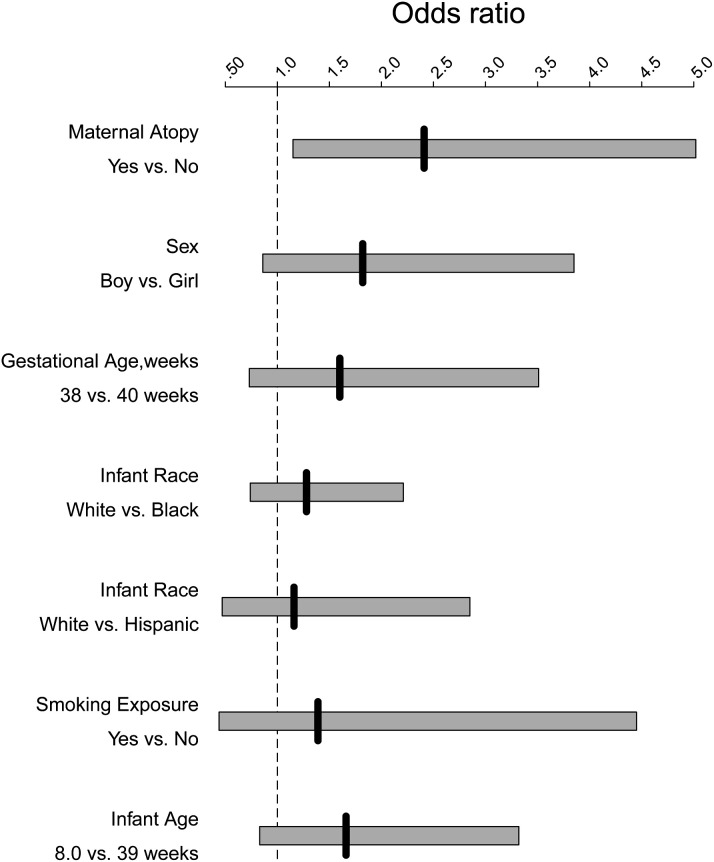
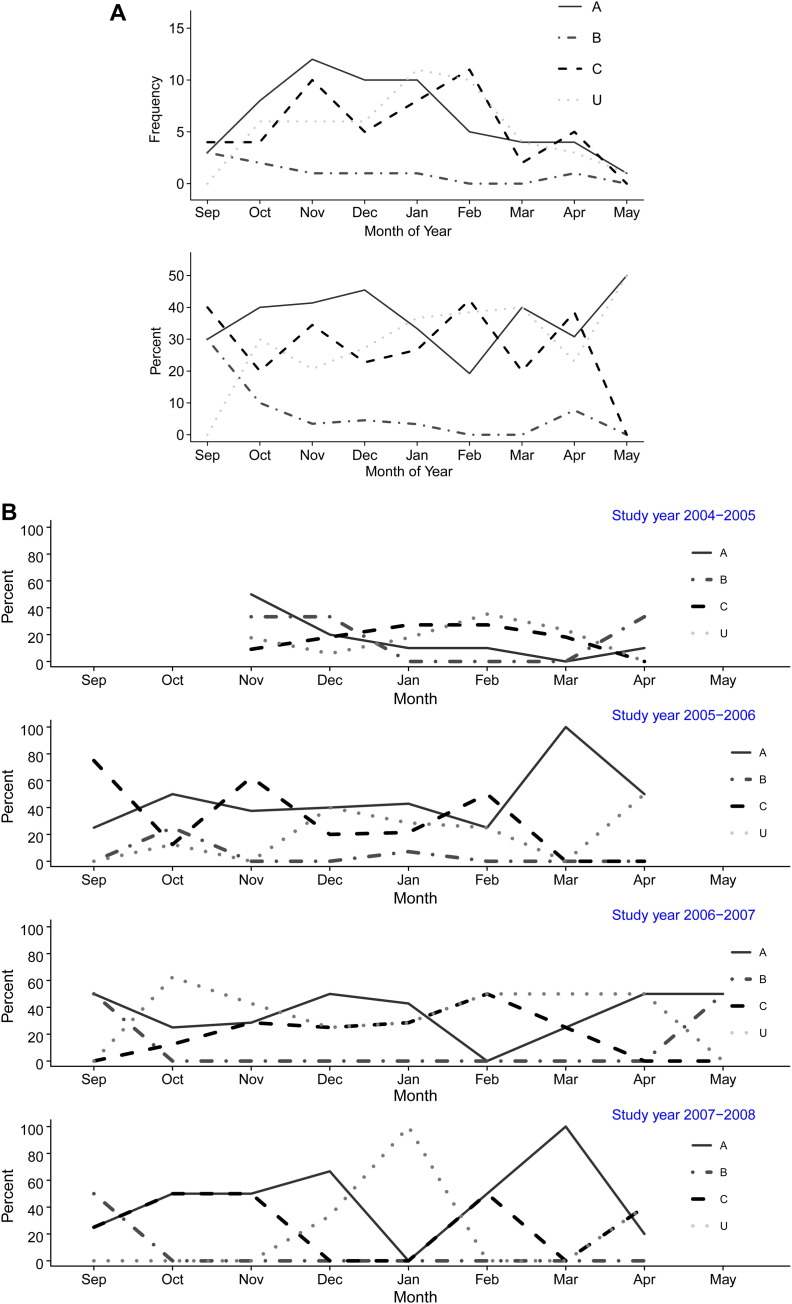
Of 630 infants with bronchiolitis or upper respiratory tract illnesses (URIs), 162 (26%) had HRV infection; HRV infection was associated with 18% of cases of bronchiolitis and 47% of cases of URI. Among infants with HRV infection, 104 (64%) had HRV infection alone. Host factors associated with more severe HRV-associated illness included a maternal and family history of atopy (median score of 3.5 [interquartile range [IQR], 1.0-7.8] vs 2.0 [IQR, 1.0-5.2] and 3.5 [IQR, 1.0-7.5] vs 2.0 [IQR, 0-4.0]). In adjusted analyses maternal history of atopy conferred an increase in the risk for more severe HRV-associated bronchiolitis (odds ratio, 2.39; 95% CI, 1.14-4.99; P = .02). In a similar model maternal asthma was also associated with greater HRV-associated bronchiolitis severity (odds ratio, 2.49, 95% CI, 1.10-5.67; P = .03). Among patients with HRV infection, 35% had HRVA, 6% had HRVB, and 30% had HRVC.
HRV infection was a frequent cause of bronchiolitis and URIs among previously healthy term infants requiring hospitalization or unscheduled outpatient visits. Substantial viral genetic diversity was seen among the patients with HRV infection, and predominant groups varied by season and year. Host factors, including maternal atopy, were associated with more severe infant HRV-associated illness.
严重人鼻病毒(HRV)相关婴儿疾病的危险因素尚不清楚。
我们旨在研究 HRV 感染在婴儿呼吸道疾病中的作用,并评估 HRV 相关疾病严重程度的病毒和宿主危险因素。
我们使用了一项前瞻性队列研究,该队列纳入了 2004 年至 2008 年秋季至春季期间因急性上呼吸道或下呼吸道疾病在住院或门诊就诊的足月、既往健康的婴儿。通过使用支气管哮喘严重程度的序贯评分来确定疾病严重程度,评分越高表示疾病越严重。通过实时 RT-PCR 检测 HRV。对 HRV 阳性标本的 VP4/VP2 区进行测序以确定种属。
在 630 名患有毛细支气管炎或上呼吸道感染(URI)的婴儿中,有 162 名(26%)存在 HRV 感染;HRV 感染与 18%的毛细支气管炎病例和 47%的 URI 病例有关。在 HRV 感染的婴儿中,有 104 名(64%)仅感染 HRV。与更严重的 HRV 相关疾病相关的宿主因素包括母体和家族过敏史(中位数评分为 3.5[四分位距(IQR),1.0-7.8] vs 2.0[IQR,1.0-5.2]和 3.5[IQR,1.0-7.5] vs 2.0[IQR,0-4.0])。在调整后的分析中,母体过敏史使更严重的 HRV 相关毛细支气管炎的风险增加(比值比,2.39;95%置信区间,1.14-4.99;P=0.02)。在类似的模型中,母体哮喘也与更严重的 HRV 相关毛细支气管炎严重程度相关(比值比,2.49;95%置信区间,1.10-5.67;P=0.03)。在 HRV 感染的患者中,35%为 HRVA,6%为 HRVB,30%为 HRVC。
HRV 感染是既往健康的足月婴儿住院或非计划性门诊就诊的毛细支气管炎和 URI 的常见原因。在 HRV 感染患者中观察到大量的病毒遗传多样性,且主要组群因季节和年份而异。宿主因素,包括母体过敏,与更严重的婴儿 HRV 相关疾病有关。