Centre for Infection & Immunity, School of Medicine, Dentistry & Biomedical Sciences, Queens University Belfast, Belfast BT9 7BL, Northern Ireland.
Virol J. 2011 Jan 27;8:43. doi: 10.1186/1743-422X-8-43.
Human respiratory syncytial virus (RSV) causes severe respiratory disease in infants. Airway epithelial cells are the principle targets of RSV infection. However, the mechanisms by which it causes disease are poorly understood. Most RSV pathogenesis data are derived using laboratory-adapted prototypic strains. We hypothesized that such strains may be poorly representative of recent clinical isolates in terms of virus/host interactions in primary human bronchial epithelial cells (PBECs).
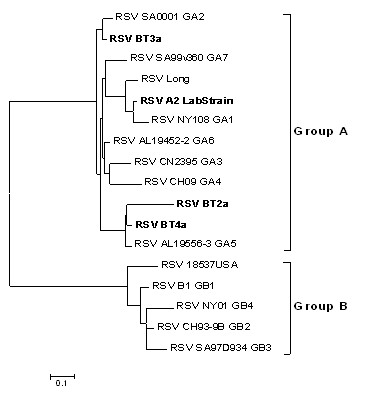
To address this hypothesis, we isolated three RSV strains from infants hospitalized with bronchiolitis and compared them with the prototypic RSV A2 in terms of cytopathology, virus growth kinetics and chemokine secretion in infected PBEC monolayers.
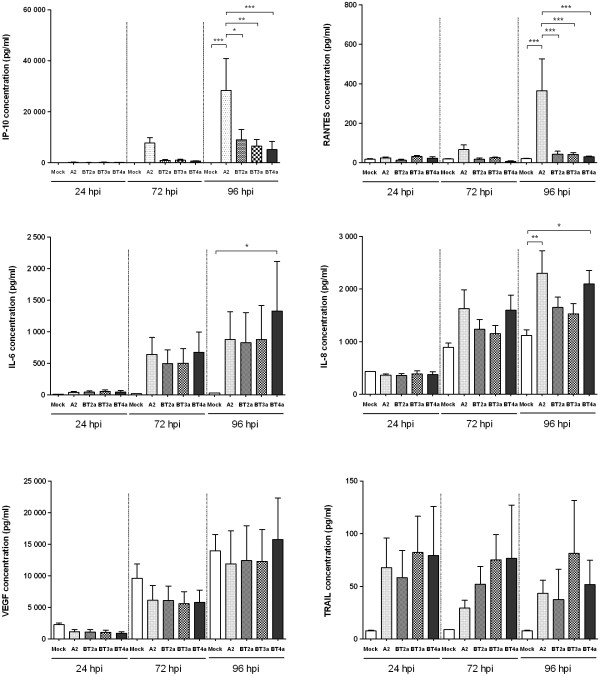
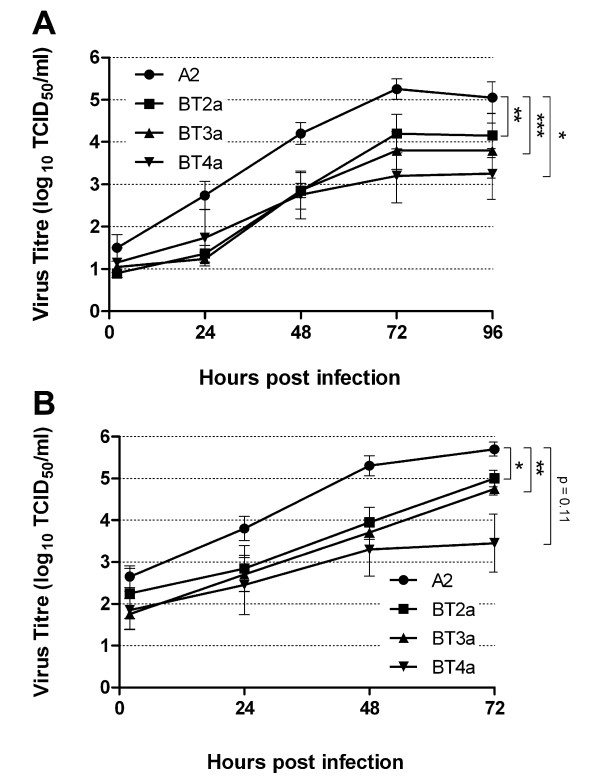
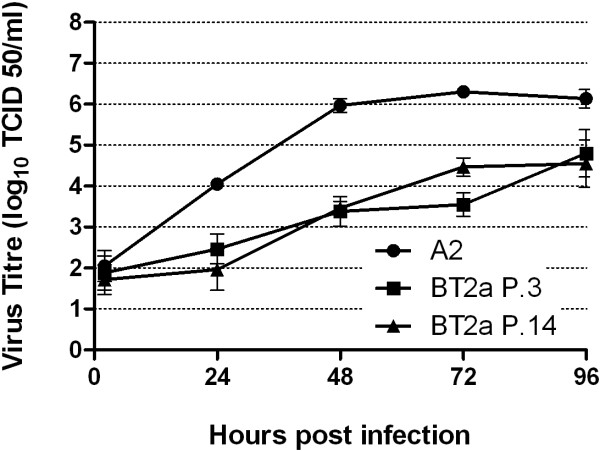
RSV A2 rapidly obliterated the PBECs, whereas the clinical isolates caused much less cytopathology. Concomitantly, RSV A2 also grew faster and to higher titers in PBECs. Furthermore, dramatically increased secretion of IP-10 and RANTES was evident following A2 infection compared with the clinical isolates.
The prototypic RSV strain A2 is poorly representative of recent clinical isolates in terms of cytopathogenicity, viral growth kinetics and pro-inflammatory responses induced following infection of PBEC monolayers. Thus, the choice of RSV strain may have important implications for future RSV pathogenesis studies.
人类呼吸道合胞病毒(RSV)可导致婴儿发生严重的呼吸道疾病。气道上皮细胞是 RSV 感染的主要靶细胞。然而,其导致疾病的机制尚未完全阐明。大多数 RSV 发病机制数据是使用实验室适应的原型株获得的。我们假设,就呼吸道合胞病毒在原代人支气管上皮细胞(PBEC)中的病毒/宿主相互作用而言,此类株可能与最近的临床分离株相差较大。
为了验证这一假设,我们从因细支气管炎住院的婴儿中分离了三株 RSV 株,并将其与原型株 RSV A2 进行了比较,比较内容包括细胞病变、病毒生长动力学和感染 PBEC 单层后趋化因子的分泌。
RSV A2 迅速破坏 PBEC,而临床分离株则引起的细胞病变要少得多。同时,RSV A2 在 PBEC 中的生长速度也更快,滴度更高。此外,与临床分离株相比,A2 感染后 IP-10 和 RANTES 的分泌明显增加。
在细胞病变、病毒生长动力学和 PBEC 单层感染后诱导的促炎反应方面,原型 RSV 株 A2 与最近的临床分离株相差较大。因此,RSV 株的选择可能对未来的 RSV 发病机制研究有重要影响。