Division of Rheumatology and Rheumatic Diseases Research Core Center, Department of Internal Medicine, University of Michigan, 1500 East Medical Center Drive, Ann Arbor, MI 48109, USA.
Arthritis Res Ther. 2011 Feb 4;13(1):R15. doi: 10.1186/ar3239.
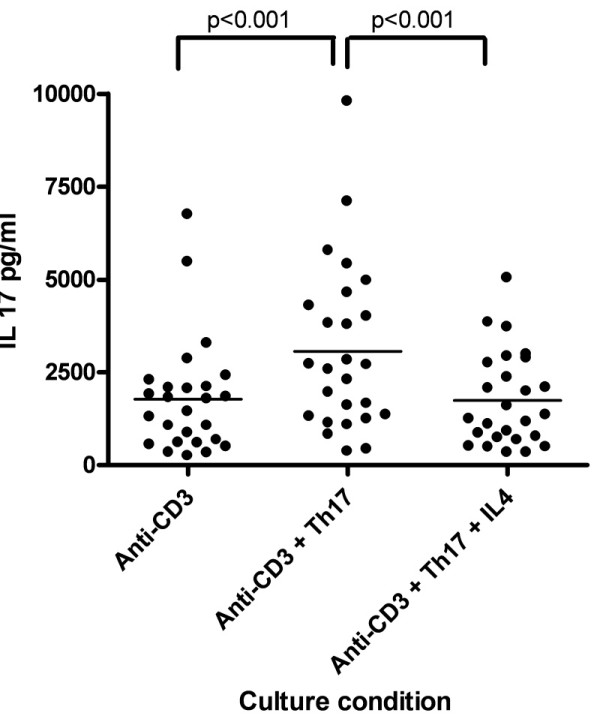
Rheumatoid arthritis (RA) is now suspected to be driven by pathogenic Th17 cells that secrete interleukin (IL)-17 and can be regulated by IL-4. A single-nucleotide polymorphism (SNP), I50V, in the coding region of the human IL-4 receptor (IL-4R) is associated with rapid development of erosive disease in RA. The present study was undertaken to determine whether this SNP renders the IL-4R less able to transduce signals that regulate IL-17 production.
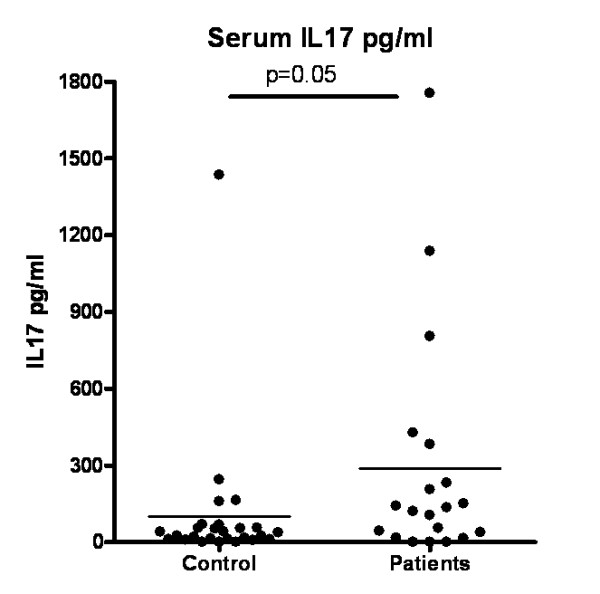
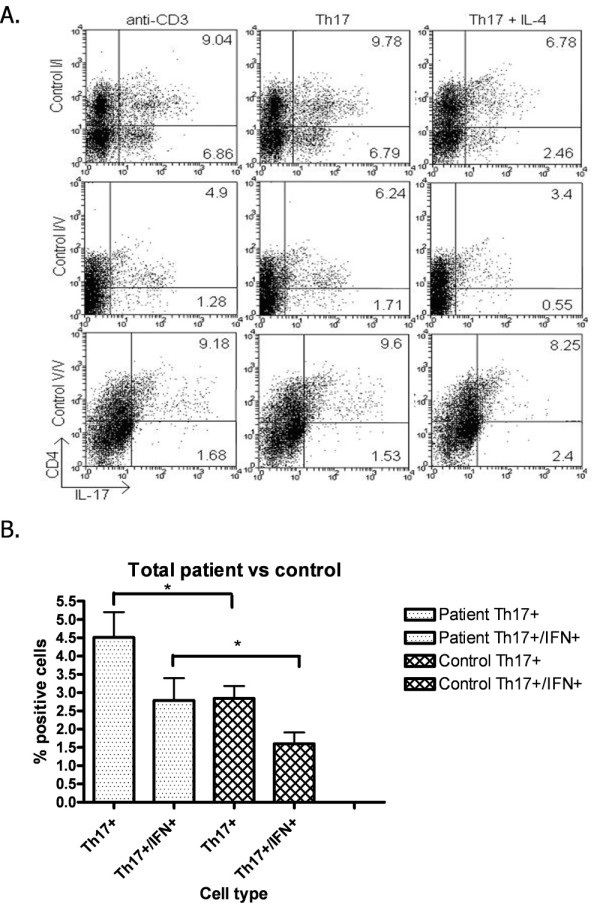
Peripheral blood mononuclear cells were activated under Th17-stimulating conditions in the presence or absence of IL-4, and IL-17 production was measured by both enzyme-linked immunosorbent assay (ELISA) and flow cytometry. Serum IL-17 was also measured by ELISA. Paired comparisons were performed using the two-tailed t-test. IL-4 receptor gene alleles were determined by polymerase chain reaction.
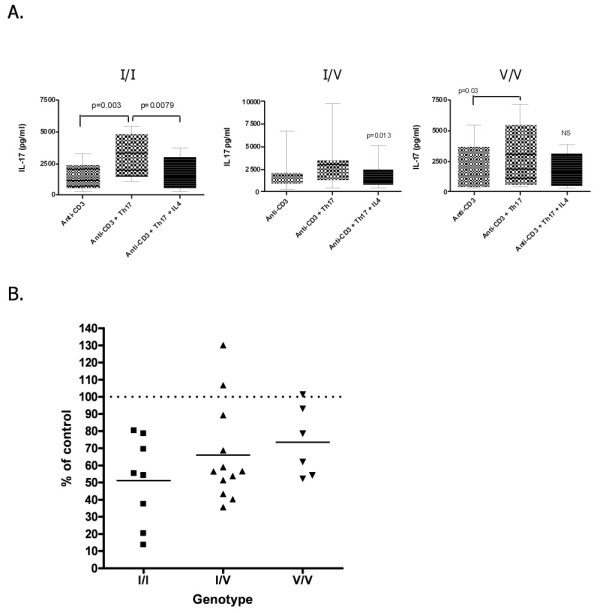
In healthy individuals, IL-4 significantly inhibited IL-17 production by cells from subjects with the I/I genotype (P = 0.0079) and the I/V genotype (P = 0.013), but not the V/V genotype (P > 0.05). In a cross-sectional sample of patients with established RA, the magnitude of the in vitro effect of IL-4 was lower and was not associated with a specific IL-4R allele. Serum IL-17 levels were higher in RA patients than in healthy individuals, as was the percentage of CD4+ cells that produced IL-17.
These results indicate that an inherited polymorphism of the IL-4R controls the ability of the human immune system to regulate the magnitude of IL-17 production. However, in established RA, this pattern may be altered, possibly due to secondary effects of both RA itself as well as immunomodulatory medications. Ineffective control of Th17 immune responses is a potential mechanism to explain why IL-4R is an important severity gene in RA, but this issue will require careful study of a cohort of new-onset RA patients.
类风湿关节炎(RA)现在被怀疑是由致病性 Th17 细胞驱动的,这些细胞分泌白细胞介素(IL)-17,并可以受到 IL-4 的调节。人类白细胞介素-4 受体(IL-4R)编码区的单核苷酸多态性(SNP)I50V 与 RA 中侵蚀性疾病的快速发展有关。本研究旨在确定该 SNP 是否使 IL-4R 更难以传递调节 IL-17 产生的信号。
在 Th17 刺激条件下,激活外周血单核细胞,并用酶联免疫吸附试验(ELISA)和流式细胞术测量 IL-17 的产生。还通过 ELISA 测量血清 IL-17。使用双尾 t 检验进行配对比较。通过聚合酶链反应确定 IL-4 受体基因等位基因。
在健康个体中,IL-4 显著抑制 I/I 基因型(P = 0.0079)和 I/V 基因型(P = 0.013)受试者细胞的 IL-17 产生,但不抑制 V/V 基因型(P > 0.05)。在患有已确诊 RA 的患者的横断面样本中,IL-4 的体外作用幅度较低,并且与特定的 IL-4R 等位基因无关。RA 患者的血清 IL-17 水平高于健康个体,产生 IL-17 的 CD4+细胞的百分比也更高。
这些结果表明,IL-4R 的遗传多态性控制着人类免疫系统调节 IL-17 产生幅度的能力。然而,在已确诊的 RA 中,这种模式可能会发生改变,这可能是由于 RA 本身以及免疫调节药物的继发性影响所致。Th17 免疫反应的控制无效是一个潜在的机制,可以解释为什么 IL-4R 是 RA 中的一个重要严重程度基因,但这个问题需要对一组新发病例的 RA 患者进行仔细研究。