Department of Systems and Computational Neurobiology, Max-Planck-Institute of Neurobiology, Martinsried, Germany.
PLoS One. 2011 Jan 31;6(1):e16303. doi: 10.1371/journal.pone.0016303.
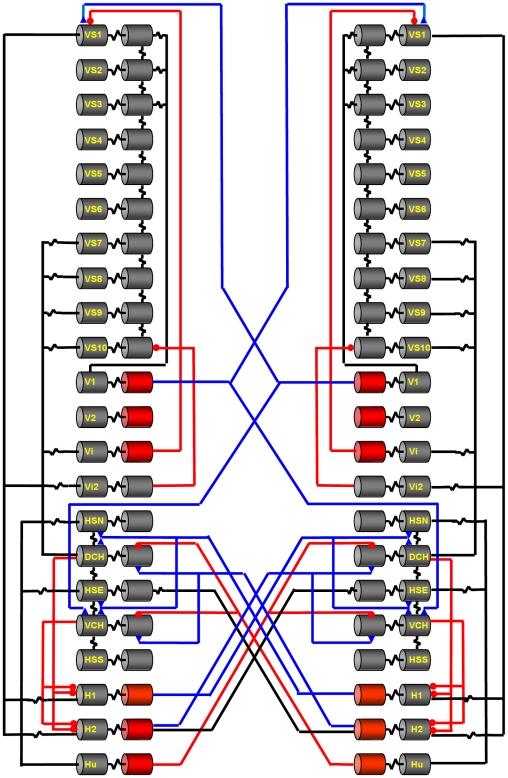
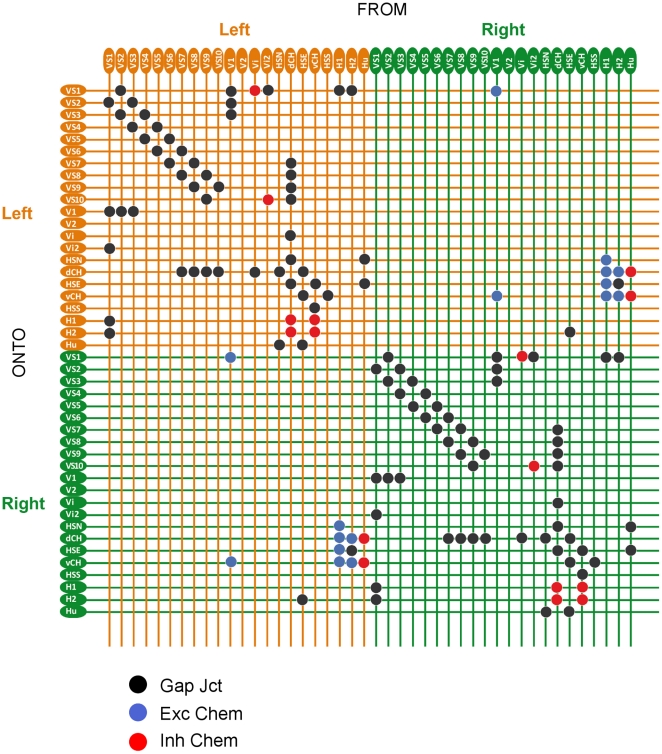
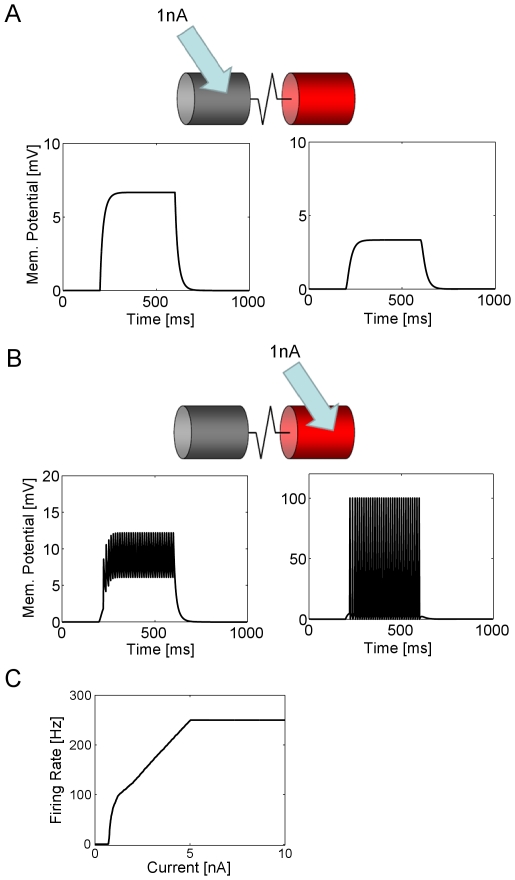
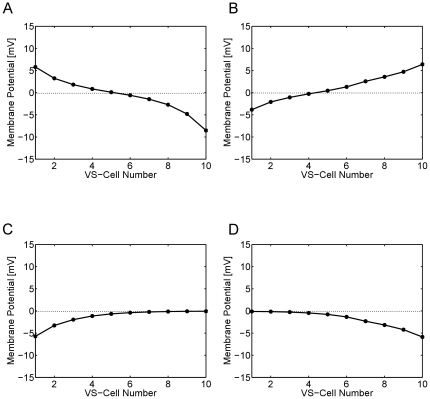
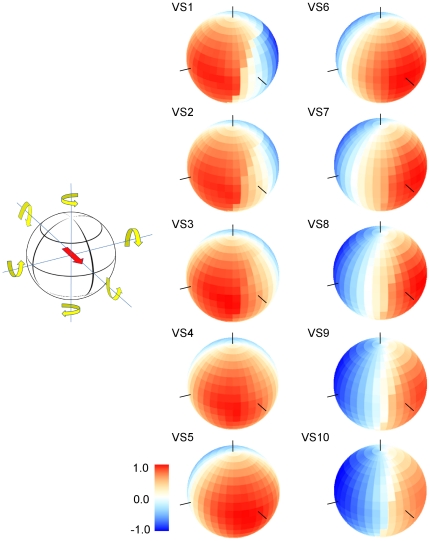
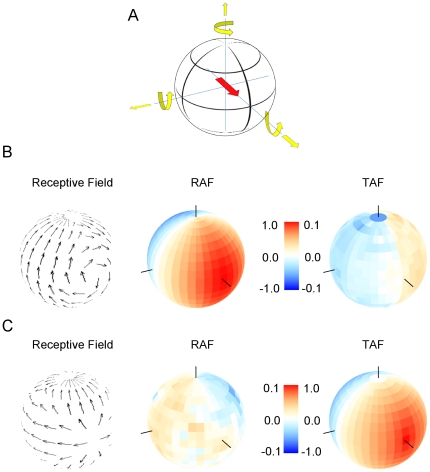
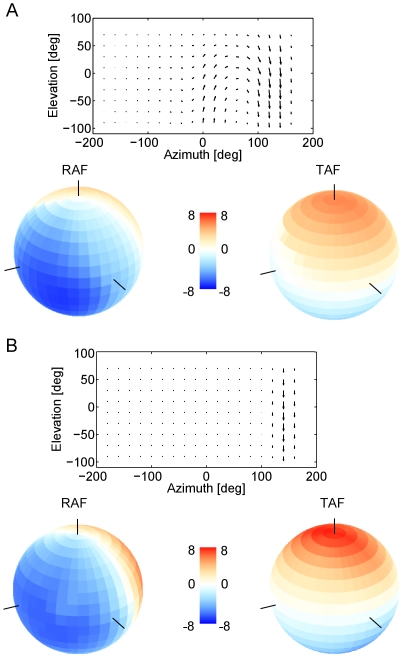
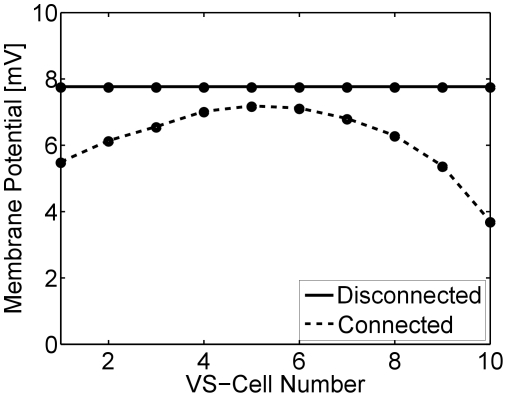
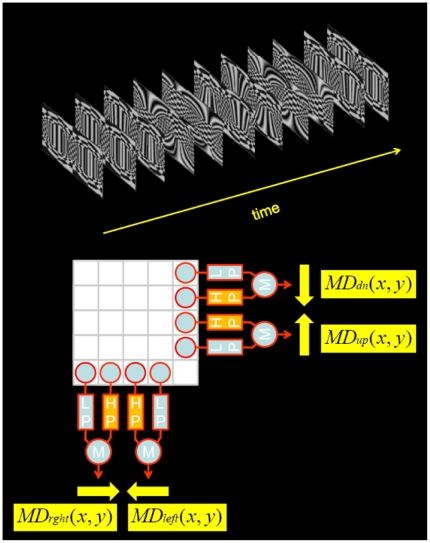
Optic flow based navigation is a fundamental way of visual course control described in many different species including man. In the fly, an essential part of optic flow analysis is performed in the lobula plate, a retinotopic map of motion in the environment. There, the so-called lobula plate tangential cells possess large receptive fields with different preferred directions in different parts of the visual field. Previous studies demonstrated an extensive connectivity between different tangential cells, providing, in principle, the structural basis for their large and complex receptive fields. We present a network simulation of the tangential cells, comprising most of the neurons studied so far (22 on each hemisphere) with all the known connectivity between them. On their dendrite, model neurons receive input from a retinotopic array of Reichardt-type motion detectors. Model neurons exhibit receptive fields much like their natural counterparts, demonstrating that the connectivity between the lobula plate tangential cells indeed can account for their complex receptive field structure. We describe the tuning of a model neuron to particular types of ego-motion (rotation as well as translation around/along a given body axis) by its 'action field'. As we show for model neurons of the vertical system (VS-cells), each of them displays a different type of action field, i.e., responds maximally when the fly is rotating around a particular body axis. However, the tuning width of the rotational action fields is relatively broad, comparable to the one with dendritic input only. The additional intra-lobula-plate connectivity mainly reduces their translational action field amplitude, i.e., their sensitivity to translational movements along any body axis of the fly.
基于光流的导航是许多物种(包括人类)描述的视觉路径控制的基本方法。在蝇类中,光流分析的一个重要部分是在小叶板中完成的,小叶板是环境中运动的视网膜映射。在那里,所谓的小叶板切线细胞具有大的感受野,在视野的不同部分具有不同的优选方向。以前的研究表明,不同的切线细胞之间存在广泛的连接,为它们的大而复杂的感受野提供了结构基础。我们提出了一个切线细胞的网络模拟,包括迄今为止研究的大多数神经元(每个半球 22 个),以及它们之间所有已知的连接。在它们的树突上,模型神经元从视网膜类型的运动探测器的排列中接收输入。模型神经元表现出与自然对应物非常相似的感受野,这表明小叶板切线细胞之间的连接确实可以解释它们复杂的感受野结构。我们通过“作用场”来描述模型神经元对特定类型的自身运动(围绕或沿着特定身体轴的旋转以及平移)的调谐。正如我们对垂直系统(VS 细胞)的模型神经元所示,它们中的每一个都显示出不同类型的作用场,即在蝇围绕特定身体轴旋转时响应最大。然而,旋转作用场的调谐宽度相对较宽,与仅具有树突输入的调谐宽度相当。小叶板内的附加连接主要降低了它们的平移作用场幅度,即它们对蝇体轴上任何平移运动的敏感性。