National Veterinary Institute, 752 89 Uppsala, Sweden.
Acta Vet Scand. 2011 Feb 11;53(1):9. doi: 10.1186/1751-0147-53-9.
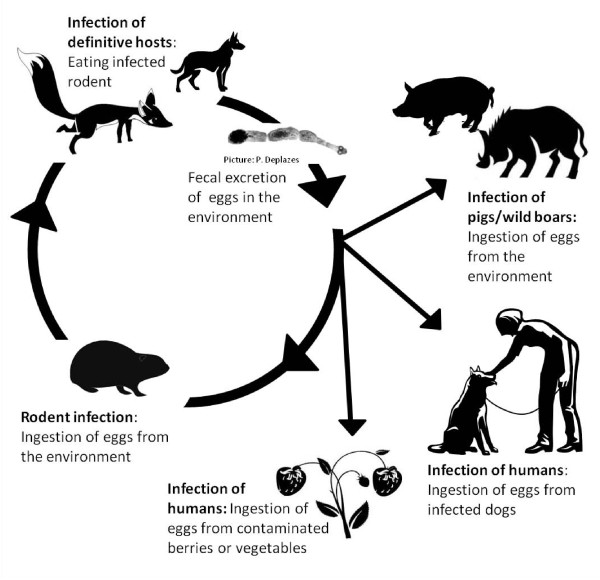
The fox tapeworm Echinococcus multilocularis has foxes and other canids as definitive host and rodents as intermediate hosts. However, most mammals can be accidental intermediate hosts and the larval stage may cause serious disease in humans. The parasite has never been detected in Sweden, Finland and mainland Norway. All three countries require currently an anthelminthic treatment for dogs and cats prior to entry in order to prevent introduction of the parasite. Documentation of freedom from E. multilocularis is necessary for justification of the present import requirements.
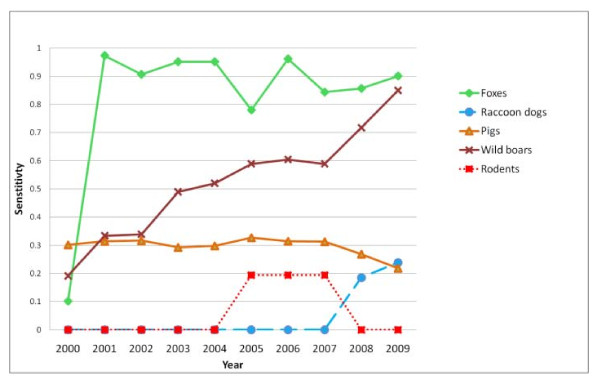
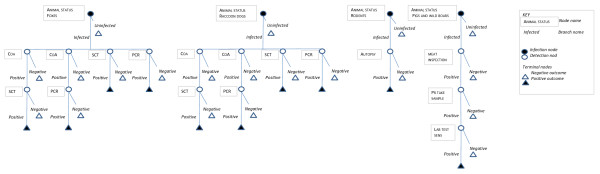
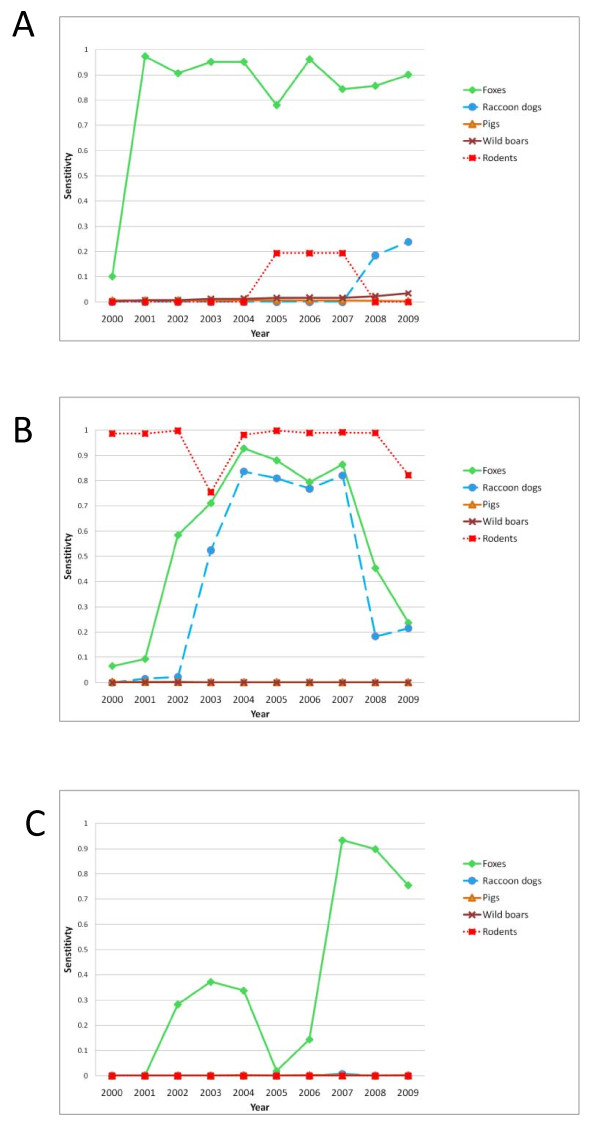
The probability that Sweden, Finland and mainland Norway were free from E. multilocularis and the sensitivity of the surveillance systems were estimated using scenario trees. Surveillance data from five animal species were included in the study: red fox (Vulpes vulpes), raccoon dog (Nyctereutes procyonoides), domestic pig, wild boar (Sus scrofa) and voles and lemmings (Arvicolinae).
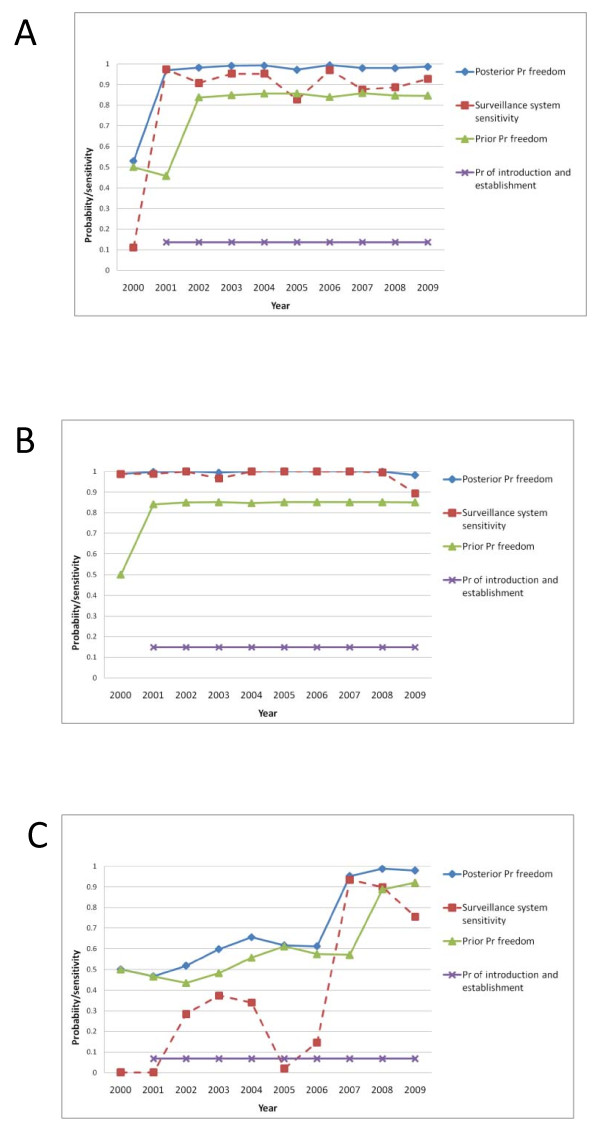
The cumulative probability of freedom from EM in December 2009 was high in all three countries, 0.98 (95% CI 0.96-0.99) in Finland and 0.99 (0.97-0.995) in Sweden and 0.98 (0.95-0.99) in Norway.
Results from the model confirm that there is a high probability that in 2009 the countries were free from E. multilocularis. The sensitivity analyses showed that the choice of the design prevalences in different infected populations was influential. Therefore more knowledge on expected prevalences for E. multilocularis in infected populations of different species is desirable to reduce residual uncertainty of the results.
狐绦虫多房棘球绦虫的终宿主为狐狸和其他犬科动物,中间宿主为啮齿动物。然而,大多数哺乳动物可能是偶然的中间宿主,幼虫阶段可能会在人类中引起严重疾病。这种寄生虫从未在瑞典、芬兰和挪威大陆被发现过。为了防止寄生虫的传入,这三个国家都要求犬猫在入境前进行驱虫治疗。证明没有多房棘球绦虫是目前进口要求的必要依据。
使用情景树来估计瑞典、芬兰和挪威大陆没有多房棘球绦虫的概率以及监测系统的敏感性。本研究纳入了来自五种动物物种的监测数据:红狐(Vulpes vulpes)、浣熊犬(Nyctereutes procyonoides)、家猪、野猪(Sus scrofa)和田鼠和旅鼠(Arvicolinae)。
2009 年 12 月,三个国家的无 EM 累积概率均较高,芬兰为 0.98(95%置信区间 0.96-0.99),瑞典为 0.99(0.97-0.995),挪威为 0.98(0.95-0.99)。
模型结果证实,2009 年这些国家无多房棘球绦虫的可能性很高。敏感性分析表明,不同感染群体的设计流行率的选择具有影响力。因此,为了降低结果的剩余不确定性,更了解不同感染物种的多房棘球蚴预期流行率的知识是可取的。