USDA Agricultural Research Service, Robert W Holley Center for Agriculture and Health, Ithaca, NY 14853, USA.
Biotechnol Biofuels. 2011 Feb 16;4:4. doi: 10.1186/1754-6834-4-4.
The discovery and development of novel plant cell wall degrading enzymes is a key step towards more efficient depolymerization of polysaccharides to fermentable sugars for the production of liquid transportation biofuels and other bioproducts. The industrial fungus Trichoderma reesei is known to be highly cellulolytic and is a major industrial microbial source for commercial cellulases, xylanases and other cell wall degrading enzymes. However, enzyme-prospecting research continues to identify opportunities to enhance the activity of T. reesei enzyme preparations by supplementing with enzymatic diversity from other microbes. The goal of this study was to evaluate the enzymatic potential of a broad range of plant pathogenic and non-pathogenic fungi for their ability to degrade plant biomass and isolated polysaccharides.
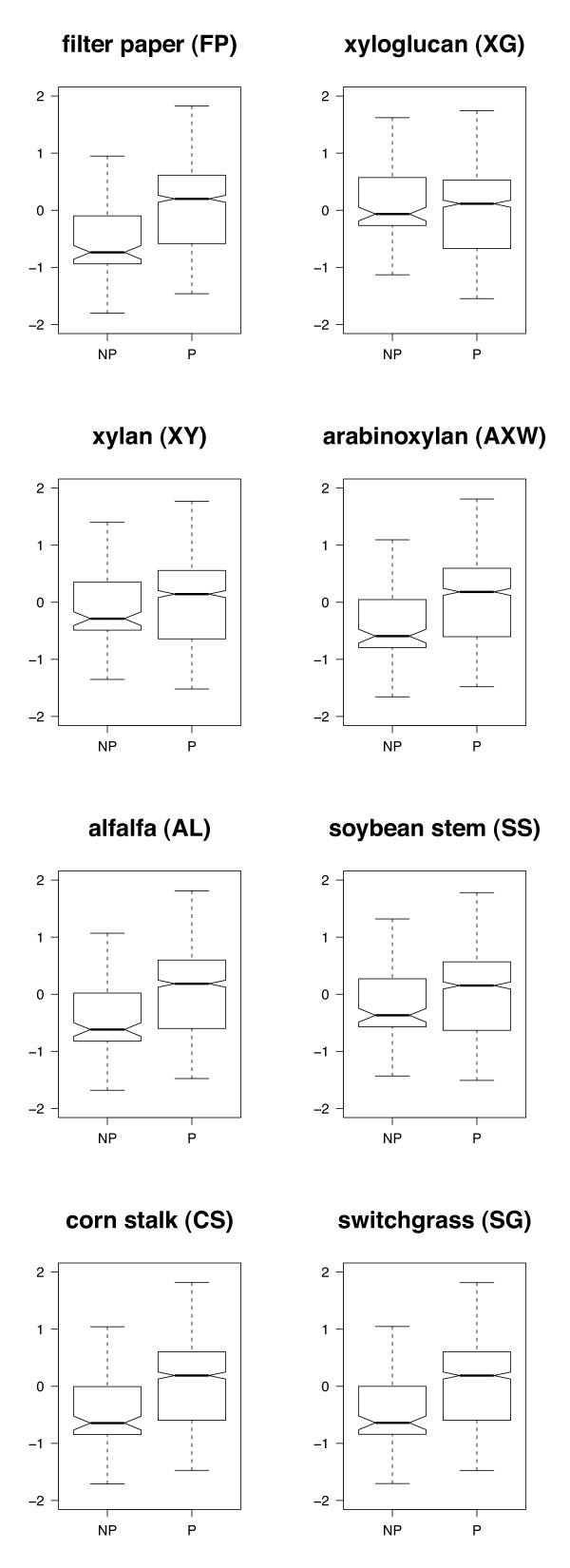
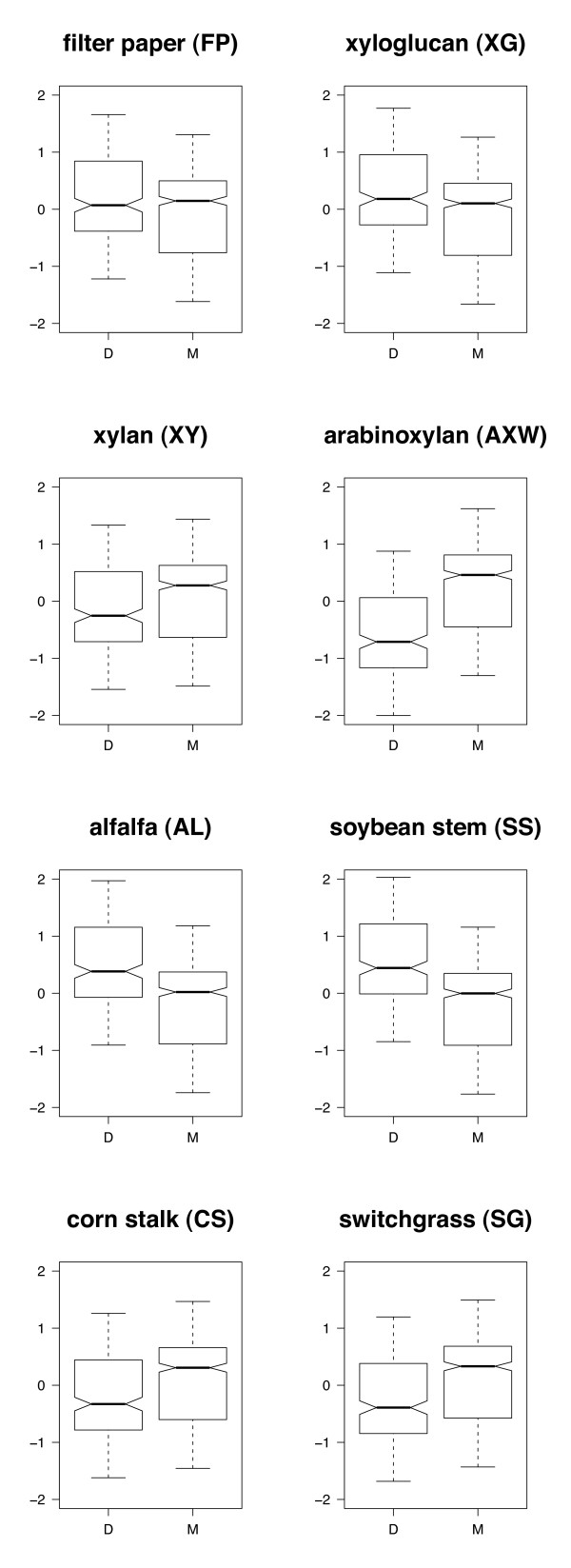
Large-scale screening identified a range of hydrolytic activities among 348 unique isolates representing 156 species of plant pathogenic and non-pathogenic fungi. Hierarchical clustering was used to identify groups of species with similar hydrolytic profiles. Among moderately and highly active species, plant pathogenic species were found to be more active than non-pathogens on six of eight substrates tested, with no significant difference seen on the other two substrates. Among the pathogenic fungi, greater hydrolysis was seen when they were tested on biomass and hemicellulose derived from their host plants (commelinoid monocot or dicot). Although T. reesei has a hydrolytic profile that is highly active on cellulose and pretreated biomass, it was less active than some natural isolates of fungi when tested on xylans and untreated biomass.
Several highly active isolates of plant pathogenic fungi were identified, particularly when tested on xylans and untreated biomass. There were statistically significant preferences for biomass type reflecting the monocot or dicot host preference of the pathogen tested. These highly active fungi are promising targets for identification and characterization of novel cell wall degrading enzymes for industrial applications.
发现和开发新型植物细胞壁降解酶是更有效地将多糖解聚为可发酵糖,以生产液体运输生物燃料和其他生物制品的关键步骤。工业真菌里氏木霉以高度纤维素酶活性而闻名,是商业纤维素酶、木聚糖酶和其他细胞壁降解酶的主要工业微生物来源。然而,酶勘探研究仍在继续,通过从其他微生物中补充酶多样性,来寻找提高 T. reesei 酶制剂活性的机会。本研究的目的是评估广泛的植物病原真菌和非病原真菌的酶潜力,以评估它们降解植物生物质和分离多糖的能力。
大规模筛选在 156 种植物病原真菌和非病原真菌的 348 个独特分离株中鉴定出一系列水解活性。层次聚类用于识别具有相似水解谱的物种组。在中度和高度活性的物种中,在 8 种测试底物中的 6 种上,病原真菌的活性高于非病原真菌,而在另外 2 种底物上没有观察到显著差异。在病原真菌中,当它们在来源于宿主植物(鸭跖草科单子叶植物或双子叶植物)的生物质和半纤维素上进行测试时,水解作用更大。尽管 T. reesei 在纤维素和预处理生物质上具有高度活性的水解谱,但在木聚糖和未处理的生物质上的活性低于一些天然真菌分离株。
鉴定出了几种具有高度活性的植物病原真菌分离株,特别是在测试木聚糖和未处理的生物质时。对生物质类型存在统计学上显著的偏好,反映了所测试的病原体对单子叶植物或双子叶植物的宿主偏好。这些高活性真菌是鉴定和表征用于工业应用的新型细胞壁降解酶的有前途的目标。