Gáspárová Zdenka, Ondrejičková Olga, Gajdošíková Alena, Gajdošík Andrej, Snirc Vladimír, Stolc Svorad
Institute of Experimental Pharmacology & Toxicology, Slovak Academy of Sciences, SK-84104 Bratislava, Slovakia.
Interdiscip Toxicol. 2010 Dec;3(4):122-6. doi: 10.2478/v10102-010-0051-x.
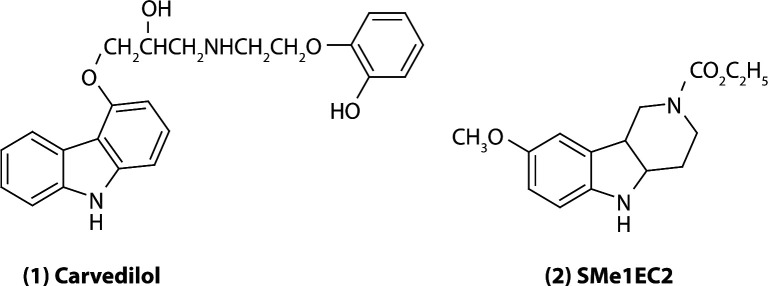
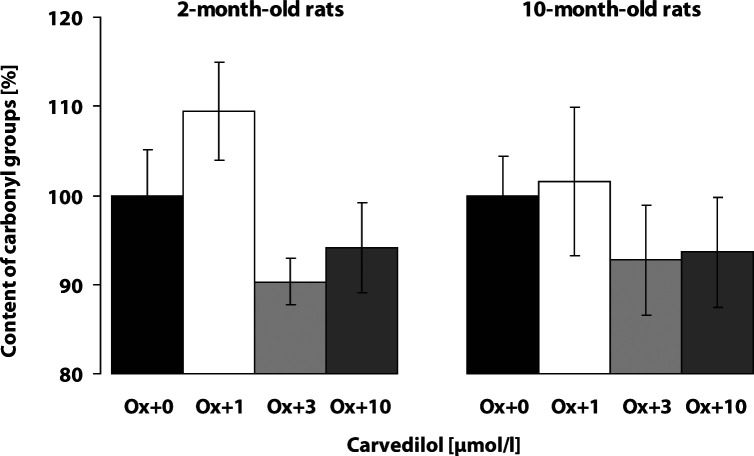
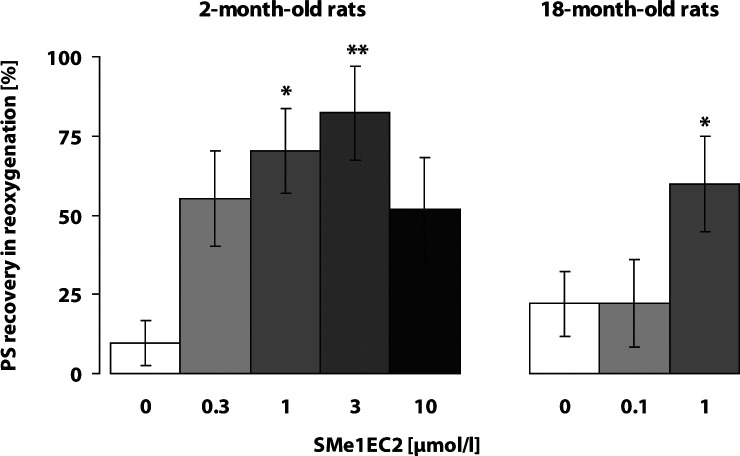
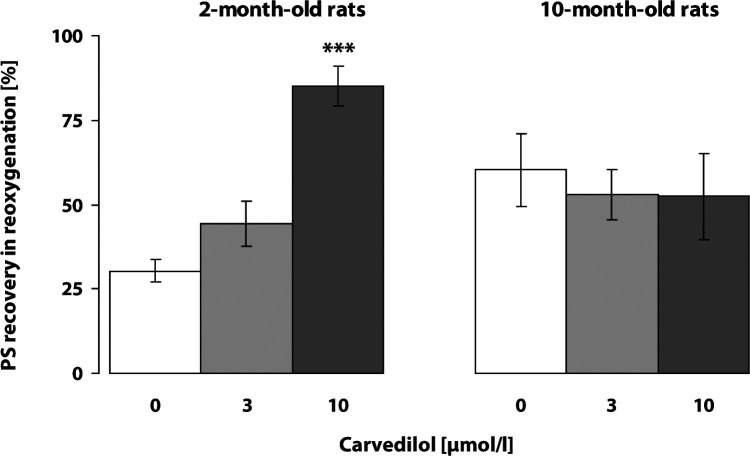
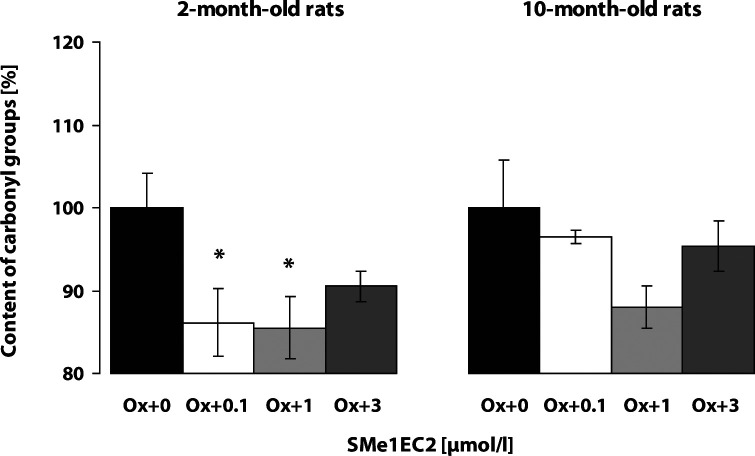
New effective strategies and new highly effective neuroprotective agents are being searched for the therapy of human stroke and cerebral ischemia. The compound SMe1EC2 is a new derivative of stobadine, with enhanced antioxidant properties compared to the maternal drug. Carvedilol, a non-selective beta-blocker, possesses besides its cardioprotective and vasculoprotective properties also an antioxidant effect. We compared the effect of carvedilol and SMe1EC2, antioxidants with a similar chemical structure, in two experimental models of oxidative stress in young and adult rat brain tissue. SMe1EC2 was found to improve the resistance of hippocampal neurons to ischemia in vitro in young and even in 18-month-old rats and inhibited formation of protein carbonyl groups induced by the Fe(2+)/ascorbic acid pro-oxidative system in brain cortex homogenates of young rats. Carvedilol exerted a protective effect only in the hippocampus of 2-month-old rats and that at the concentration 10-times higher than did SMe1EC2. The inhibitory effect of carvedilol on protein carbonyl formation induced by the pro-oxidative system was not proved in the cortex of either young or adult rats. An increased baseline level of the content of protein carbonyl groups in the adult versus young rat brain cortex confirmed age-related changes in neuronal tissue and may be due to increased production of reactive oxygen species and low antioxidant defense mechanisms in the adult rat brain. The results revealed the new pyridoindole SMe1EC2 to be more effective than carvedilol in neuroprotection of rat brain tissue in both experimental models involving oxidative stress.
人们正在寻找新的有效策略和新型高效神经保护剂用于人类中风和脑缺血的治疗。化合物SMe1EC2是司巴丁的一种新衍生物,与母体药物相比具有更强的抗氧化特性。卡维地洛是一种非选择性β受体阻滞剂,除了具有心脏保护和血管保护特性外,还具有抗氧化作用。我们在年轻和成年大鼠脑组织氧化应激的两种实验模型中比较了具有相似化学结构的抗氧化剂卡维地洛和SMe1EC2的效果。结果发现,SMe1EC2能提高年轻大鼠甚至18月龄大鼠海马神经元的体外抗缺血能力,并抑制年轻大鼠脑皮质匀浆中由Fe(2+)/抗坏血酸促氧化系统诱导的蛋白质羰基化的形成。卡维地洛仅在2月龄大鼠的海马中发挥保护作用,且所需浓度比SMe1EC2高10倍。在年轻或成年大鼠的皮质中,未证实卡维地洛对促氧化系统诱导的蛋白质羰基化形成有抑制作用。成年大鼠脑皮质中蛋白质羰基含量的基线水平高于年轻大鼠,这证实了神经元组织中与年龄相关的变化,可能是由于成年大鼠脑中活性氧的产生增加和抗氧化防御机制低下所致。结果表明,在涉及氧化应激的两种实验模型中,新型吡啶并吲哚SMe1EC2在大鼠脑组织的神经保护方面比卡维地洛更有效。