Department of Genetics and Development, Columbia University, New York, NY 10032, USA.
Cell. 2011 Mar 4;144(5):796-809. doi: 10.1016/j.cell.2011.02.004. Epub 2011 Feb 17.
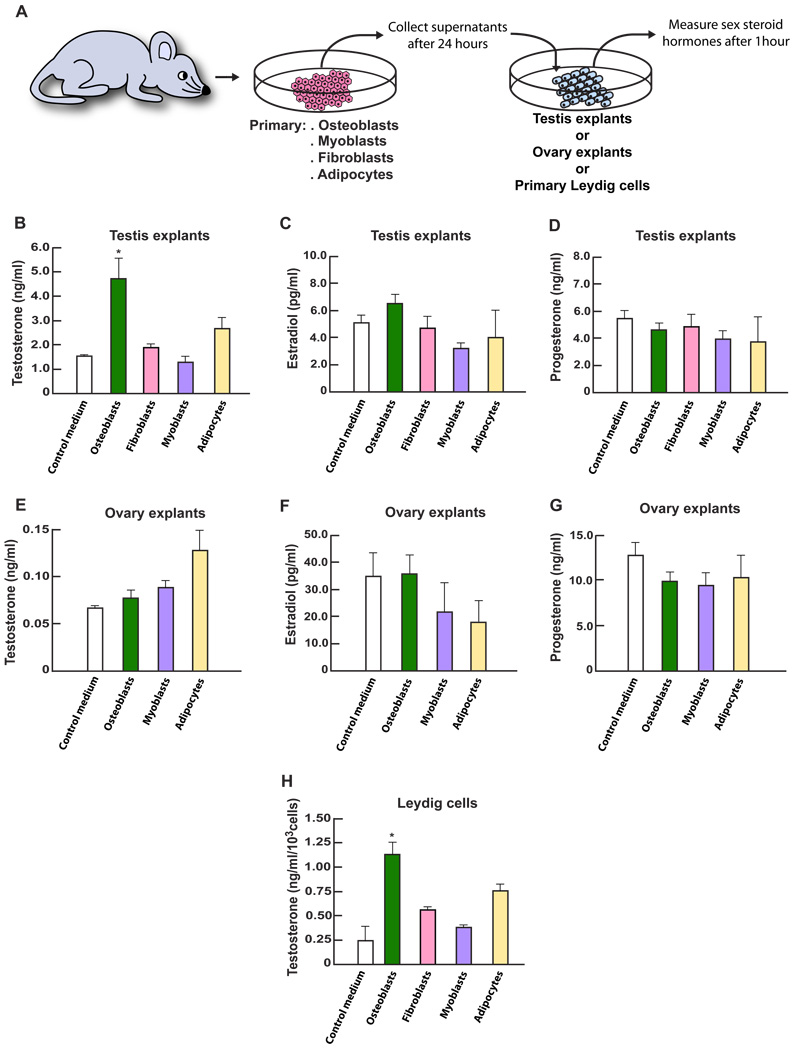
Interactions between bone and the reproductive system have until now been thought to be limited to the regulation of bone remodeling by the gonads. We now show that, in males, bone acts as a regulator of fertility. Using coculture assays, we demonstrate that osteoblasts are able to induce testosterone production by the testes, though they fail to influence estrogen production by the ovaries. Analyses of cell-specific loss- and gain-of-function models reveal that the osteoblast-derived hormone osteocalcin performs this endocrine function. By binding to a G protein-coupled receptor expressed in the Leydig cells of the testes, osteocalcin regulates in a CREB-dependent manner the expression of enzymes that is required for testosterone synthesis, promoting germ cell survival. This study expands the physiological repertoire of osteocalcin and provides the first evidence that the skeleton is an endocrine regulator of reproduction.
迄今为止,人们一直认为骨骼与生殖系统之间的相互作用仅限于性腺对骨骼重塑的调节。我们现在表明,在男性中,骨骼是生育能力的调节剂。通过共培养实验,我们证明成骨细胞能够诱导睾丸产生睾酮,尽管它们不能影响卵巢产生雌激素。对细胞特异性缺失和获得功能模型的分析表明,成骨细胞衍生的激素骨钙素具有这种内分泌功能。骨钙素通过与睾丸间质细胞中表达的 G 蛋白偶联受体结合,以 CREB 依赖性方式调节睾丸细胞中所需的酶的表达,从而促进精子细胞的存活。这项研究扩展了骨钙素的生理作用范围,并首次提供了骨骼是生殖内分泌调节剂的证据。