Biological Systems Engineering Laboratory, Department of Chemical Engineering, Centre for Process Systems Engineering, Imperial College, London, United Kingdom.
PLoS One. 2011 Feb 8;6(2):e14668. doi: 10.1371/journal.pone.0014668.
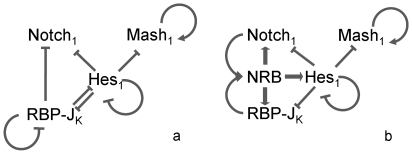
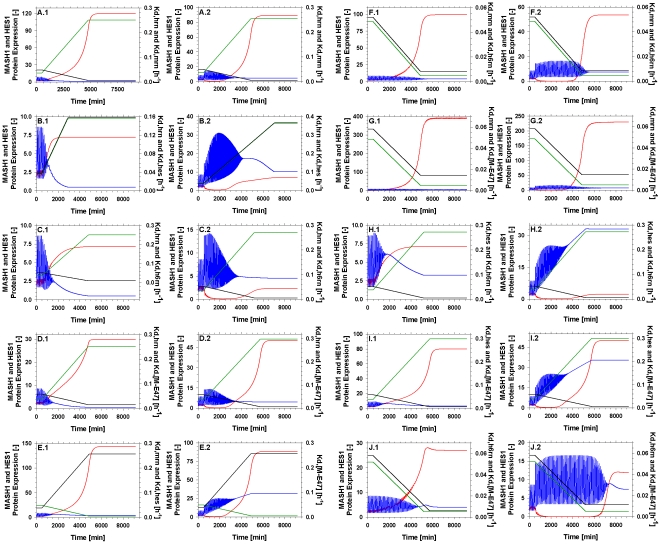
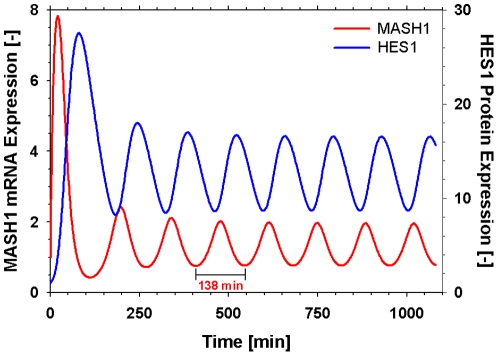
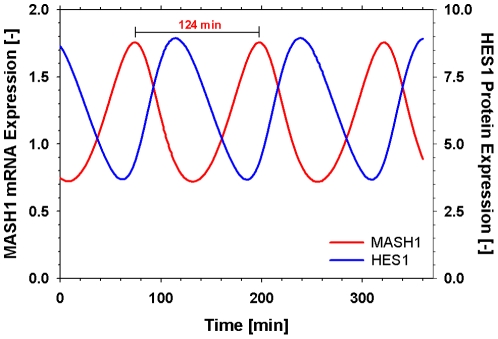
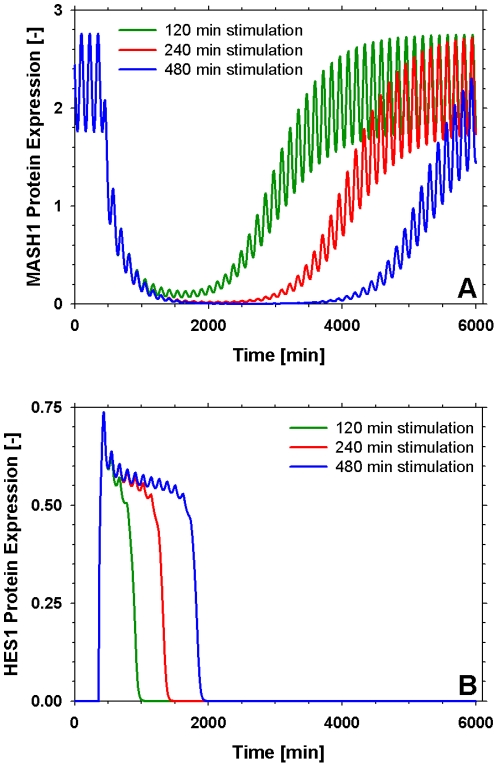
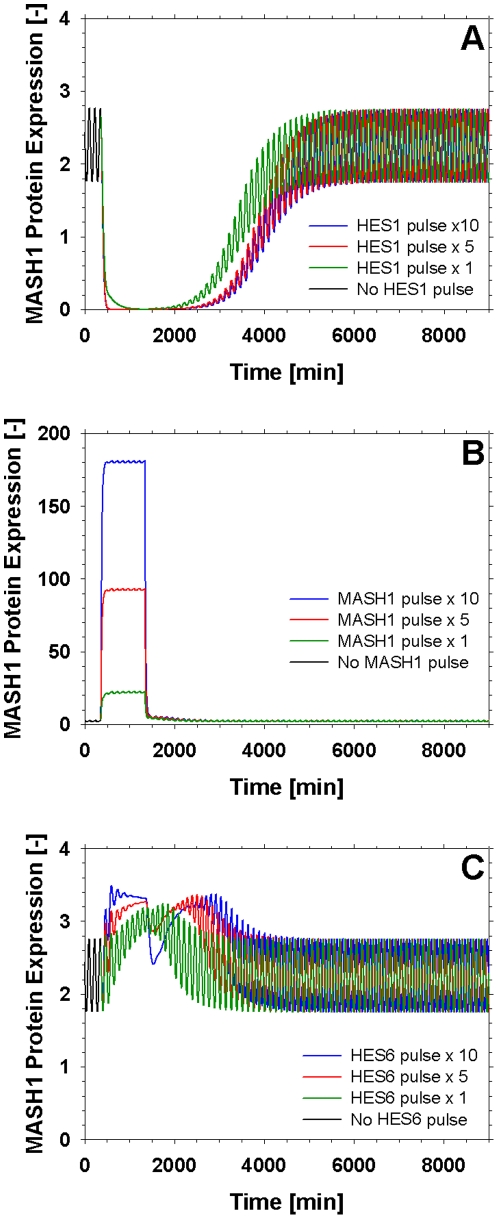
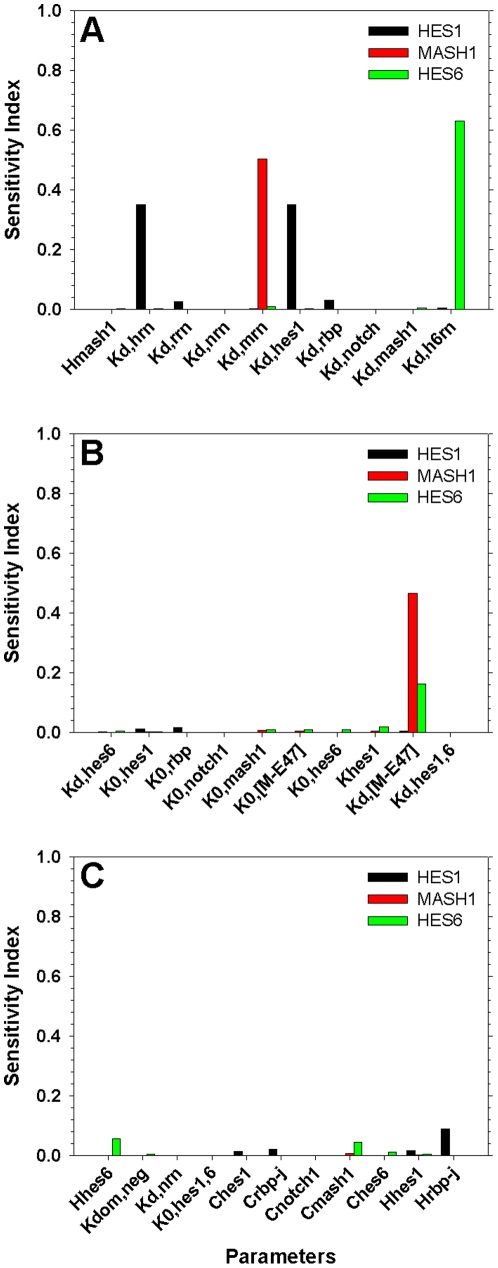
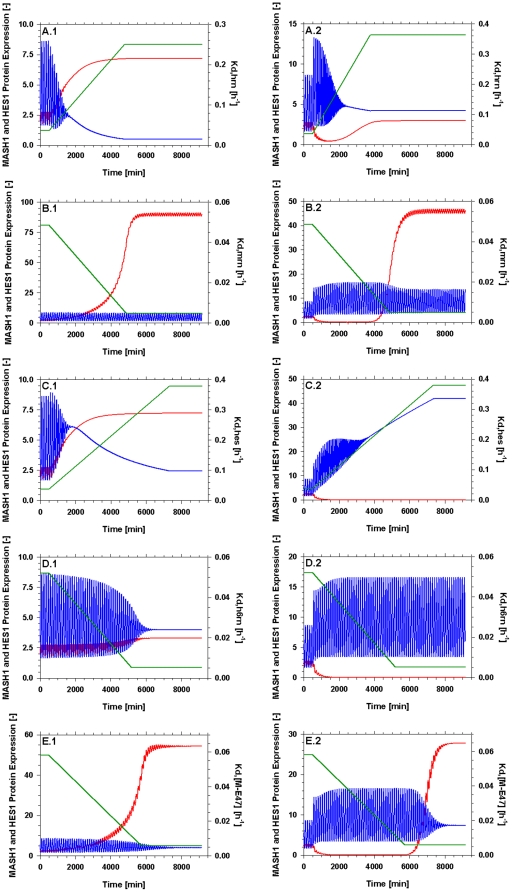
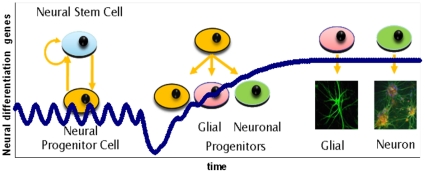
The Notch1 signalling pathway has been shown to control neural stem cell fate through lateral inhibition of mash1, a key promoter of neuronal differentiation. Interaction between the Delta1 ligand of a differentiating cell and the Notch1 protein of a neighbouring cell results in cleavage of the trans-membrane protein, releasing the intracellular domain (NICD) leading to the up regulation of hes1. Hes1 homodimerisation leads to down regulation of mash1. Most mathematical models currently represent this pathway up to the formation of the HES1 dimer. Herein, we present a detailed model ranging from the cleavage of the NICD and how this signal propagates through the Delta1/Notch1 pathway to repress the expression of the proneural genes. Consistent with the current literature, we assume that cells at the self renewal state are represented by a stable limit cycle and through in silico experimentation we conclude that a drastic change in the main pathway is required in order for the transition from self-renewal to differentiation to take place. Specifically, a model analysis based approach is utilised in order to generate hypotheses regarding potential mediators of this change. Through this process of model based hypotheses generation and testing, the degradation rates of Hes1 and Mash1 mRNA and the dissociation constant of Mash1-E47 heterodimers are identified as the most potent mediators of the transition towards neural differentiation.
Notch1 信号通路通过侧向抑制 mash1 来控制神经干细胞命运,mash1 是神经元分化的关键促进剂。分化细胞的 Delta1 配体与邻近细胞的 Notch1 蛋白相互作用导致跨膜蛋白的裂解,释放细胞内结构域(NICD),从而导致 hes1 的上调。 Hes1 同源二聚化导致 mash1 的下调。目前大多数数学模型都将该通路表示为 HES1 二聚体的形成。在此,我们提出了一个详细的模型,范围从 NICD 的裂解以及该信号如何通过 Delta1/Notch1 途径传播以抑制 proneural 基因的表达。与当前文献一致,我们假设处于自我更新状态的细胞由稳定的极限环表示,通过计算机模拟实验,我们得出结论,为了使自我更新向分化转变,需要对主要途径进行重大改变。具体而言,利用基于模型的分析方法来生成关于这种变化的潜在介导物的假设。通过基于模型的假设生成和测试的过程,鉴定 Hes1 和 Mash1 mRNA 的降解率以及 Mash1-E47 异源二聚体的解离常数是向神经分化转变的最有力介导物。