Biological Science, California Polytechnic State University, San Luis Obispo, CA 93407, USA.
CBE Life Sci Educ. 2011 Spring;10(1):43-54. doi: 10.1187/cbe.10-08-0102.
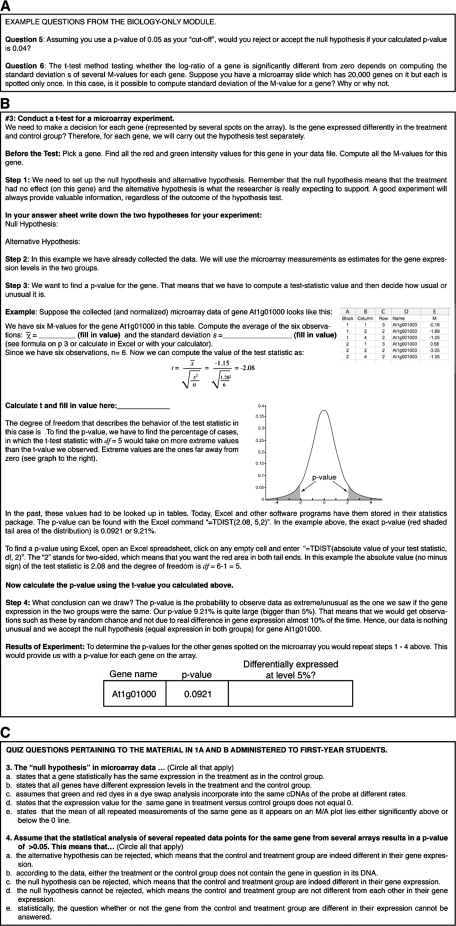
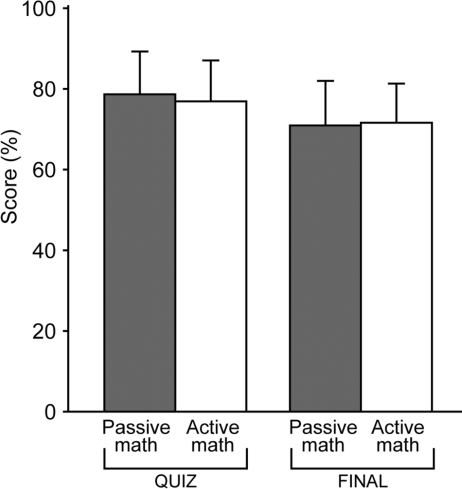
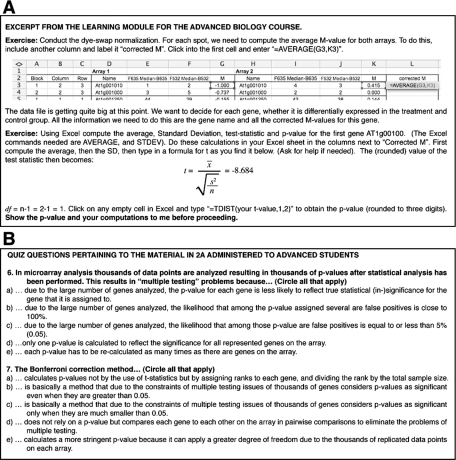
There is increasing enthusiasm for teaching approaches that combine mathematics and biology. The call for integrating more quantitative work in biology education has led to new teaching tools that improve quantitative skills. Little is known, however, about whether increasing interdisciplinary work can lead to adverse effects, such as the development of broader but shallower skills or the possibility that math anxiety causes some students to disengage in the classroom, or, paradoxically, to focus so much on the mathematics that they lose sight of its application for the biological concepts in the center of the unit at hand. We have developed and assessed an integrative learning module and found disciplinary learning gains to be equally strong in first-year students who actively engaged in embedded quantitative calculations as in those students who were merely presented with quantitative data in the context of interpreting biological and biostatistical results. When presented to advanced biology students, our quantitative learning tool increased test performance significantly. We conclude from our study that the addition of mathematical calculations to the first year and advanced biology curricula did not hinder overall student learning, and may increase disciplinary learning and data interpretation skills in advanced students.
人们对于将数学和生物学相结合的教学方法越来越感兴趣。呼吁在生物学教育中融入更多定量工作的呼声,催生了一些新的教学工具,这些工具提高了学生的定量技能。然而,人们对于增加跨学科工作是否会产生不利影响知之甚少,例如技能的广度增加但深度变浅,或者数学焦虑是否会导致一些学生在课堂上不参与,或者相反,过于关注数学,以至于忽略了其在手头单元的生物学概念中的应用。我们开发并评估了一个综合学习模块,发现积极参与嵌入式定量计算的一年级学生和仅在解释生物学和生物统计学结果的背景下提供定量数据的学生在学科学习方面都取得了同样强的收获。当向高级生物学学生呈现时,我们的定量学习工具显著提高了他们的考试成绩。我们从研究中得出结论,在基础生物学和高级生物学课程中增加数学计算并没有阻碍学生的整体学习,并且可能会提高高级学生的学科学习和数据解释技能。