Instituto de Agrobiotecnología del Litoral, Universidad Nacional del Litoral, CONICET, CC 242 Ciudad Universitaria, 3000, Santa Fe, Argentina.
BMC Plant Biol. 2011 Mar 3;11:42. doi: 10.1186/1471-2229-11-42.
Plant HD-Zip transcription factors are modular proteins in which a homeodomain is associated to a leucine zipper. Of the four subfamilies in which they are divided, the tested members from subfamily I bind in vitro the same pseudopalindromic sequence CAAT(A/T)ATTG and among them, several exhibit similar expression patterns. However, most experiments in which HD-Zip I proteins were over or ectopically expressed under the control of the constitutive promoter 35S CaMV resulted in transgenic plants with clearly different phenotypes. Aiming to elucidate the structural mechanisms underlying such observation and taking advantage of the increasing information in databases of sequences from diverse plant species, an in silico analysis was performed. In addition, some of the results were also experimentally supported.
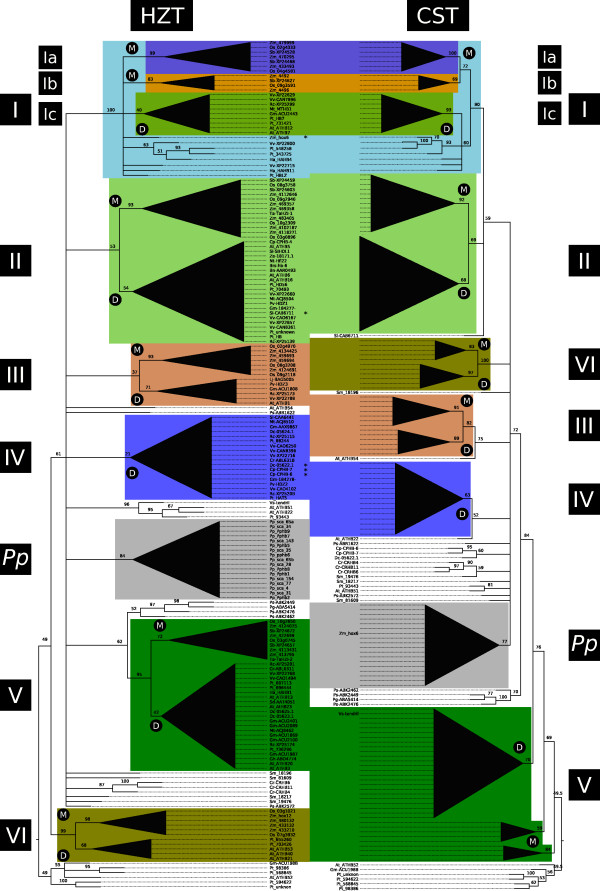
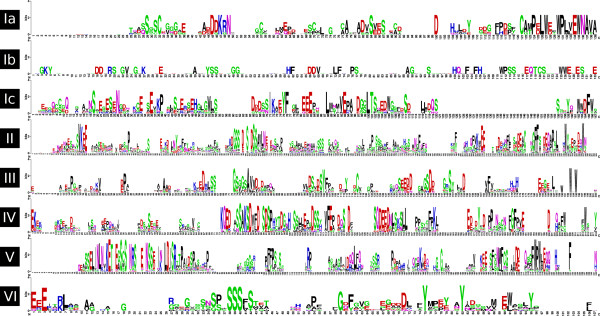
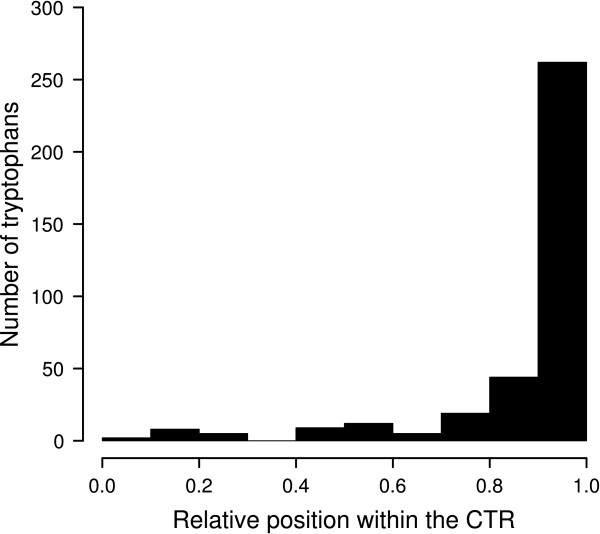
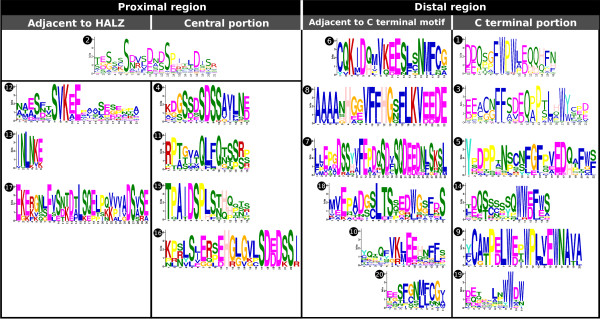
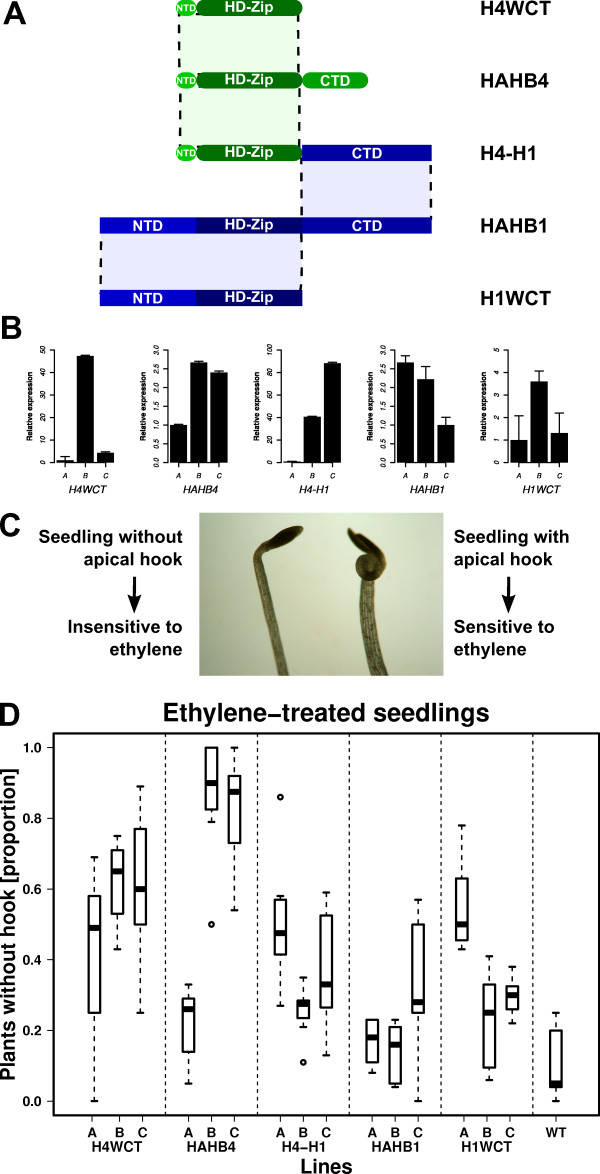
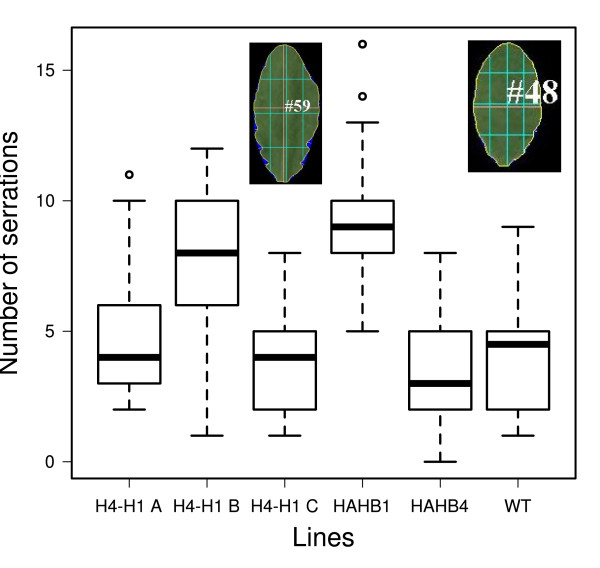
A phylogenetic tree of 178 HD-Zip I proteins together with the sequence conservation presented outside the HD-Zip domains allowed the distinction of six groups of proteins. A motif-discovery approach enabled the recognition of an activation domain in the carboxy-terminal regions (CTRs) and some putative regulatory mechanisms acting in the amino-terminal regions (NTRs) and CTRs involving sumoylation and phosphorylation. A yeast one-hybrid experiment demonstrated that the activation activity of ATHB1, a member of one of the groups, is located in its CTR. Chimerical constructs were performed combining the HD-Zip domain of one member with the CTR of another and transgenic plants were obtained with these constructs. The phenotype of the chimerical transgenic plants was similar to the observed in transgenic plants bearing the CTR of the donor protein, revealing the importance of this module inside the whole protein.
The bioinformatical results and the experiments conducted in yeast and transgenic plants strongly suggest that the previously poorly analyzed NTRs and CTRs of HD-Zip I proteins play an important role in their function, hence potentially constituting a major source of functional diversity among members of this subfamily.
植物 HD-Zip 转录因子是模块化蛋白,其中同源域与亮氨酸拉链相关。在它们被分为四个亚家族中,亚家族 I 的测试成员在体外结合相同的伪回文序列 CAAT(A/T)ATTG,其中一些表现出相似的表达模式。然而,在大多数实验中,HD-Zip I 蛋白在组成型启动子 35S CaMV 的控制下过表达或异位表达,导致转基因植物表现出明显不同的表型。为了解释这种观察结果的结构机制,并利用来自不同植物物种的序列数据库中不断增加的信息,进行了计算机分析。此外,一些结果也得到了实验支持。
178 个 HD-Zip I 蛋白的系统发育树以及 HD-Zip 结构域外的序列保守性允许区分出 6 组蛋白质。一种基序发现方法能够识别羧基末端区域(CTRs)中的激活域,以及一些可能在氨基末端区域(NTRs)和 CTRs 中发挥作用的调节机制,包括 SUMO 化和磷酸化。酵母单杂交实验表明,一个组的成员 ATHB1 的激活活性位于其 CTR 中。进行了嵌合构建,将一个成员的 HD-Zip 结构域与另一个成员的 CTR 结合,并使用这些构建体获得了转基因植物。嵌合转基因植物的表型与携带供体蛋白 CTR 的转基因植物的观察结果相似,这表明该模块在整个蛋白中非常重要。
生物信息学结果和在酵母和转基因植物中进行的实验强烈表明,HD-Zip I 蛋白的先前分析甚少的 NTRs 和 CTRs 在其功能中起着重要作用,因此可能构成该亚家族成员之间功能多样性的主要来源。