Division of Preventive and Behavioral Medicine, University of Massachusetts Medical School, Worcester, MA 01655, USA.
Menopause. 2011 Jun;18(6):611-20. doi: 10.1097/gme.0b013e318204a05c.
The aim of this study was to analyze the effect of participation in a mindfulness training program (mindfulness-based stress reduction, [MBSR]) on the degree of bother from hot flashes and night sweats.
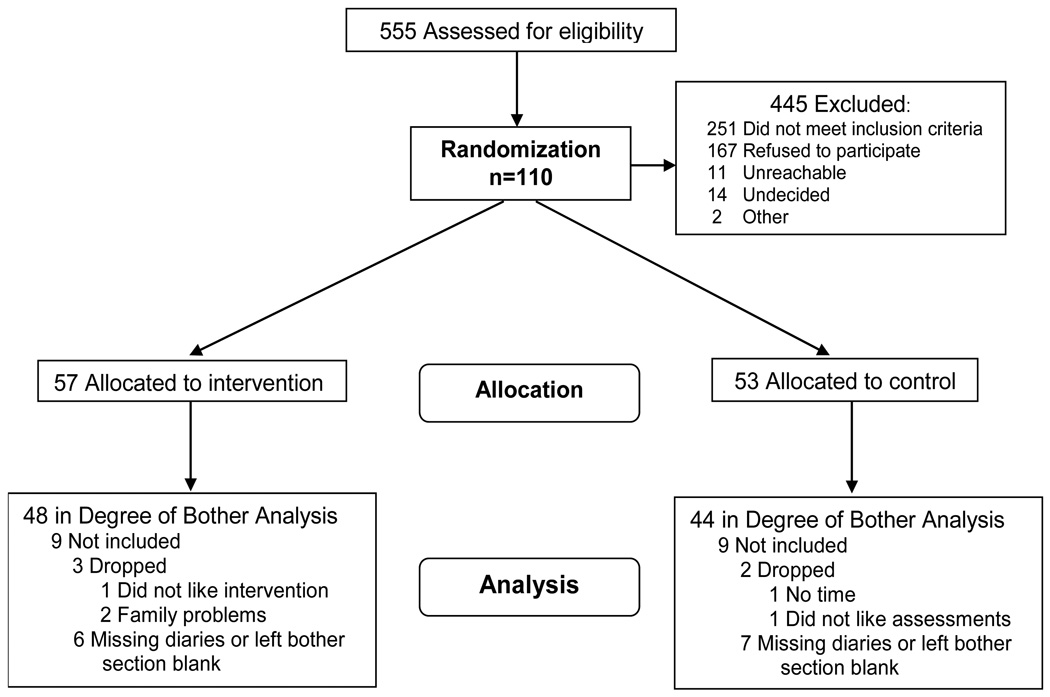
This study was a randomized trial of 110 late perimenopausal and early postmenopausal women experiencing an average of 5 or more moderate or severe hot flashes (including night sweats)/day. A wait-list control (WLC) was used with 3-month postintervention follow-up. The main outcome was the degree of bother from hot flashes and night sweats in the previous 24 hours. Secondary measures were hot flash intensity, quality of life, insomnia, anxiety, and perceived stress.
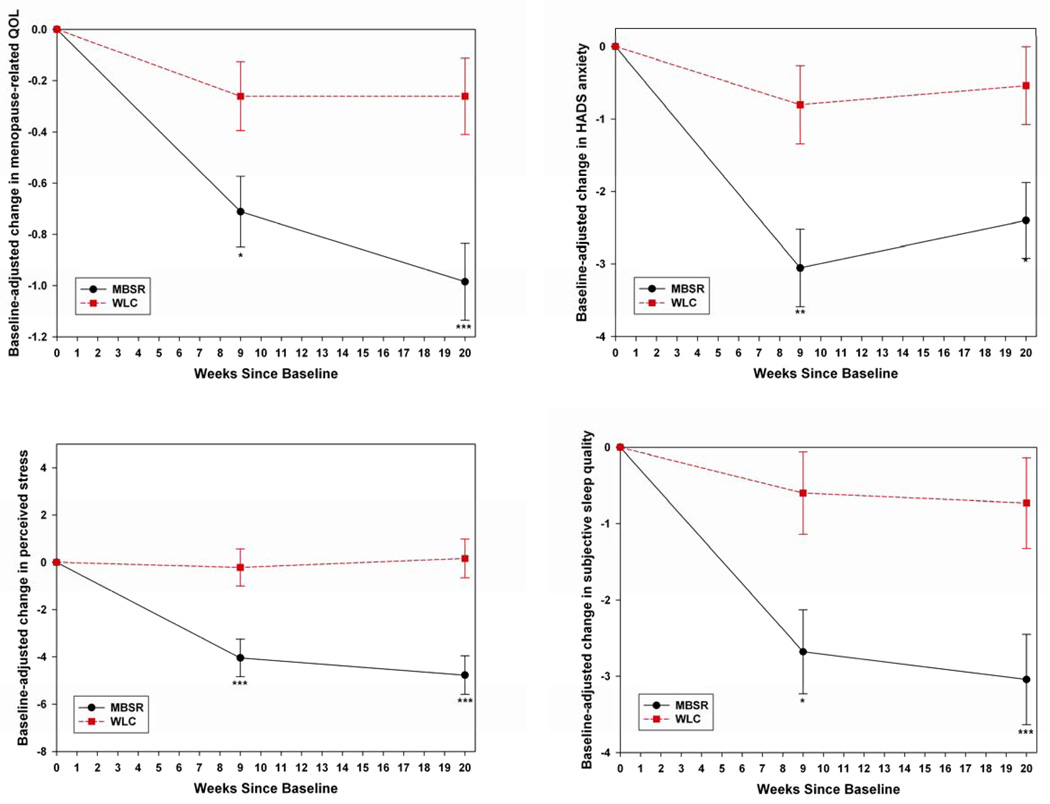
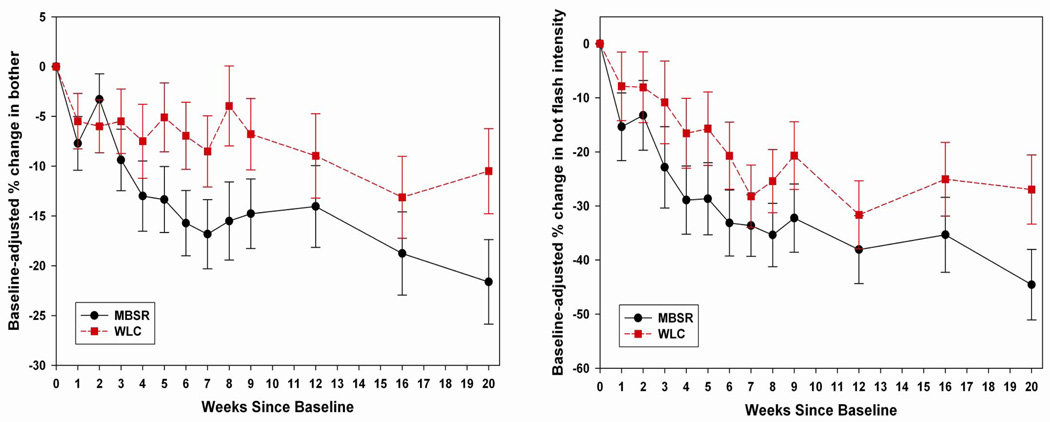
Baseline average (SD) hot flash frequency was 7.87 (3.44) and 2.81 (1.76) night sweats/day. Mean (SD) bothersomeness score was 3.18 (0.55; "moderately bothered/extremely bothered"). All analyses were intention to treat and were controlled for baseline values. Within-woman changes in bother from hot flashes differed significantly by treatment arm (week × treatment arm interaction, P = 0.042). At completion of the intervention, bother in the MBSR arm decreased on average by 14.77% versus 6.79% for WLC. At 20 weeks, total reduction in bother for MBSR was 21.62% and 10.50% for WLC. Baseline-adjusted changes in hot flash intensity did not differ between treatment arms (week × treatment arm interaction, P = 0.692). The MBSR arm made clinically significant improvements in quality of life (P = 0.022), subjective sleep quality (P = 0.009), anxiety (P = 0.005), and perceived stress (P = 0.001). Improvements were maintained 3 months postintervention.
Our data suggest that MBSR may be a clinically significant resource in reducing the degree of bother and distress women experience from hot flashes and night sweats.
本研究旨在分析参与正念减压训练计划(正念减压疗法,[MBSR])对潮热和盗汗严重程度的影响。
本研究为 110 例处于围绝经期后期和绝经早期的女性随机试验,这些女性平均每天经历 5 次或更多次中度或重度潮热(包括夜间盗汗)。采用等待名单对照(WLC),并在干预后 3 个月进行随访。主要结果是前 24 小时潮热和盗汗的严重程度。次要测量指标为热闪强度、生活质量、失眠、焦虑和感知压力。
基线平均(SD)热频为 7.87(3.44)和 2.81(1.76)次/天。平均(SD)困扰度评分为 3.18(0.55;“中度困扰/极度困扰”)。所有分析均为意向治疗,并控制了基线值。女性个体内的热闪光频率变化在治疗臂之间有显著差异(周×治疗臂交互作用,P=0.042)。在干预结束时,MBSR 组的困扰度平均降低了 14.77%,而 WLC 组降低了 6.79%。20 周时,MBSR 组的总困扰度降低了 21.62%,WLC 组降低了 10.50%。治疗臂之间的热闪光强度基线调整后的变化无差异(周×治疗臂交互作用,P=0.692)。MBSR 组在生活质量(P=0.022)、主观睡眠质量(P=0.009)、焦虑(P=0.005)和感知压力(P=0.001)方面有显著的临床改善。这些改善在干预后 3 个月仍得以维持。
我们的数据表明,MBSR 可能是一种有临床意义的资源,可以减轻女性潮热和盗汗的严重程度和困扰。