Cell microscopy Centre, Department of Cell Biology, UMC Utrecht, The Netherlands.
PLoS One. 2011 Feb 23;6(2):e17173. doi: 10.1371/journal.pone.0017173.
In Drosophila, the early secretory apparatus comprises discrete paired Golgi stacks in close proximity to exit sites from the endoplasmic reticulum (tER sites), thus forming tER-Golgi units. Although many components involved in secretion have been identified, the structural components sustaining its organisation are less known. Here we set out to identify novel ER resident proteins involved in the of tER-Golgi unit organisation.
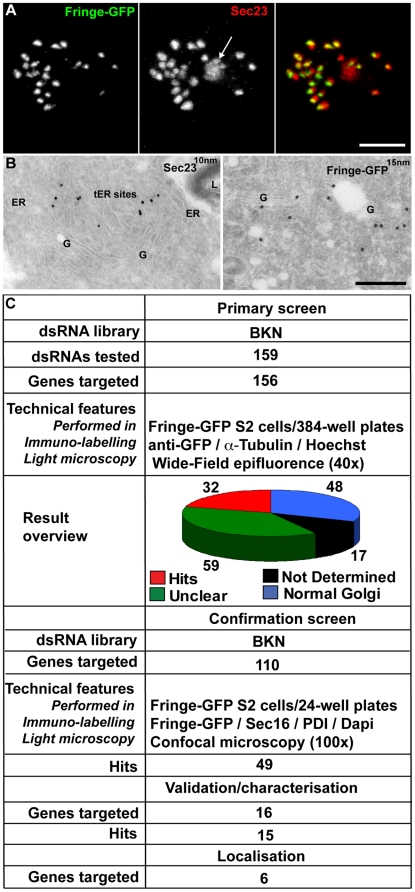
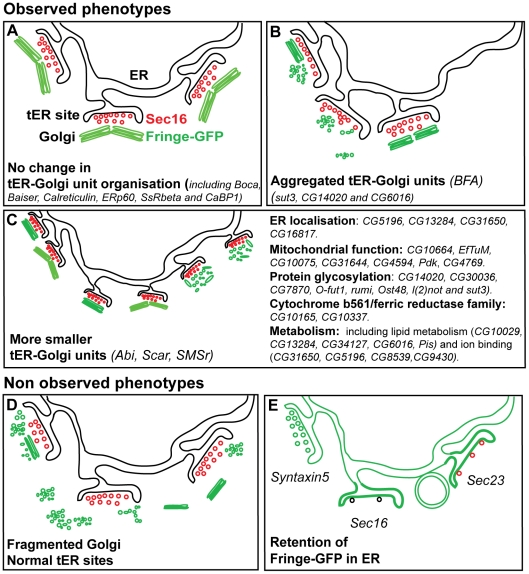
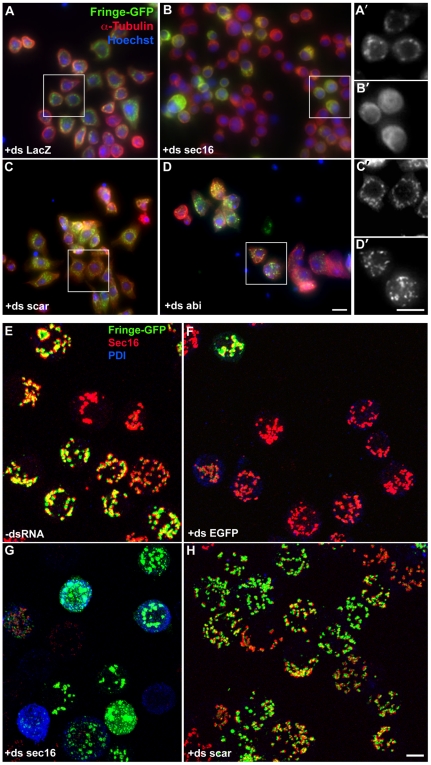
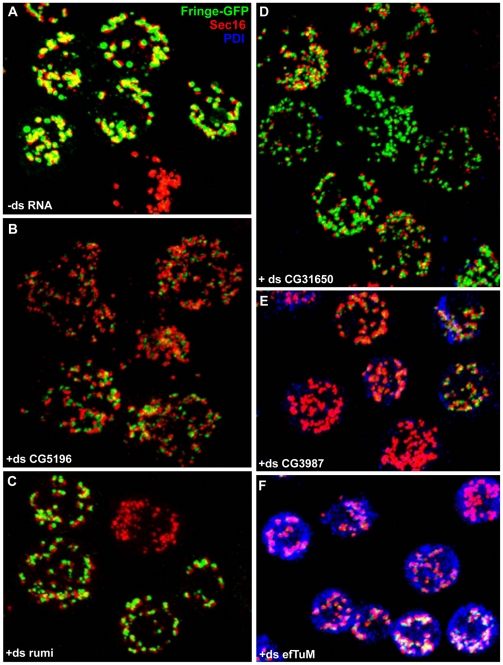
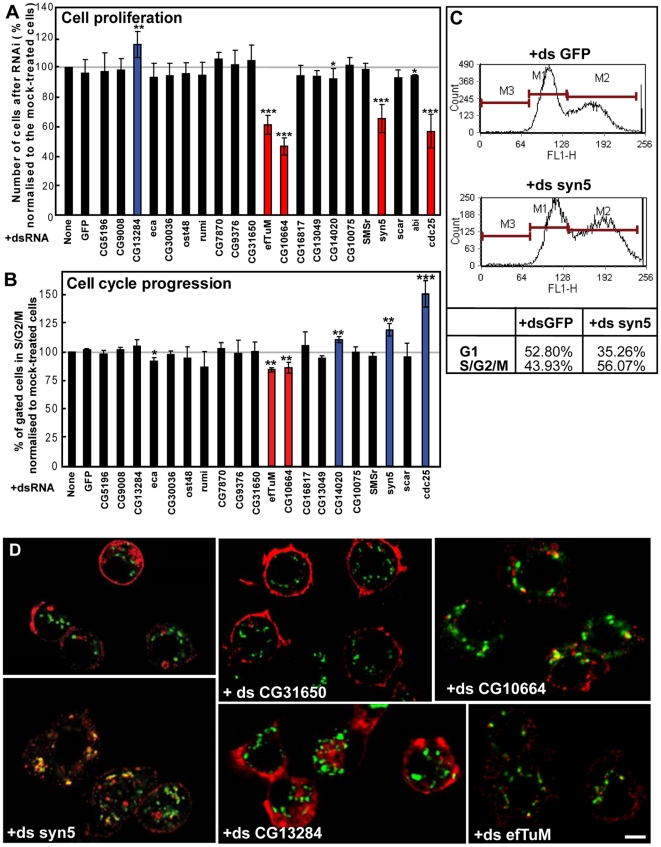
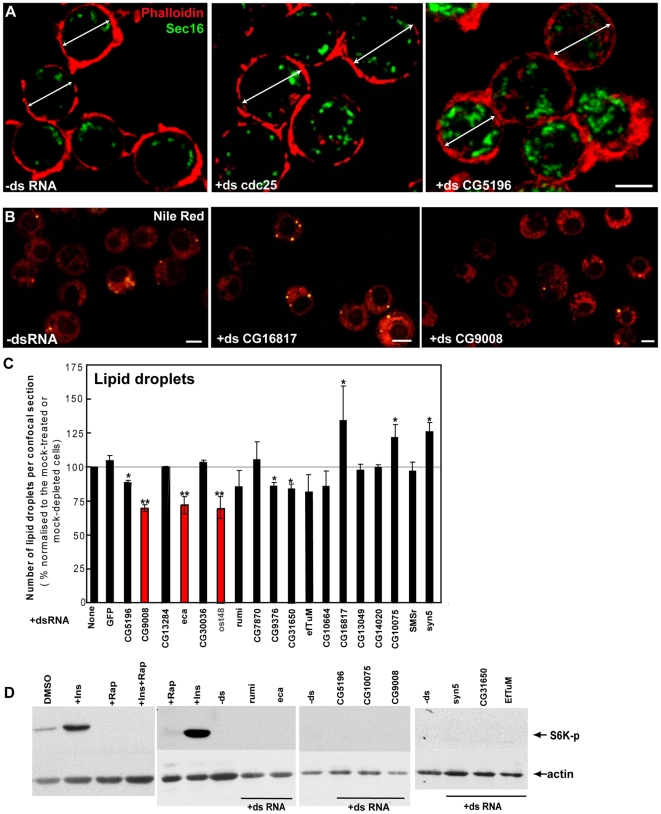
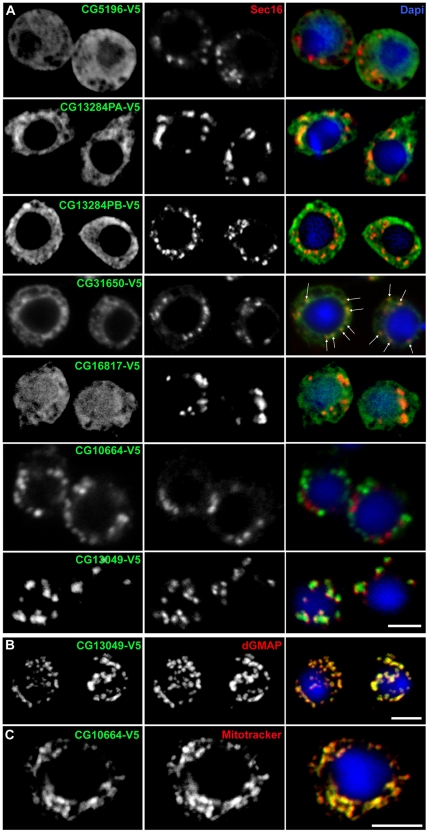
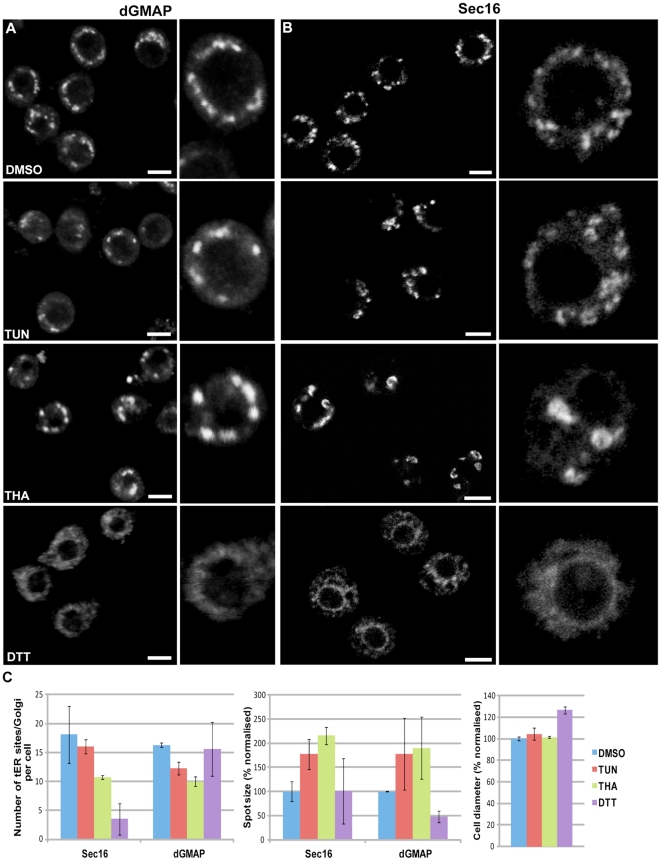
To do so, we designed a novel screening strategy combining a bioinformatics pre-selection with an RNAi screen. We first selected 156 proteins exhibiting known or related ER retention/retrieval signals from a list of proteins predicted to have a signal sequence. We then performed a microscopy-based primary and confirmation RNAi screen in Drosophila S2 cells directly scoring the organisation of the tER-Golgi units. We identified 49 hits, most of which leading to an increased number of smaller tER-Golgi units (MG for "more and smaller Golgi") upon depletion. 16 of them were validated and characterised, showing that this phenotype was not due to an inhibition in secretion, a block in G2, or ER stress. Interestingly, the MG phenotype was often accompanied by an increase in the cell volume. Out of 6 proteins, 4 were localised to the ER.
This work has identified novel proteins involved in the organisation of the Drosophila early secretory pathway. It contributes to the effort of assigning protein functions to gene annotation in the secretory pathway, and analysis of the MG hits revealed an enrichment of ER proteins. These results suggest a link between ER localisation, aspects of cell metabolism and tER-Golgi structural organisation.
在果蝇中,早期分泌装置由靠近内质网(tER 出口)的离散成对的高尔基体堆栈组成,从而形成 tER-高尔基体单元。尽管已经鉴定出许多参与分泌的成分,但维持其组织的结构成分知之甚少。在这里,我们着手确定参与 tER-高尔基体单元组织的新的内质网驻留蛋白。
为此,我们设计了一种新的筛选策略,将生物信息学预选与 RNAi 筛选相结合。我们首先从预测具有信号序列的蛋白质列表中选择了 156 种具有已知或相关内质网保留/检索信号的蛋白质。然后,我们在果蝇 S2 细胞中进行了基于显微镜的初步和确认 RNAi 筛选,直接对 tER-高尔基体单元的组织进行评分。我们确定了 49 个命中,其中大多数在耗尽时导致更多更小的 tER-高尔基体单元(MG 代表“更多和更小的高尔基体”)的数量增加。其中 16 个得到了验证和表征,表明这种表型不是由于分泌抑制、G2 阻断或内质网应激引起的。有趣的是,MG 表型通常伴随着细胞体积的增加。在 6 种蛋白质中,有 4 种定位于内质网。
这项工作鉴定了参与果蝇早期分泌途径组织的新蛋白。它有助于将蛋白质功能分配给分泌途径中的基因注释,并且对 MG 命中的分析揭示了内质网蛋白的富集。这些结果表明 ER 定位、细胞代谢方面和 tER-高尔基体结构组织之间存在联系。