Department of Biological Sciences, Virginia Polytechnic Institute and State University, Blacksburg, VA 24061-0406, USA.
Emerg Infect Dis. 2011 Mar;17(3):419-24. doi: 10.3201/eid1703.101510.
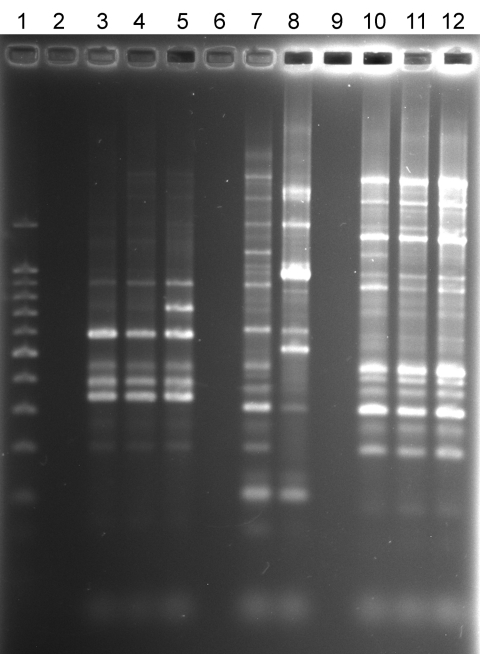
To determine whether plumbing could be a source of nontuberculous mycobacteria (NTM) infection, during 2007-2009 I isolated NTM from samples from household water systems of NTM patients. Samples from 22/37 (59%) households and 109/394 (28%) total samples yielded NTM. Seventeen (46%) of the 37 households yielded ≥1 Mycobacterium spp. isolate of the same species as that found in the patient; in 7 of those households, the patient isolate and 1 plumbing isolate exhibited the same repetitive sequence-based PCR DNA fingerprint. Households with water heater temperatures ≤125 degrees C (≤50 degrees C) were significantly more likely to harbor NTM compared with households with hot water temperatures ≥130 degrees F (≥55 degrees C) (p = 0.0107). Although households with water from public or private water systems serving multiple households were more likely to have NTM (19/27, 70%) compared with households with a well providing water to only 1 household (5/12, 42%), that difference was not significant (p = 0.1532).
为了确定管道是否可能成为非结核分枝杆菌(NTM)感染的源头,在 2007-2009 年期间,我从 NTM 患者家庭用水系统的样本中分离出 NTM。22/37(59%)户和 109/394(28%)总样本中分离出 NTM。37 户中有 17 户(46%)产生了与患者相同物种的≥1 株分枝杆菌属分离株;在其中 7 户中,患者分离株和 1 个管道分离株表现出相同的重复序列基 PCR DNA 指纹。热水器温度≤125°C(≤50°C)的家庭比热水温度≥130°F(≥55°C)的家庭更有可能携带 NTM(p=0.0107)。尽管来自为多个家庭供水的公共或私人供水系统的家庭更有可能有 NTM(19/27,70%),而只向 1 个家庭供水的水井家庭则为 5/12(42%),但差异无统计学意义(p=0.1532)。