Departamento de Biología del Estrés y Patología Vegetal, Centro de Edafología y Biología Aplicada del Segura (CEBAS)- CSIC, PO Box 164, 30100 Espinardo, Murcia, Spain.
Plant Methods. 2011 Mar 11;7:6. doi: 10.1186/1746-4811-7-6.
Plant viruses are useful expression vectors because they can mount systemic infections allowing large amounts of recombinant protein to be produced rapidly in differentiated plant tissues. Pepino mosaic virus (PepMV) (genus Potexvirus, family Flexiviridae), a widespread plant virus, is a promising candidate expression vector for plants because of its high level of accumulation in its hosts and the absence of severe infection symptoms. We report here the construction of a stable and efficient expression vector for plants based on PepMV.
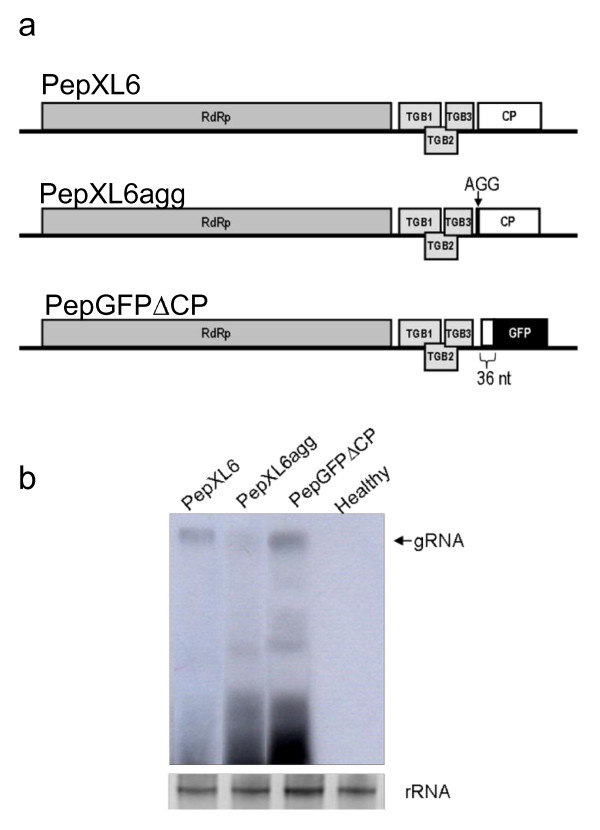
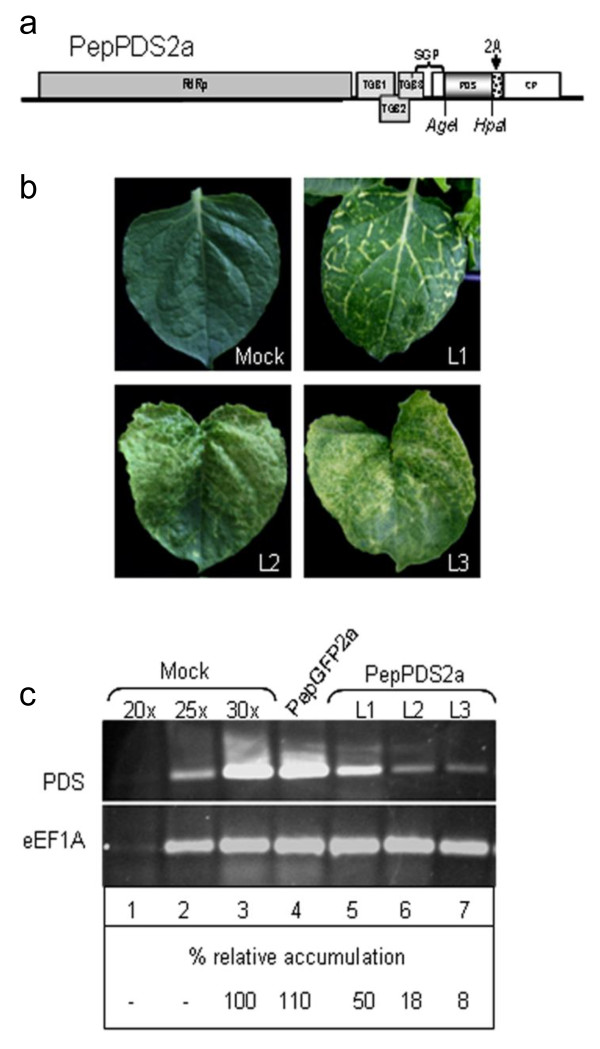
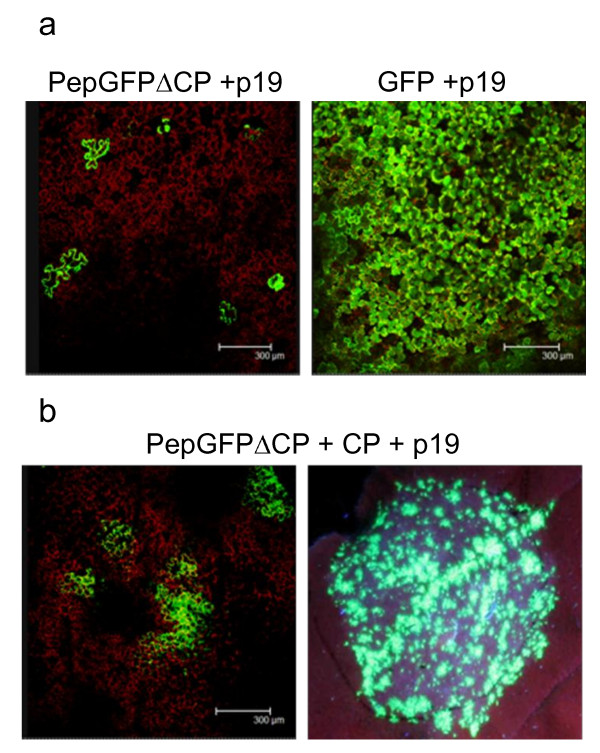
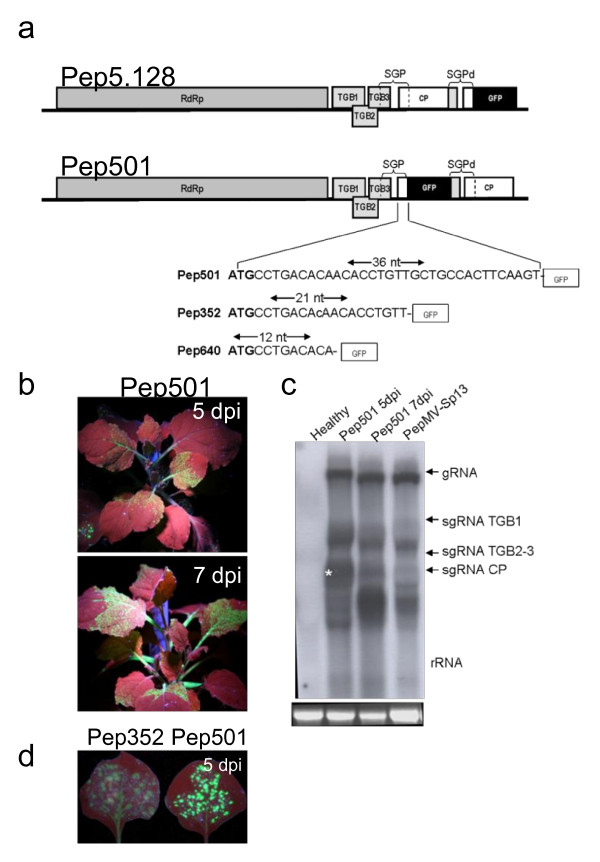
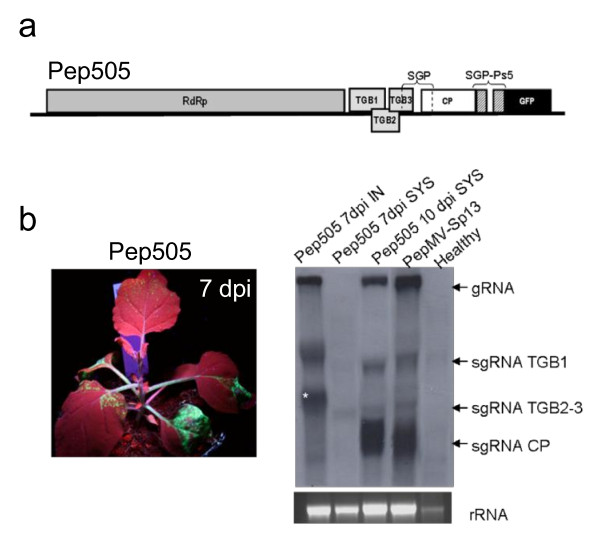
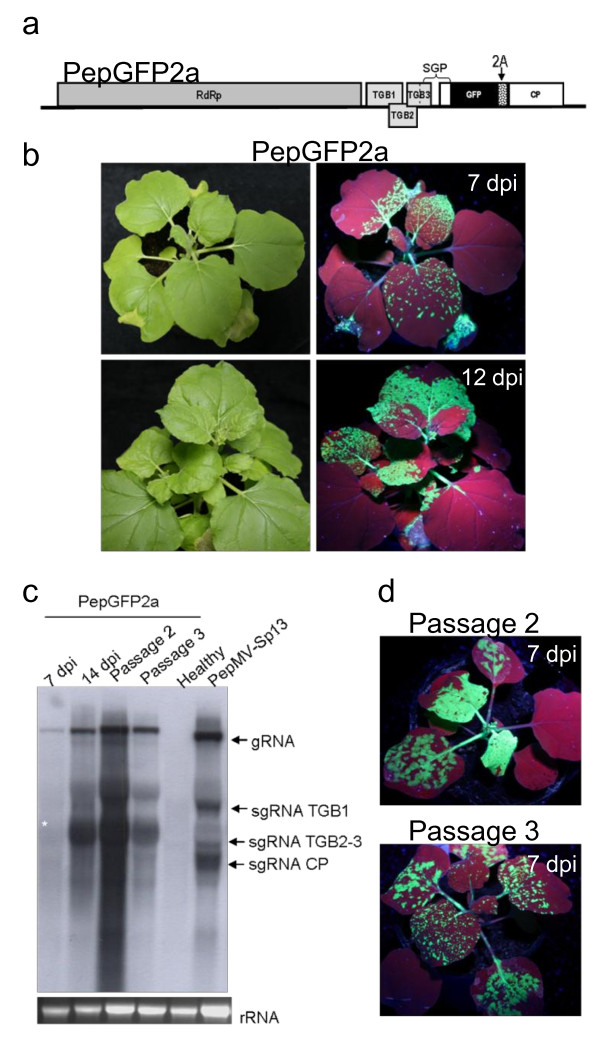
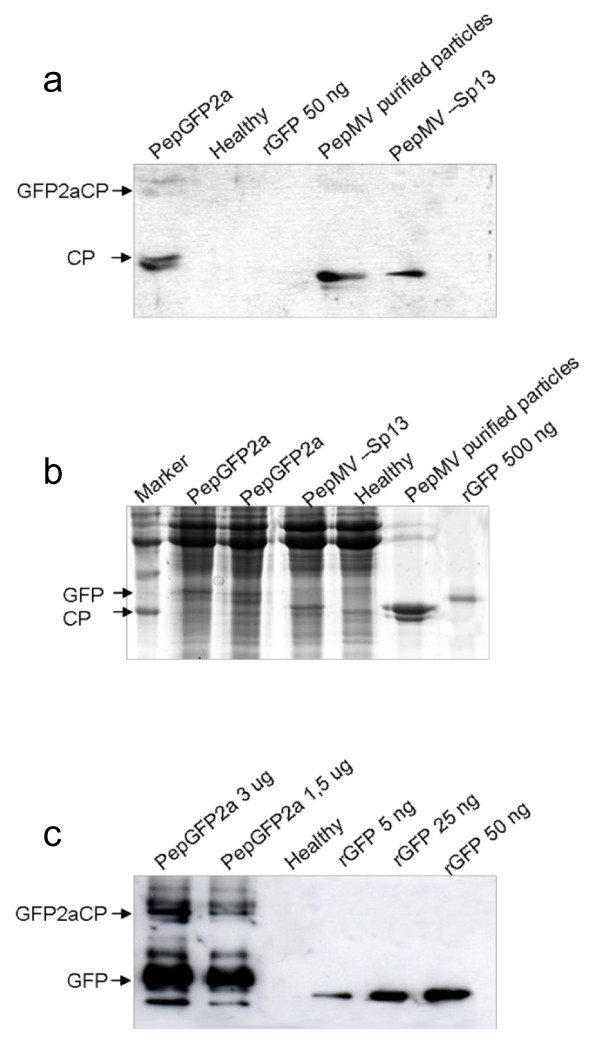
Agroinfectious clones were produced from two different PepMV genotypes (European and Chilean), and these were able to initiate typical PepMV infections. We explored several strategies for vector development including coat protein (CP) replacement, duplication of the CP subgenomic promoter (SGP) and the creation of a fusion protein using the foot-and-mouth disease virus (FMDV) 2A catalytic peptide. We found that CP replacement vectors were unable to move systemically and that vectors with duplicated SGPs (even heterologous SGPs) suffered from significant transgene instability. The fusion protein incorporating the FMDV 2A catalytic peptide gave by far the best results, maintaining stability through serial passages and allowing the accumulation of GFP to 0.2-0.4 g per kg of leaf tissue. The possible use of PepMV as a virus-induced gene silencing vector to study gene function was also demonstrated. Protocols for the use of this vector are described.
A stable PepMV vector was generated by expressing the transgene as a CP fusion using the sequence encoding the foot-and-mouth disease virus (FMDV) 2A catalytic peptide to separate them. We have generated a novel tool for the expression of recombinant proteins in plants and for the functional analysis of virus and plant genes. Our experiments have also highlighted virus requirements for replication in single cells as well as intercellular and long-distance movement.
植物病毒是有用的表达载体,因为它们可以引发系统性感染,使大量重组蛋白在分化的植物组织中快速产生。 Pepino 花叶病毒(PepMV)(属 Potexvirus,科 Flexiviridae)是一种广泛分布的植物病毒,由于其在宿主中的高水平积累和没有严重的感染症状,是植物表达载体的有前途的候选者。我们在这里报告了一种基于 PepMV 的植物稳定高效表达载体的构建。
从两种不同的 PepMV 基因型(欧洲和智利)产生了传染性克隆,并能够引发典型的 PepMV 感染。我们探索了几种载体开发策略,包括外壳蛋白(CP)替换、CP 亚基因组启动子(SGP)的重复和使用口蹄疫病毒(FMDV)2A 催化肽创建融合蛋白。我们发现 CP 替换载体不能系统移动,并且具有重复 SGP(甚至异源 SGP)的载体会遭受严重的转基因不稳定性。包含 FMDV 2A 催化肽的融合蛋白迄今为止给出了最好的结果,通过连续传代保持稳定性,并允许 GFP 积累到每公斤叶片组织 0.2-0.4 克。还证明了 PepMV 作为病毒诱导基因沉默载体用于研究基因功能的可能性。描述了使用该载体的方案。
通过使用编码口蹄疫病毒(FMDV)2A 催化肽的序列将转基因表达为 CP 融合,生成了一种稳定的 PepMV 载体。我们已经为植物中重组蛋白的表达和病毒和植物基因的功能分析生成了一种新的工具。我们的实验还强调了病毒在单细胞以及细胞间和长距离运动中的复制要求。