Department of Intensive Care Medicine, Western Clinical School, Nepean Hospital, University of Sydney, New South Wales, Australia.
PLoS One. 2011 Mar 8;6(3):e17186. doi: 10.1371/journal.pone.0017186.
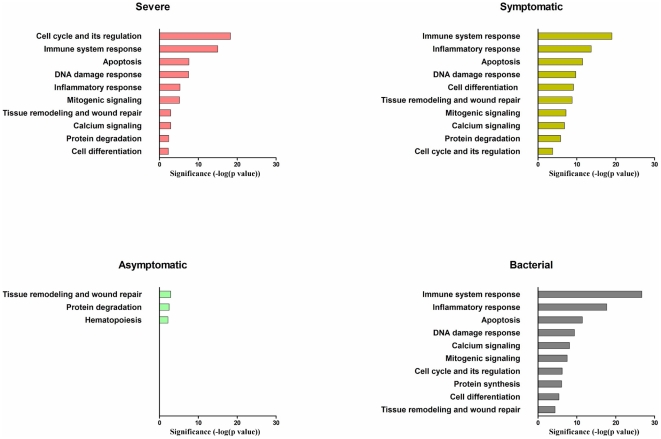
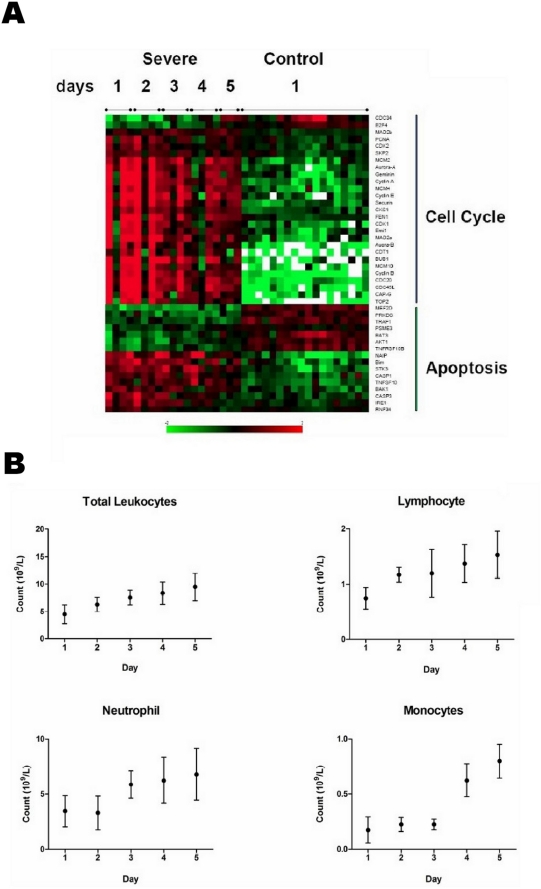
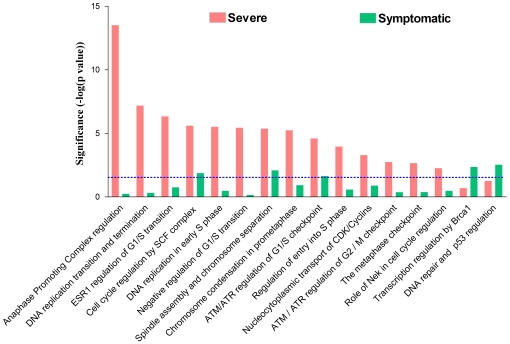
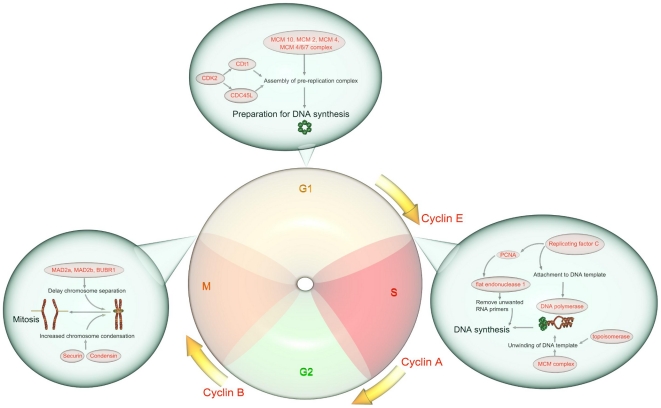
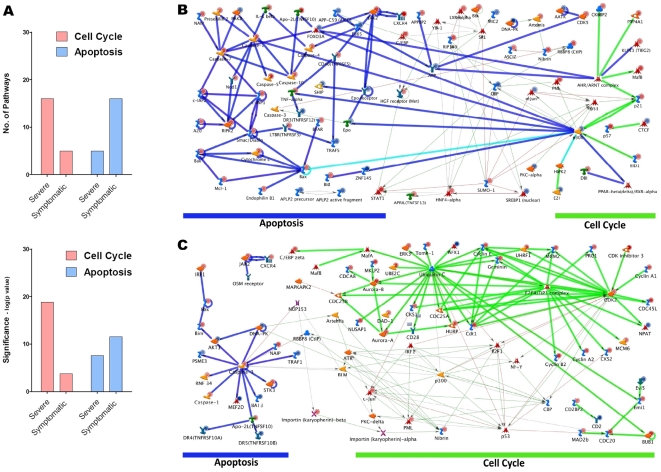
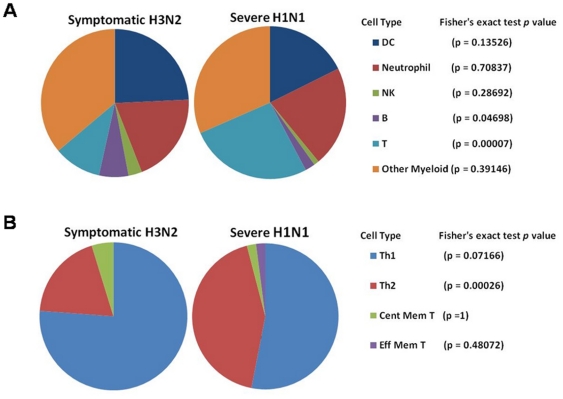
Influenza A infection is a global disease that has been responsible for four pandemics over the last one hundred years. However, it remains poorly understood as to why some infected individuals succumb to life threatening complications whilst others recover and are relatively unaffected. Using gene-expression analysis of circulating leukocytes, here we show that the progression towards severe influenza A infection is characterised by an abnormal transcriptional reprogramming of cell cycle and apoptosis pathways. In severely infected humans, leukocyte gene-expression profiles display opposing cell cycle activities; an increased aberrant DNA replication in the G(1)/S phase yet delayed progression in the G(2)/M phase. In mild infection, cell cycle perturbations are fewer and are integrated with an efficient apoptotic program. Importantly, the loss of integration between cell cycle perturbations and apoptosis marks the transition from a mild viral illness to a severe, life threatening infection. Our findings suggest that circulating immune cells may play a significant role in the evolution of the host response. Further study may reveal alternative host response factors previously unrecognized in the current disease model of influenza.
甲型流感感染是一种全球性疾病,在过去的一百年中已经引发了四次大流行。然而,人们仍然不太清楚为什么有些感染者会死于危及生命的并发症,而有些感染者则康复且相对不受影响。通过对循环白细胞的基因表达分析,我们发现严重甲型流感感染的进展特征是细胞周期和细胞凋亡途径的异常转录重编程。在严重感染的人类中,白细胞基因表达谱显示出相反的细胞周期活性;G1/S 期的异常 DNA 复制增加,但 G2/M 期的进展延迟。在轻度感染中,细胞周期的扰动较少,并且与有效的凋亡程序相整合。重要的是,细胞周期扰动和凋亡之间的整合丧失标志着从轻度病毒病向严重、危及生命的感染的转变。我们的研究结果表明,循环免疫细胞可能在宿主反应的演变中发挥重要作用。进一步的研究可能会揭示以前在流感现行疾病模型中未被识别的宿主反应的替代因素。