Institute of Social and Cultural Anthropology, University of Oxford, 51 Banbury Road, Oxford OX6 6PE, UK.
J Ethnopharmacol. 2011 May 17;135(2):501-9. doi: 10.1016/j.jep.2011.03.051. Epub 2011 Mar 31.
Given the increasing coverage of antiretroviral therapy (ART) for HIV/AIDS treatment as well as the high utilization of herbal medicine, many persons living with HIV/AIDS in sub-Saharan Africa are thought to practice medical pluralism, or the adoption of more than one medical system for their care and treatment. Using a cross-sectional study we sought to document and identify the herbal medicines used by persons living with HIV/AIDS on Mfangano Island, Suba District, Nyanza Province, Kenya.
We interviewed herbalists and knowledgeable mothers to obtain information regarding medicinal plants, particularly for HIV/AIDS-related symptoms, HIV/AIDS, and chira (an illness concept with similarities to HIV/AIDS regarding sexual transmission and wasting symptoms). Using systematic sampling, 67 persons living with HIV/AIDS (49 of whom were receiving ART) were selected from an Mfangano Island health clinic and participated in semi-structured interviews.
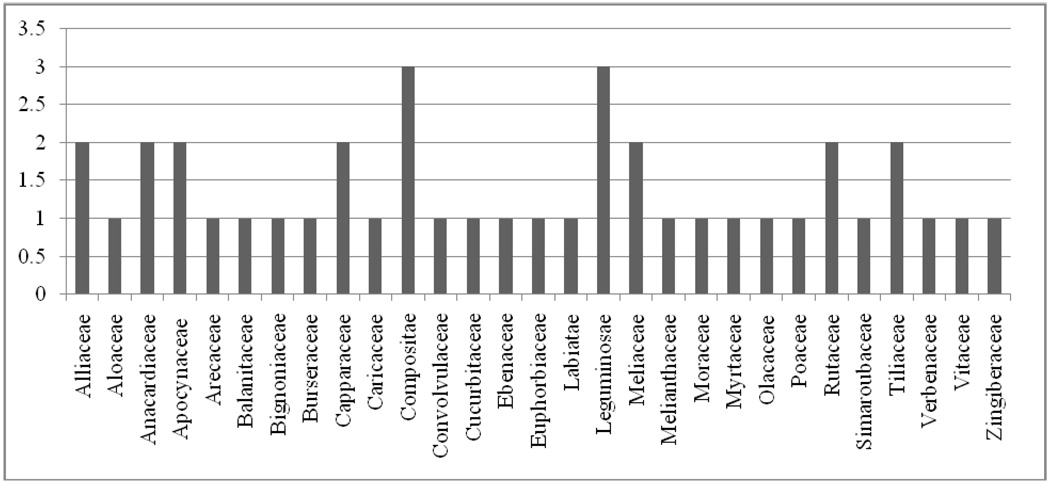
Interviews with herbalists and mothers identified 40 plant species in 37 genera and 29 families that a person with HIV/AIDS or chira could use for herbal remedies. Overall, 70.1% of persons living with HIV/AIDS had used medicinal plants after HIV diagnosis, most commonly to treat symptoms related to HIV/AIDS. In addition to common vegetables and fruits that can serve medicinal purposes, Azadirachta indica A. Juss. (Meliaceae), Carissa edulis (Forssk.) Vahl (Apocynaceae), and Ximenia americana L. (Olacaceae) were the most frequently cited medicinal plants used by persons living with HIV/AIDS.
Collaboration and communication between biomedical clinicians and herbalists should be encouraged given high rates of concomitant ART-herb usage. Pharmacological, toxicological, and ART-herb interaction studies based on the plants identified in this study and their constituent ingredients should be considered.
鉴于抗逆转录病毒疗法(ART)在艾滋病毒/艾滋病治疗中的应用越来越广泛,以及草药的高利用率,许多撒哈拉以南非洲地区的艾滋病毒/艾滋病患者被认为采用了多种医疗体系来进行治疗。本研究采用横断面研究,旨在记录和识别肯尼亚尼亚萨省苏巴区姆方加诺岛上艾滋病毒/艾滋病患者使用的草药。
我们采访了草药医生和知识渊博的母亲,以获取有关药用植物的信息,特别是与艾滋病毒/艾滋病相关症状、艾滋病毒/艾滋病和 chira(一种与艾滋病毒/艾滋病在性传播和消瘦症状方面相似的疾病概念)相关的药用植物。我们采用系统抽样法,从姆方加诺岛的一家诊所中选择了 67 名艾滋病毒感染者(其中 49 名正在接受 ART 治疗),并对他们进行了半结构化访谈。
对草药医生和母亲的访谈确定了 40 种植物,这些植物分别来自 37 个属和 29 个科,艾滋病毒感染者或 chira 患者可以使用这些植物来治疗草药疗法。总体而言,70.1%的艾滋病毒感染者在 HIV 诊断后使用过药用植物,最常用于治疗与 HIV/AIDS 相关的症状。除了常见的可药用蔬菜和水果外,Azadirachta indica A. Juss.(楝科)、Carissa edulis(夹竹桃科)和 Ximenia americana L.(铁青树科)是艾滋病毒感染者最常使用的药用植物。
鉴于同时使用 ART 和草药的高比例,应该鼓励生物医学临床医生和草药医生之间进行合作和交流。应该考虑基于本研究中确定的植物及其成分进行药理学、毒理学和 ART-草药相互作用研究。