Division of Humanities and Social Sciences, California Institute of Technology, HSS 228-77, Caltech, Pasadena, CA, 91125, USA,
J Neurodev Disord. 2011 Mar;3(1):3-27. doi: 10.1007/s11689-010-9059-y. Epub 2010 Sep 23.
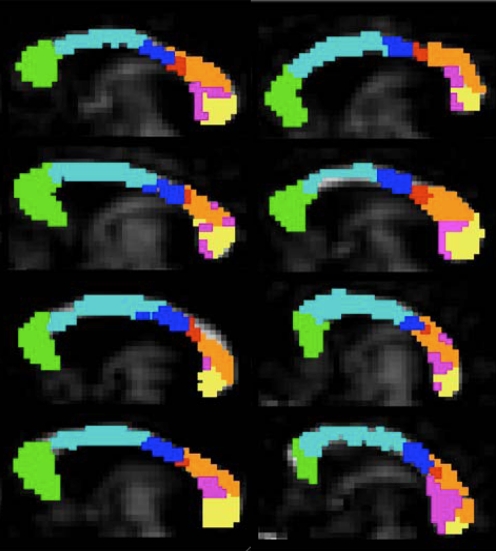
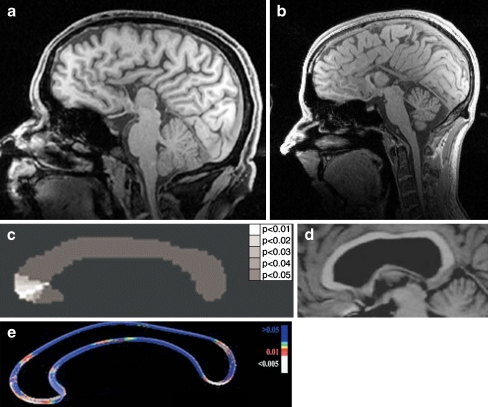
This review provides an overview of the involvement of the corpus callosum (CC) in a variety of developmental disorders that are currently defined exclusively by genetics, developmental insult, and/or behavior. I begin with a general review of CC development, connectivity, and function, followed by discussion of the research methods typically utilized to study the callosum. The bulk of the review concentrates on specific developmental disorders, beginning with agenesis of the corpus callosum (AgCC)-the only condition diagnosed exclusively by callosal anatomy. This is followed by a review of several genetic disorders that commonly result in social impairments and/or psychopathology similar to AgCC (neurofibromatosis-1, Turner syndrome, 22q11.2 deletion syndrome, Williams yndrome, and fragile X) and two forms of prenatal injury (premature birth, fetal alcohol syndrome) known to impact callosal development. Finally, I examine callosal involvement in several common developmental disorders defined exclusively by behavioral patterns (developmental language delay, dyslexia, attention-deficit hyperactive disorder, autism spectrum disorders, and Tourette syndrome).
这篇综述概述了胼胝体(CC)在各种目前仅通过遗传学、发育损伤和/或行为定义的发育障碍中的作用。我首先对 CC 的发育、连接和功能进行了一般性的回顾,然后讨论了通常用于研究胼胝体的研究方法。本综述的主要内容集中在特定的发育障碍上,首先介绍了胼胝体发育不全(AgCC)——这是唯一一种仅通过胼胝体解剖学诊断的疾病。接下来,我回顾了几种常见的遗传疾病,这些疾病通常会导致与 AgCC 相似的社交障碍和/或精神病理学(神经纤维瘤病 1 型、特纳综合征、22q11.2 缺失综合征、威廉姆斯综合征和脆性 X 综合征),以及两种已知会影响胼胝体发育的产前损伤(早产、胎儿酒精综合征)。最后,我研究了几种仅通过行为模式定义的常见发育障碍中的胼胝体参与情况(发育性语言延迟、阅读障碍、注意缺陷多动障碍、自闭症谱系障碍和妥瑞氏综合征)。