Schneider Bruce A, Parker Scott, Murphy Dana
Department of Psychology, University of Toronto Mississauga, 3359 Mississauga Rd., Mississauga, ON, L5L 1C6, Canada.
Atten Percept Psychophys. 2011 Jul;73(5):1562-78. doi: 10.3758/s13414-011-0097-7.
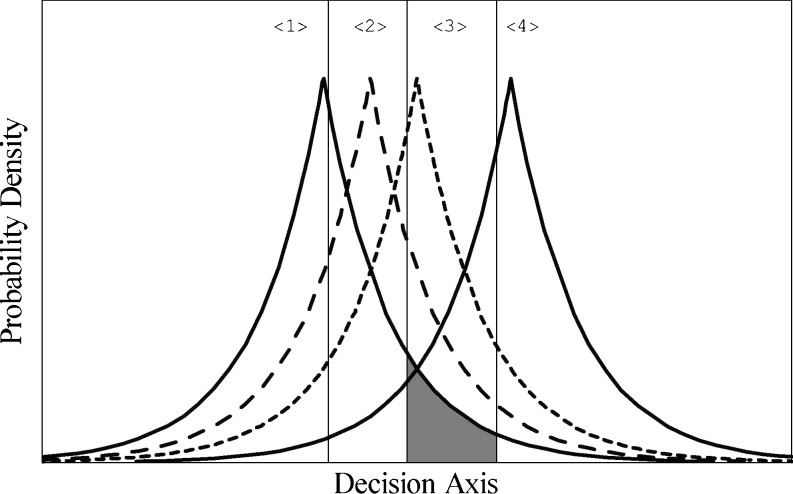
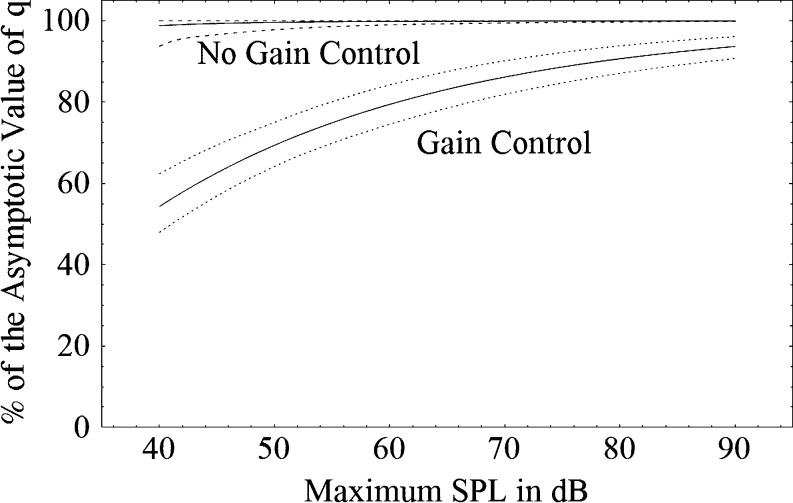
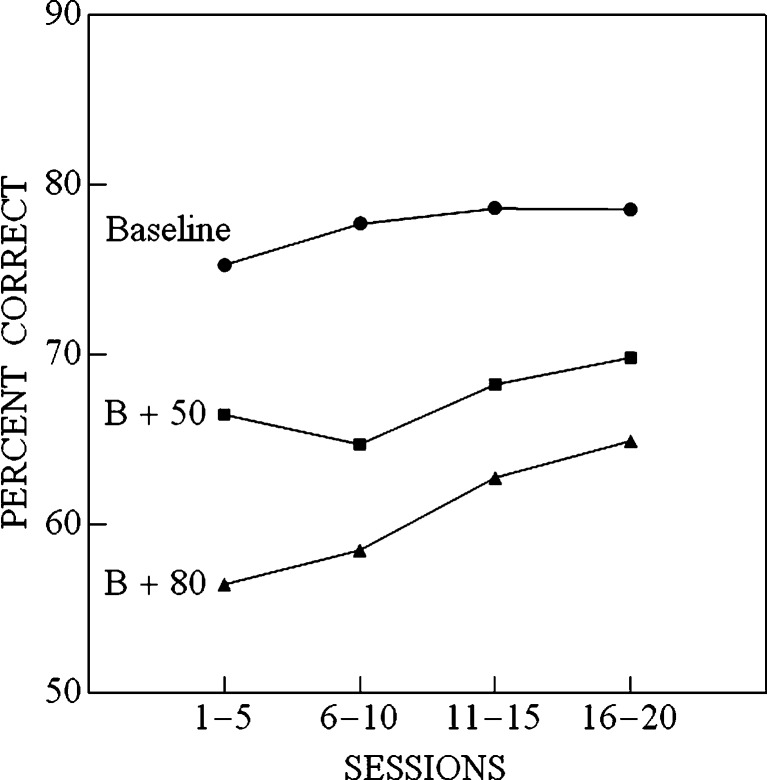
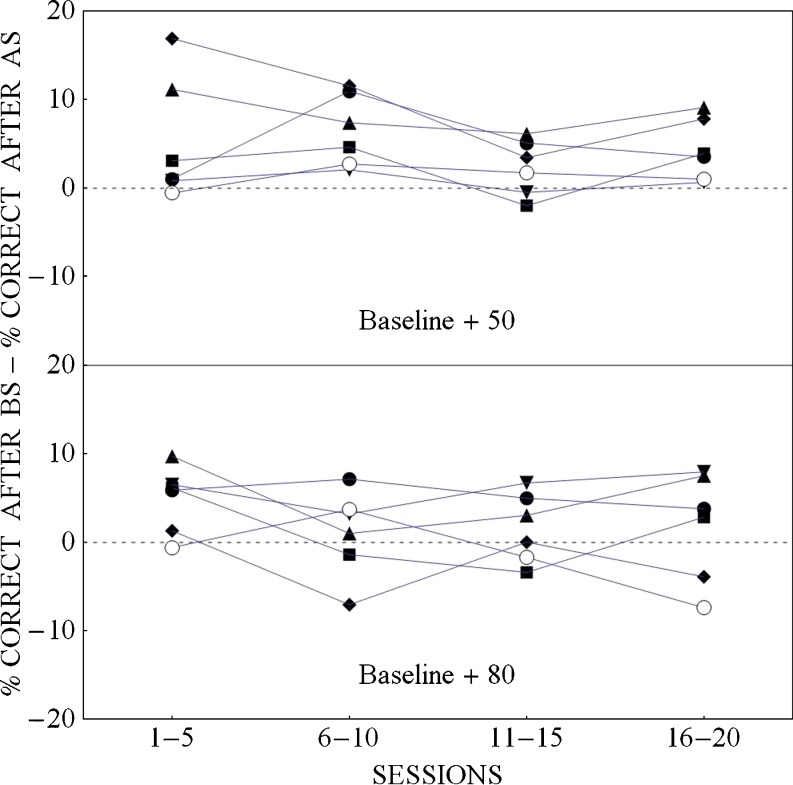
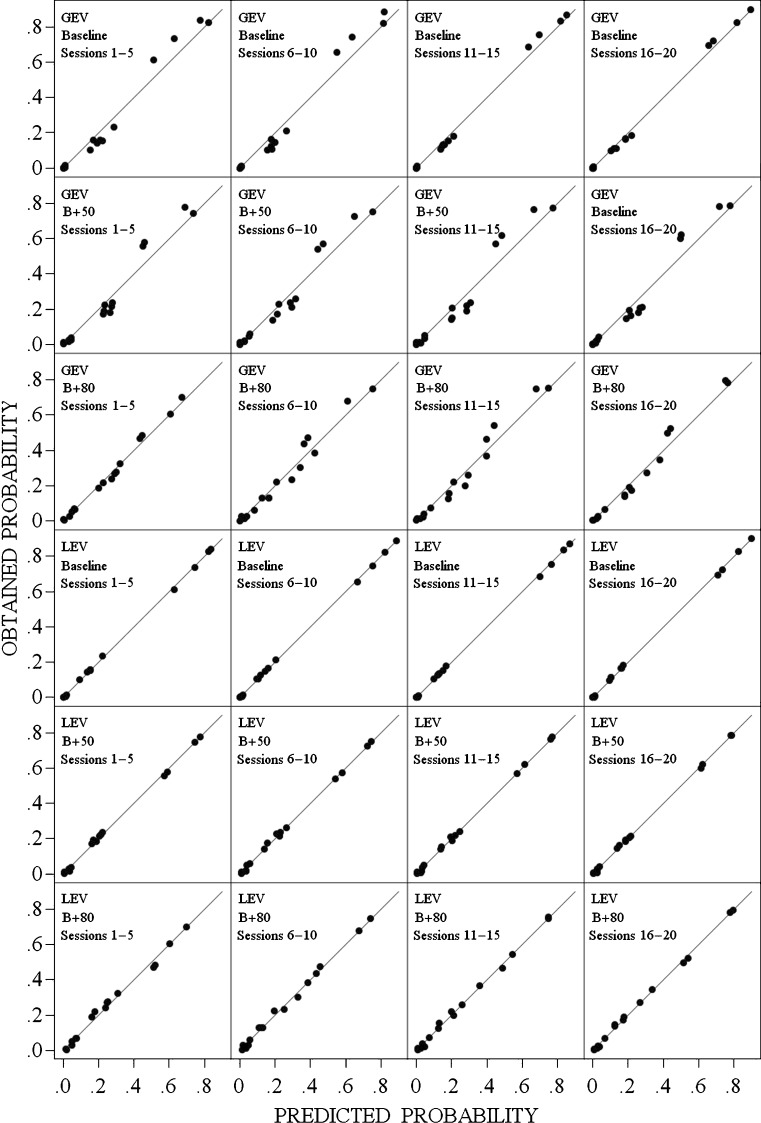
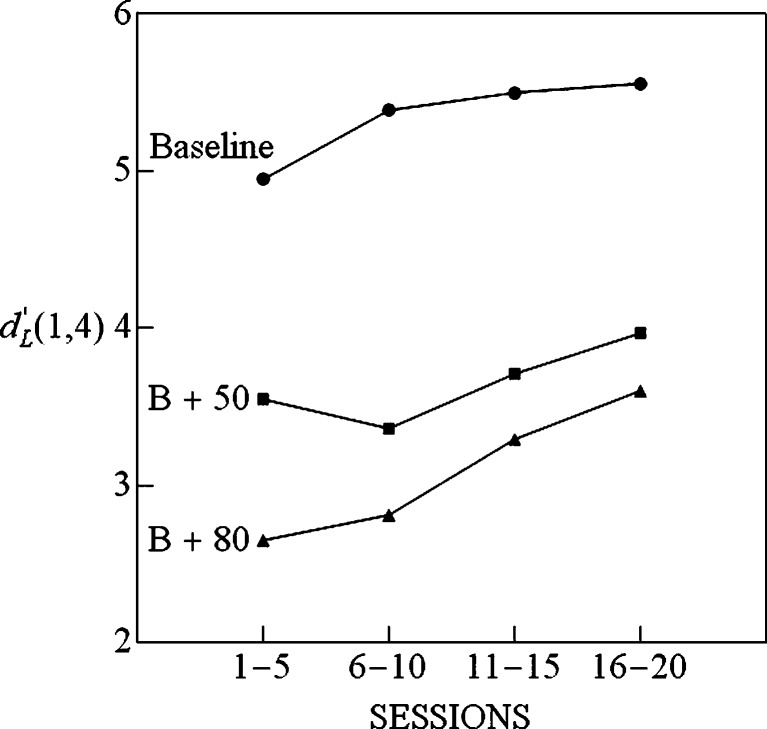
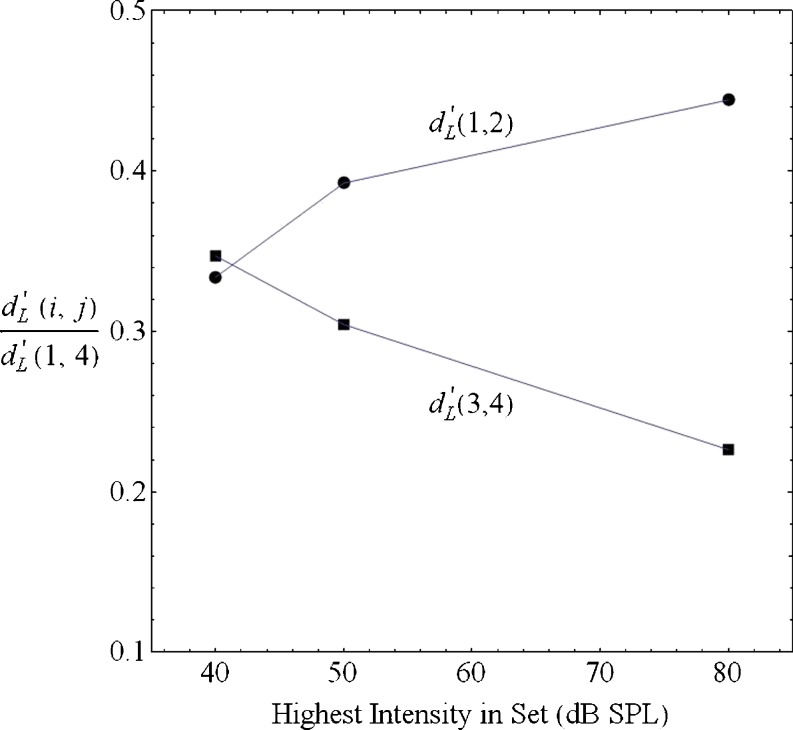
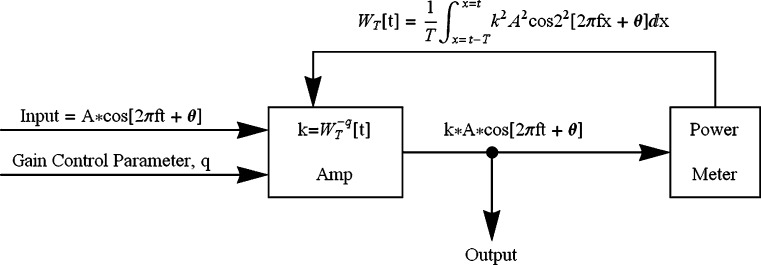
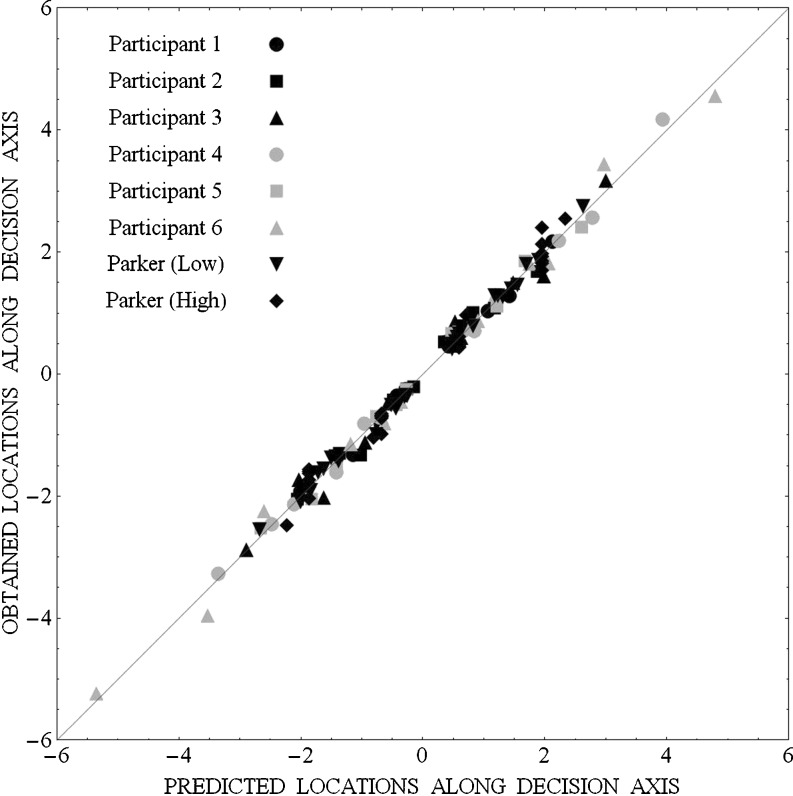
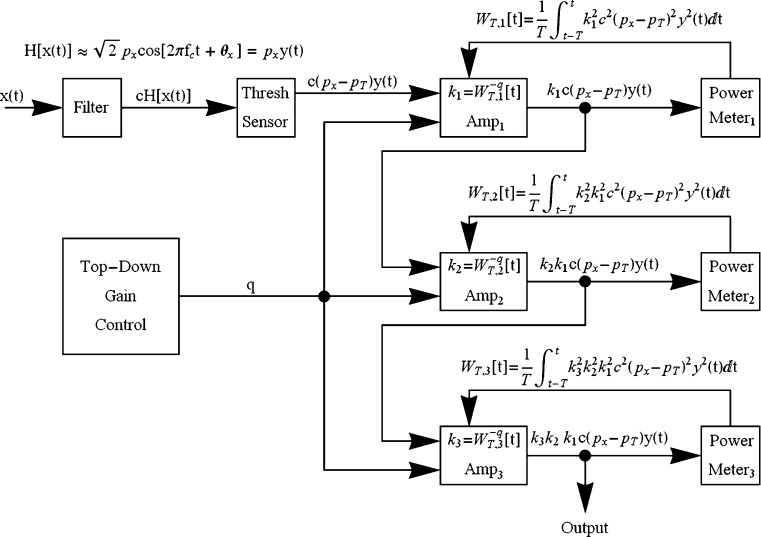
To evaluate a model of top-down gain control in the auditory system, 6 participants were asked to identify 1-kHz pure tones differing only in intensity. There were three 20-session conditions: (1) four soft tones (25, 30, 35, and 40 dB SPL) in the set; (2) those four soft tones plus a 50-dB SPL tone; and (3) the four soft tones plus an 80-dB SPL tone. The results were well described by a top-down, nonlinear gain-control system in which the amplifier's gain depended on the highest intensity in the stimulus set. Individual participants' identification judgments were generally compatible with an equal-variance signal-detection model in which the mean locations of the distribution of effects along the decision axis were determined by the operation of this nonlinear amplification system.
为评估听觉系统中自上而下增益控制的模型,6名参与者被要求识别仅强度不同的1千赫纯音。存在三种20节次的条件:(1)集合中有四个柔和音调(25、30、35和40分贝声压级);(2)那四个柔和音调加上一个50分贝声压级的音调;以及(3)那四个柔和音调加上一个80分贝声压级的音调。结果可以用一个自上而下的非线性增益控制系统很好地描述,其中放大器的增益取决于刺激集合中的最高强度。个体参与者的识别判断通常与等方差信号检测模型相符,在该模型中,沿决策轴的效应分布的平均位置由这个非线性放大系统的运作决定。