Department of Intensive Care, Griffi ths University, Logan Hospital, Meadowbrook, Queensland 4131, Australia.
Crit Care. 2011 Apr 6;15(2):219. doi: 10.1186/cc10020.
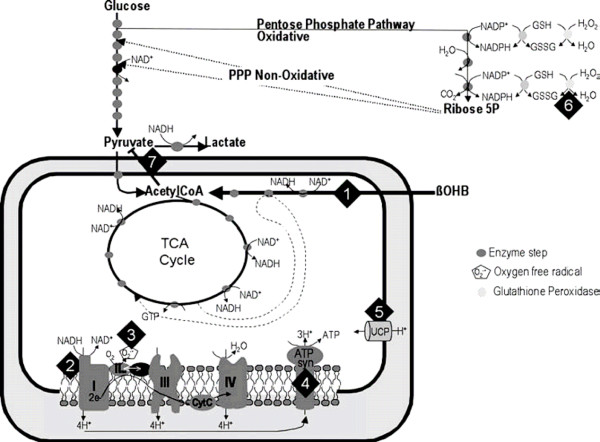
Although much feared by clinicians, the ability to produce ketones has allowed humans to withstand prolonged periods of starvation. At such times, ketones can supply up to 50% of basal energy requirements. More interesting, however, is the fact that ketones can provide as much as 70% of the brain's energy needs, more efficiently than glucose. Studies suggest that during times of acute brain injury, cerebral uptake of ketones increases significantly. Researchers have thus attempted to attenuate the effects of cerebral injury by administering ketones exogenously. Hypertonic saline is commonly utilized for management of intracranial hypertension following cerebral injury. A solution containing both hypertonic saline and ketones may prove ideal for managing the dual problems of refractory intracranial hypertension and low cerebral energy levels. The purpose of the present review is to explore the physiology of ketone body utilization by the brain in health and in a variety of neurological conditions, and to discuss the potential for ketone supplementation as a therapeutic option in traumatic brain injury.
尽管酮体的产生让临床医生感到恐惧,但它却使人类能够在长时间的饥饿中存活下来。在这种情况下,酮体可以提供高达 50%的基础能量需求。然而,更有趣的是,酮体可以提供高达 70%的大脑能量需求,而且比葡萄糖更有效。研究表明,在急性脑损伤期间,大脑对酮体的摄取会显著增加。因此,研究人员试图通过外源性给予酮体来减轻脑损伤的影响。高渗盐水通常用于治疗脑损伤后的颅内高压。含有高渗盐水和酮体的溶液可能是治疗难治性颅内高压和脑能量水平低这双重问题的理想选择。本综述的目的是探讨酮体在健康和各种神经疾病状态下被大脑利用的生理学,并讨论酮体补充作为创伤性脑损伤治疗选择的潜力。